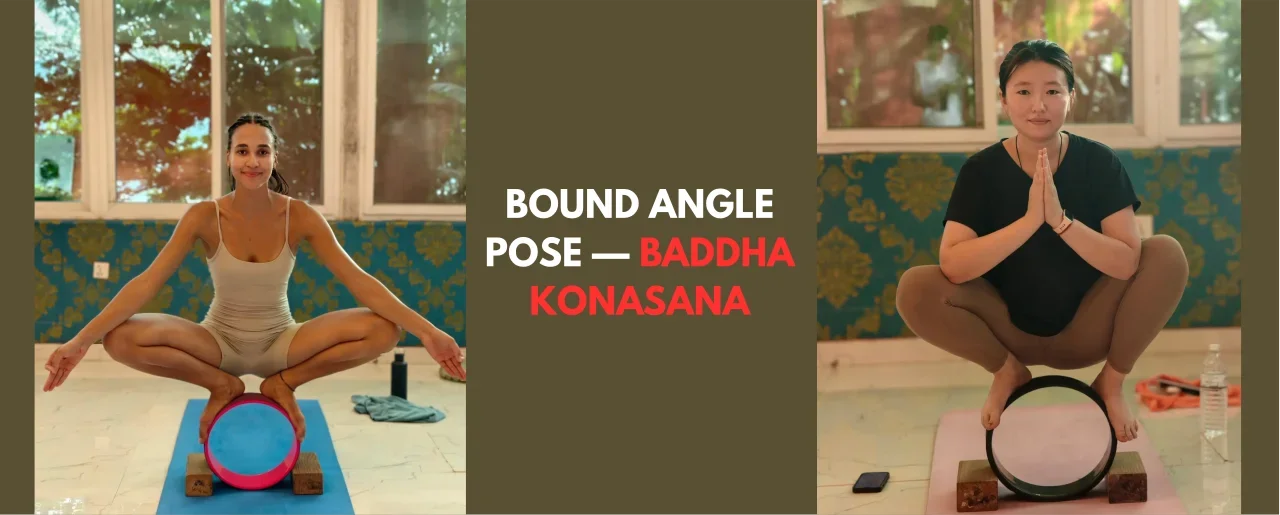
Baddha Konasana, commonly known as Bound Angle Pose or Butterfly Pose, is a seated yoga posture that brings the soles of the feet together while the knees gently move outward. It is a commonly practiced posture for improving lower-body mobility, preparing the body for meditation, and developing awareness of comfortable seated alignment.
The posture shown in the image demonstrates the traditional seated position with the feet brought together and the hands holding the feet while the spine remains upright. Baddha Konasana can be practiced by beginners as well as experienced yoga practitioners, provided the pose is performed comfortably without forcing the hips or knees.
What Is Baddha Konasana?
Baddha Konasana is a seated yoga posture in which the soles of the feet are brought together and the knees open toward the sides. The hands can hold the feet or ankles while the practitioner maintains a comfortable upright posture.
The Sanskrit name comes from Baddha, meaning bound, and Kona, meaning angle. The posture is therefore commonly translated as Bound Angle Pose.
How to Do Baddha Konasana Step by Step
- Sit comfortably on a yoga mat with your legs extended forward.
- Bend both knees and bring your feet toward your pelvis.
- Bring the soles of your feet together.
- Allow your knees to gently move outward.
- Hold your feet, ankles, or toes comfortably with your hands.
- Keep your spine naturally upright.
- Relax your shoulders and avoid rounding the upper back.
- Keep your breathing slow and natural.
- Stay in the posture for a comfortable amount of time.
- To release the pose, gently bring your knees together and extend your legs forward.
Benefits of Baddha Konasana
Regular practice of Baddha Konasana can be incorporated into a balanced yoga routine to support flexibility, body awareness, and comfortable seated practice.
1. Supports Hip Mobility
Baddha Konasana places the hips in an externally rotated position and can be used as part of a yoga sequence focused on comfortable hip mobility.
2. Stretches the Inner Thighs
The posture gently lengthens the inner thigh region as the knees move outward. The stretch should remain comfortable rather than forced.
3. Supports Comfortable Seated Practice
Baddha Konasana can be included in yoga sequences designed to prepare the body for seated meditation and other floor-based practices.
4. Encourages Upright Posture
Maintaining an upright spine while practicing the pose encourages awareness of sitting alignment and helps practitioners develop better body awareness.
5. Useful for Relaxation and Mindful Breathing
Once the body is comfortably positioned, practitioners can focus on slow breathing and relaxation, making Baddha Konasana a useful addition to gentle yoga and mindfulness practices.
Baddha Konasana for Meditation
Baddha Konasana can be used as part of preparation for meditation because it provides a seated position that focuses attention on the hips, legs, spine, and breath.
Beginners should avoid forcing the knees toward the floor. Instead, allow the knees to lower naturally while maintaining relaxed breathing and a comfortable spine.
How to Make Baddha Konasana More Comfortable
Some beginners may find it difficult to sit upright in Baddha Konasana. A folded blanket, cushion, or yoga bolster can be placed underneath the hips to provide additional support.
You can also place cushions or blocks underneath the knees if they feel unsupported. The goal is to create a stable and comfortable position rather than forcing the body into a deeper stretch.
Common Mistakes in Baddha Konasana
- Forcing the knees toward the floor.
- Rounding the spine excessively.
- Pulling the feet aggressively toward the pelvis.
- Holding the breath during the posture.
- Trying to achieve maximum flexibility instead of maintaining comfortable alignment.
- Ignoring pain or discomfort in the knees, hips, or lower back.
Precautions While Practicing Baddha Konasana
- Do not force the knees downward.
- Stop if you experience sharp or significant pain.
- Practice gently if you have limited hip mobility.
- Use cushions or other suitable yoga supports when needed.
- Maintain natural and relaxed breathing.
- People with existing knee, hip, or other joint problems should seek appropriate professional guidance before practicing.
If you have an existing injury or health condition that affects your ability to practice seated yoga postures, consult an appropriately qualified healthcare professional or experienced yoga instructor before practicing Baddha Konasana.
Baddha Konasana in Traditional Yoga Practice
Baddha Konasana can be incorporated into traditional yoga sequences alongside asana practice, pranayama, meditation, and other yogic practices. Learning how to perform individual postures with appropriate alignment is an important part of developing a consistent yoga practice.
For students who want to study yoga more deeply, structured teacher training can provide broader knowledge of asanas, pranayama, meditation, yoga philosophy, anatomy, and teaching methodology.
If you are looking for a structured yoga education in Nepal, explore our Best Yoga Teacher Training Nepal programs to learn traditional yoga practices in a supportive learning environment.
Conclusion
Baddha Konasana (Bound Angle Pose) is a simple seated yoga posture that can be included in yoga routines focused on hip mobility, mindful breathing, relaxation, and preparation for meditation. The most important aspect of the pose is comfortable alignment rather than forcing the knees or hips into a deeper position.
Practicing individual yoga postures alongside pranayama, meditation, yoga philosophy, and proper guidance can help students develop a broader understanding of traditional yoga.