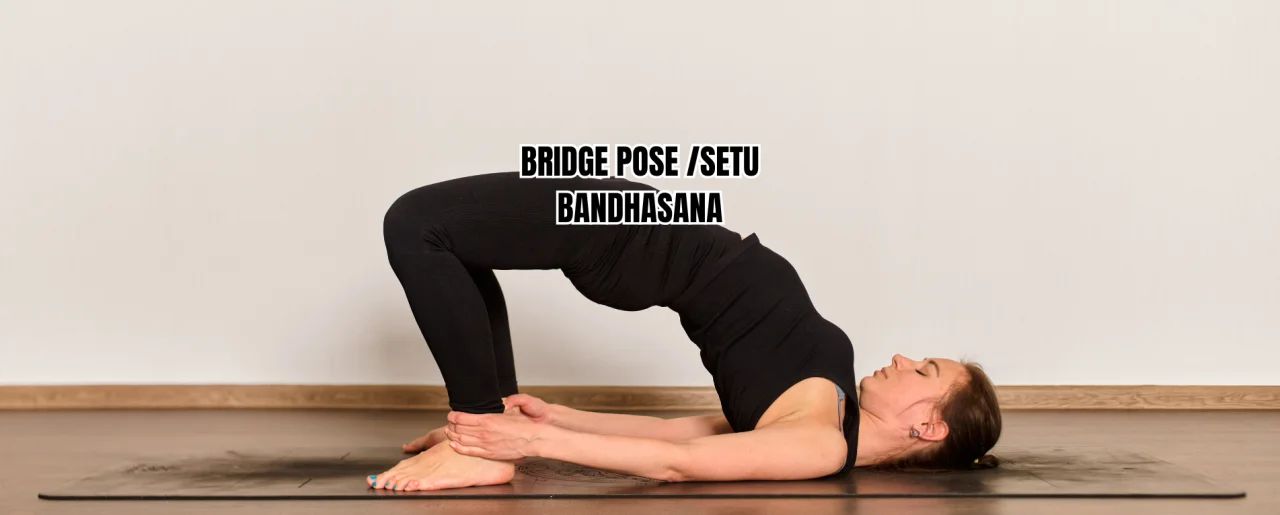
Bridge Pose, also known as Setu Bandhasana or Setu Bandha Sarvangasana, is a popular yoga posture that strengthens the legs, hips, back, and core while gently opening the chest and front body. It is suitable for many yoga practitioners and can be adapted for beginners with appropriate modifications.
Bridge Pose is often included in yoga sequences as a strengthening posture, a gentle backbend, and preparation for deeper poses such as Chakrasana (Wheel Pose). Practicing it with proper alignment and controlled breathing can help improve body awareness and stability.
What Is Bridge Pose?
The Sanskrit name Setu Bandhasana is associated with the idea of building or forming a bridge. In this posture, the practitioner lies on the back, bends the knees, places the feet on the floor, and lifts the hips toward the ceiling.
Unlike more advanced backbends, Bridge Pose does not require the hands to support the body from overhead. This makes it a useful posture for developing the strength and mobility needed for more challenging backbends.
How to Do Bridge Pose Step by Step
- Lie on your back on a comfortable yoga mat.
- Bend your knees and place both feet flat on the floor.
- Keep your feet approximately hip-width apart.
- Place your arms beside your body with the palms facing down.
- Bring your heels comfortably closer to your sitting bones.
- Take a slow breath in and prepare your body.
- As you exhale, press your feet firmly into the floor.
- Lift your hips slowly toward the ceiling.
- Keep your thighs active and your knees tracking in the same general direction as your feet.
- Keep the chest gently lifted while maintaining a comfortable neck position.
- Hold the posture for several steady breaths.
- To release, lower your spine and hips slowly back toward the mat.
- Rest for a few breaths before repeating or moving into the next posture.
Benefits of Bridge Pose
Regular and mindful practice of Bridge Pose can support strength, mobility, posture, and body awareness. The benefits can vary depending on individual practice and physical condition.
- Strengthens the legs: The quadriceps, hamstrings, and gluteal muscles help support the posture.
- Activates the core: The abdominal and trunk muscles contribute to stability.
- Strengthens the back: The muscles along the back body are engaged during hip extension.
- Opens the chest: The posture gently stretches the front of the chest and shoulders.
- Improves hip extension: The lifting action encourages active movement through the hips.
- Supports spinal mobility: Controlled extension can help develop awareness of spinal movement.
- Improves body awareness: The pose requires coordination between the feet, legs, pelvis, and upper body.
- Prepares for deeper backbends: Bridge Pose can be used as preparation for postures such as Wheel Pose.
Bridge Pose Alignment Tips
Correct alignment is important for making Bridge Pose comfortable and effective. Instead of lifting the hips as high as possible, focus on creating a stable and controlled position.
- Keep both feet firmly grounded on the mat.
- Keep your feet approximately hip-width apart.
- Avoid allowing your knees to collapse inward.
- Keep the thighs active throughout the posture.
- Lift the hips gradually rather than using momentum.
- Keep the neck relaxed and avoid turning your head from side to side.
- Distribute the movement through the hips and spine instead of forcing the lower back.
- Maintain steady, natural breathing.
Common Mistakes in Bridge Pose
Bridge Pose may appear simple, but poor alignment can reduce its effectiveness or create unnecessary strain. Some common mistakes include:
- Placing the feet too far away from or too close to the body.
- Allowing the knees to fall inward.
- Lifting the hips aggressively or using momentum.
- Putting excessive pressure on the neck.
- Holding the breath during the posture.
- Overarching the lower back.
- Turning the head while the hips are lifted.
Bridge Pose for Beginners
Bridge Pose can be a good starting point for beginners who are learning basic backbending techniques. Begin with a small lift and concentrate on keeping the feet stable, the knees aligned, and the breath relaxed.
You can also place a yoga block under the sacrum for a supported version of the pose. This variation can reduce the muscular effort required and allow you to experience a gentle opening across the front body. Always choose a height that feels stable and comfortable.
Preparatory Exercises and Poses
If you are new to Bridge Pose, gentle movements that warm the hips, spine, shoulders, and legs can make the practice more comfortable.
- Cat-Cow Pose
- Pelvic Tilts
- Supine Knee-to-Chest Pose
- Low Lunge
- Gentle spinal mobility exercises
- Glute and leg strengthening exercises
Bridge Pose as Preparation for Wheel Pose
Bridge Pose is frequently used as a preparatory posture for Chakrasana or Wheel Pose. Both postures involve hip extension and spinal extension, but Wheel Pose requires significantly more shoulder, wrist, arm, and spinal mobility.
Practicing Bridge Pose can help practitioners understand how to engage the legs and hips while maintaining control through the spine. However, Bridge Pose alone does not guarantee readiness for Wheel Pose. Adequate strength, mobility, and proper instruction are still important.
Breathing During Bridge Pose
Maintain slow and comfortable breathing throughout the posture. Inhale naturally as you prepare and lift the hips, then continue taking steady breaths while holding the pose. Avoid holding your breath, especially when the posture feels physically challenging.
Precautions and Safety Tips
Although Bridge Pose is accessible to many practitioners, it should still be practiced mindfully. Avoid forcing the movement or continuing through pain.
Practitioners with an acute neck, back, shoulder, hip, knee, or wrist injury should seek appropriate professional guidance before practicing. If you experience sharp pain, numbness, dizziness, or unusual discomfort, release the posture slowly and rest.
Never turn your head from side to side while your hips are lifted. Keep the head and neck stable throughout the posture.
Learn Yoga in Nepal
If you want to deepen your knowledge of yoga asanas, alignment, pranayama, meditation, and yoga philosophy, structured teacher training can provide a comprehensive learning experience. Explore our Yoga Teacher Training in Nepal to learn yoga in a supportive Himalayan environment.
If you are looking for a shorter and focused training program, explore our 100 Hour Yoga Teacher Training in Nepal to learn more about yoga asana, pranayama, meditation, philosophy, and teaching methodology.
Frequently Asked Questions About Bridge Pose
What is Bridge Pose called in Sanskrit?
Bridge Pose is commonly known as Setu Bandhasana. It is also referred to as Setu Bandha Sarvangasana in some yoga traditions.
Is Bridge Pose good for beginners?
Yes. Bridge Pose can be adapted for beginners. Start with a comfortable hip lift and focus on alignment, breathing, and controlled movement.
What muscles does Bridge Pose work?
Bridge Pose engages the glutes, hamstrings, quadriceps, core, and muscles of the back while also opening the chest and front of the hips.
Can Bridge Pose help prepare for Wheel Pose?
Yes. Bridge Pose can help develop awareness and strength for hip and spinal extension. However, Wheel Pose requires additional shoulder, wrist, arm, and spinal mobility.
How long should I hold Bridge Pose?
Hold Bridge Pose for several comfortable breaths while maintaining stable alignment. Beginners should prioritize technique and controlled breathing rather than holding the pose for a long time.
Final Thoughts
Bridge Pose or Setu Bandhasana is a versatile yoga posture that combines strength, stability, mobility, and mindful breathing. It can be practiced as an independent posture, included in a balanced yoga sequence, or used as preparation for more advanced backbends.
Practice consistently, progress gradually, and focus on proper alignment rather than forcing the body into a deeper position. With regular practice and qualified guidance, Bridge Pose can become a valuable part of a balanced yoga practice.