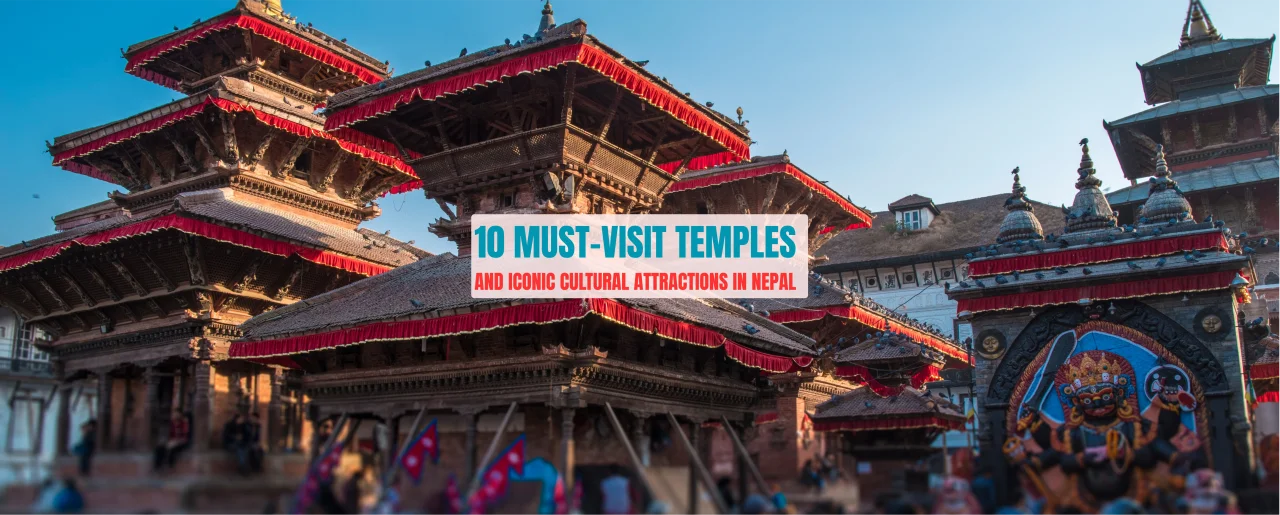
Nepal is a beautiful destination known for its ancient temples, sacred monasteries, UNESCO World Heritage Sites, traditional architecture, and spiritual heritage. Nestled in the Himalayas, this culturally rich country offers visitors an opportunity to explore centuries-old traditions, experience diverse religious practices, and discover the deep connection between spirituality and everyday life.
From the sacred Pashupatinath Temple in Kathmandu to the birthplace of Gautama Buddha in Lumbini, Nepal is home to some of South Asia's most remarkable religious and cultural landmarks. Whether you are interested in Hindu temples, Buddhist stupas, historical monuments, or peaceful spiritual destinations, there is something special to discover in every region.
In this guide, we explore 10 must-visit temples and iconic cultural attractions in Nepal that deserve a place on your travel itinerary.
1. Pashupatinath Temple, Kathmandu
Pashupatinath Temple is one of the most sacred Hindu pilgrimage destinations in Nepal. Located on the banks of the Bagmati River in Kathmandu, this ancient temple is dedicated to Lord Shiva and attracts thousands of devotees and visitors throughout the year.
The temple complex features traditional Nepalese pagoda architecture, beautifully carved wooden elements, smaller shrines, and sacred ghats along the river. Maha Shivaratri is one of the most important festivals celebrated here, attracting pilgrims and sadhus from Nepal and India.
Why Visit: Explore Nepal's Hindu spiritual traditions, admire traditional architecture, and experience the religious atmosphere surrounding the Bagmati River.
Location: Kathmandu, Nepal
2. Swayambhunath Stupa, Kathmandu
Swayambhunath Stupa, popularly known as the Monkey Temple, is one of the most recognizable Buddhist landmarks in Nepal. Located on a hill overlooking the Kathmandu Valley, this sacred site offers beautiful panoramic views of the surrounding city.
The white dome, golden spire, colourful prayer flags, and Buddha's watchful eyes make Swayambhunath an important symbol of Nepalese Buddhist culture. The complex also includes shrines, monasteries, prayer wheels, and traditional religious artwork.
Visitors can climb the steps leading to the hilltop and experience the peaceful atmosphere created by chanting, prayer wheels, and fluttering prayer flags.
Why Visit: Enjoy spiritual surroundings, Buddhist heritage, traditional architecture, and spectacular views of Kathmandu.
Location: Kathmandu Valley, Nepal
3. Boudhanath Stupa, Kathmandu
Boudhanath Stupa is among the largest Buddhist stupas in Nepal and an important centre of Tibetan Buddhist culture. Its enormous white dome, golden tower, colourful prayer flags, and painted Buddha eyes create an impressive landmark.
The area surrounding the stupa is filled with monasteries, traditional shops, cafes, and Tibetan cultural influences. Visitors and Buddhist practitioners walk clockwise around the stupa while turning prayer wheels and reciting traditional mantras.
Boudhanath is particularly beautiful during the morning and evening when devotees gather for prayers and meditation. It is also an excellent place to learn about Buddhist philosophy and Tibetan traditions.
Why Visit: Experience Buddhist traditions, peaceful surroundings, prayer rituals, and Tibetan cultural heritage.
Location: Kathmandu, Nepal
4. Changu Narayan Temple, Bhaktapur
Changu Narayan Temple is one of Nepal's oldest Hindu temples and an important example of traditional Nepalese temple architecture. Situated on a hilltop near Bhaktapur, this sacred temple is dedicated to Lord Vishnu.
The temple is particularly famous for its intricate wood and stone carvings, traditional sculptures, and ancient inscriptions. Its architectural details provide valuable insight into Nepal's historical art, craftsmanship, and religious traditions.
Recognized as part of the Kathmandu Valley UNESCO World Heritage property, Changu Narayan is an excellent destination for travellers interested in history, architecture, and Hindu culture.
Why Visit: Discover ancient Nepalese architecture, historical inscriptions, traditional artwork, and religious heritage.
Location: Bhaktapur District, Nepal
5. Janaki Mandir, Janakpur
Janaki Mandir is one of the most famous Hindu temples in Nepal and an important pilgrimage destination associated with Goddess Sita. Located in Janakpur, the temple is traditionally connected with the birthplace of Sita, who is revered in the Hindu epic Ramayana.
The temple's impressive white structure, colourful decorative details, domes, and architectural design make it one of the most distinctive religious landmarks in the country.
During festivals such as Vivah Panchami and Ram Navami, Janakpur becomes a major centre of religious celebrations. Devotees gather to participate in ceremonies and celebrate the traditional connection between Lord Rama and Goddess Sita.
Why Visit: Explore Ramayana heritage, experience Mithila culture, and admire the temple's beautiful architecture.
Location: Janakpur, Madhesh Province, Nepal
6. Muktinath Temple, Mustang
Muktinath Temple is a sacred pilgrimage destination located in the Himalayan region of Mustang. Revered by both Hindus and Buddhists, the temple represents an important meeting point of different spiritual traditions.
Dedicated to Lord Vishnu and associated with Buddhist worship of Avalokiteshvara, Muktinath is particularly known for its peaceful mountain setting and religious significance.
The temple complex features traditional shrines and 108 water spouts, which are associated with purification rituals performed by Hindu pilgrims. The surrounding Himalayan landscape adds to the spiritual and scenic experience.
Reaching Muktinath is also an opportunity to explore the unique landscapes, villages, and cultural traditions of the Mustang region.
Why Visit: Experience Himalayan spirituality, explore Hindu and Buddhist traditions, and enjoy breathtaking mountain scenery.
Location: Mustang District, Nepal
7. Lumbini – The Birthplace of Gautama Buddha
Lumbini is one of the world's most important Buddhist pilgrimage destinations. Located in the Rupandehi District of Nepal, it is recognized as the birthplace of Gautama Buddha.
The sacred garden features the Maya Devi Temple, the Ashoka Pillar, ancient archaeological remains, and the peaceful Puskarini Pond. The wider Lumbini area also includes monasteries and meditation centres established by Buddhist communities from different countries.
Visitors can explore monasteries representing different Buddhist traditions, enjoy peaceful surroundings, and learn about the life and teachings of Buddha.
Lumbini is a UNESCO World Heritage Site and an essential destination for anyone interested in Buddhism, meditation, philosophy, and spiritual history.
Why Visit: Discover the birthplace of Buddha, explore Buddhist monasteries, and experience an atmosphere of peace and reflection.
Location: Rupandehi District, Lumbini Province, Nepal
8. Manakamana Temple, Gorkha
Manakamana Temple is a famous Hindu pilgrimage destination dedicated to Goddess Bhagwati, a manifestation of Goddess Parvati. Located on a hilltop in Gorkha District, the temple is traditionally believed to fulfil the wishes of devotees who visit with sincere faith.
One of the most memorable aspects of visiting Manakamana is the cable car journey, which offers beautiful views of green hills, valleys, rivers, and surrounding mountain landscapes.
The temple attracts pilgrims throughout the year, especially during major Hindu festivals. Its combination of religious importance and scenic surroundings makes it a popular destination for both spiritual travellers and tourists.
Why Visit: Experience Hindu pilgrimage traditions, enjoy the cable car journey, and explore the beautiful Himalayan foothills.
Location: Gorkha District, Nepal
9. Bhaktapur Durbar Square and Nyatapola Temple
Bhaktapur Durbar Square is one of the most remarkable historical and cultural attractions in Nepal. This UNESCO-listed monument zone showcases traditional Newari architecture, ancient palaces, temples, courtyards, and beautifully crafted monuments.
One of its most famous landmarks is Nyatapola Temple, a five-storey pagoda dedicated to Goddess Siddhi Lakshmi. Its impressive structure and carefully carved figures make it an outstanding example of traditional Nepalese craftsmanship.
Visitors can also explore the 55 Window Palace, traditional pottery squares, local markets, and historic streets. Bhaktapur is particularly well known for preserving its Newari culture, traditional food, festivals, and artistic heritage.
Why Visit: Discover traditional Newari architecture, historic temples, local craftsmanship, and authentic Nepalese culture.
Location: Bhaktapur, Nepal
10. Patan Durbar Square, Lalitpur
Patan Durbar Square is another outstanding cultural destination in the Kathmandu Valley. Located in Lalitpur, this historic square is famous for its traditional Newari architecture, ancient temples, royal courtyards, and intricate metal and wood craftsmanship.
The square features several important landmarks, including Krishna Mandir, traditional palace buildings, and the Patan Museum. Krishna Mandir is particularly notable for its stone construction and detailed carvings depicting scenes from Hindu mythology.
Patan is also famous for its traditional arts, metalwork, sculpture, and handicrafts. Exploring its narrow streets and historic courtyards gives visitors a deeper understanding of Nepal's cultural identity.
Why Visit: Explore historic temples, traditional architecture, Nepalese art, museums, and Newari cultural traditions.
Location: Lalitpur, Kathmandu Valley, Nepal
Best Time to Visit Temples and Cultural Attractions in Nepal
The best time to explore Nepal's temples and cultural destinations is generally during spring and autumn when the weather is comparatively pleasant and suitable for sightseeing.
Spring (March to May)
Spring offers comfortable temperatures, colourful landscapes, and favourable conditions for exploring temples, historical monuments, and cultural attractions.
Autumn (September to November)
Autumn is one of the most popular seasons for visiting Nepal. Clear skies, pleasant temperatures, and excellent mountain visibility make it a wonderful time for cultural exploration and sightseeing.
Winter (December to February)
Winter can also be suitable for visiting Kathmandu, Janakpur, and other lower-altitude destinations. However, high-altitude locations such as Muktinath can experience very cold conditions and snowfall.
Tips for Visiting Temples in Nepal
- Wear modest and respectful clothing when visiting religious sites.
- Remove your shoes before entering designated temple areas.
- Respect local religious customs, ceremonies, and traditions.
- Check photography restrictions before taking pictures inside temples.
- Some Hindu temple areas restrict entry to non-Hindu visitors, so check access rules in advance.
- Carry cash for local transportation, donations, and small purchases.
- Plan additional travel time for mountain destinations such as Muktinath.
- Support local communities by purchasing traditional handicrafts and using local services.
Experience Nepal Beyond Temples: Yoga, Meditation, and Spiritual Learning
Nepal is not only a destination for historical exploration and religious pilgrimage but also a wonderful place to discover yoga, meditation, mindfulness, and traditional spiritual practices.
The country's peaceful Himalayan surroundings, ancient monasteries, spiritual communities, and rich cultural traditions create an inspiring environment for people interested in personal development and inner wellbeing.
Pokhara, in particular, is a popular destination for yoga enthusiasts who want to combine their spiritual journey with the natural beauty of the Annapurna region. Visitors can experience peaceful surroundings, mountain views, lakeside relaxation, meditation, and traditional yoga practices.
For those interested in developing their yoga knowledge and teaching skills, exploring a Nepal Yoga Teacher Training program can be a meaningful way to experience the country's yoga traditions. Students can explore structured yoga education, asana practice, pranayama, meditation, and yogic philosophy while enjoying the peaceful environment of Pokhara.
Whether you are planning a spiritual retreat, a cultural holiday, or a professional yoga learning experience, Nepal offers opportunities to connect with its ancient traditions and discover a deeper sense of balance.
Conclusion
Nepal is a remarkable destination where ancient temples, Buddhist stupas, traditional architecture, and spiritual traditions come together. From the sacred atmosphere of Pashupatinath and Boudhanath to the historical beauty of Bhaktapur and Patan Durbar Squares, every destination offers a unique cultural experience.
Whether you are a history enthusiast, spiritual traveller, photography lover, or yoga practitioner, exploring these 10 must-visit temples and cultural attractions will help you appreciate the beauty and heritage of Nepal.
Plan your Nepal journey, discover its sacred landmarks, experience its welcoming culture, and make unforgettable memories in the heart of the Himalayas.