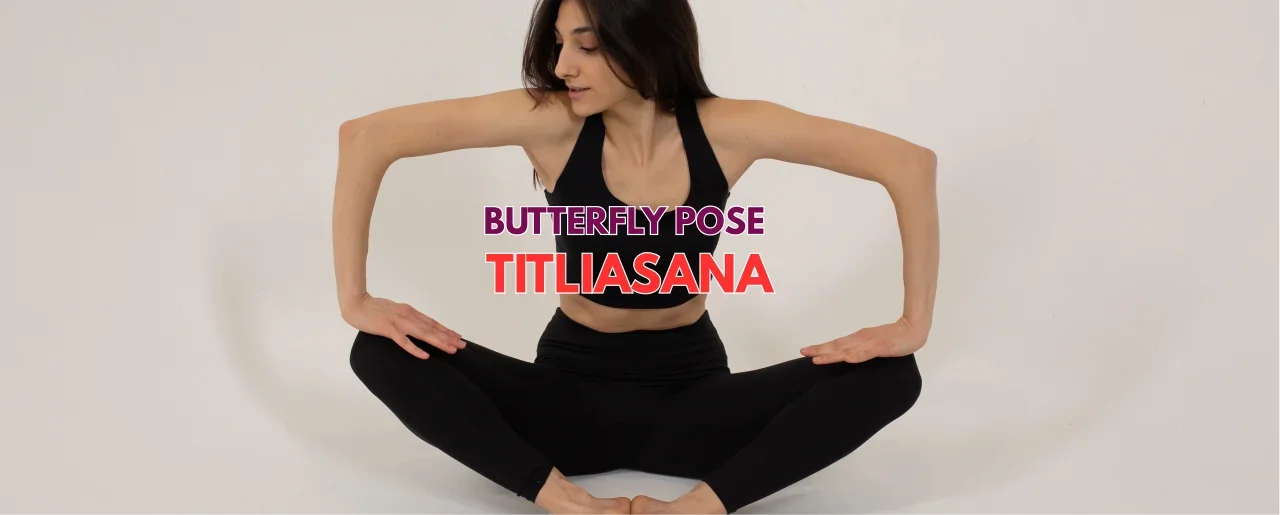
Butterfly Pose, traditionally known as Titliasana or Baddha Konasana, is a simple seated yoga posture that focuses on the hips, inner thighs, groin, and lower body. The pose gets its common name from the gentle movement of the knees, which resembles the wings of a butterfly.
Although Butterfly Pose looks simple, practicing it with proper alignment and relaxed breathing can make it a useful part of a regular yoga routine. It is commonly included in flexibility work, warm-up sequences, meditation preparation, and traditional yoga practices.
What Is Butterfly Pose (Titliasana)?
Butterfly Pose is a seated posture in which the soles of the feet are brought together while the knees move outward. The hands can hold the feet or ankles while the spine is kept comfortably upright.
The posture encourages gentle mobility around the hips and stretches the inner thighs. Rather than forcing the knees toward the floor, the emphasis should be on maintaining steady breathing and allowing the body to gradually become more comfortable in the position.
How to Do Butterfly Pose Step by Step
- Sit comfortably on the floor with your legs extended in front of you.
- Bend both knees and bring the soles of your feet together.
- Allow your knees to move gently outward toward the sides.
- Bring your heels toward your pelvis only as far as feels comfortable.
- Hold your feet or ankles with your hands.
- Sit tall and keep your spine naturally lengthened.
- Relax your shoulders and avoid rounding your back.
- Take slow, comfortable breaths while holding the position.
- If comfortable, gently move the knees up and down without forcing the movement.
- Release the pose slowly and extend your legs forward.
Benefits of Butterfly Pose
Regular and comfortable practice of Butterfly Pose can be useful for developing lower-body mobility and improving awareness of posture and breathing. Some commonly experienced benefits include:
- Encourages flexibility in the inner thighs and groin.
- Supports comfortable hip mobility.
- Provides a gentle stretch for the lower body.
- Can be included in warm-up and cool-down routines.
- Encourages an upright seated posture.
- Can be combined with slow breathing and mindfulness.
- May help prepare the body for other seated yoga postures.
Butterfly Pose for Beginners
Beginners do not need to force their knees toward the floor. Flexibility varies from person to person, so the natural position of the knees will be different for everyone.
If sitting directly on the floor feels uncomfortable, place a folded blanket or yoga cushion underneath your hips. This can make it easier to maintain a comfortable seated position and keep the spine upright.
Start with a short hold and gradually increase the duration as your mobility and comfort improve. The goal is controlled, relaxed movement rather than maximum range of motion.
Common Mistakes to Avoid
Butterfly Pose is relatively accessible, but incorrect technique can make the posture uncomfortable. Keep these points in mind:
- Do not force the knees down: Let gravity and regular practice gradually improve mobility.
- Avoid rounding the spine: Sit comfortably upright without creating unnecessary tension.
- Do not pull the feet aggressively: Keep the movement gentle and controlled.
- Avoid bouncing: Rapid or forceful movement can place unnecessary stress on the joints.
- Do not ignore pain: Stretching may feel mild, but sharp or persistent pain is a reason to stop.
Breathing During Butterfly Pose
Breathing is an important part of a mindful yoga practice. Once you are comfortable in the posture, breathe slowly through the nose and allow the abdomen and rib cage to move naturally.
Instead of concentrating only on how far the knees can move, use the breath to remain relaxed. This approach can help make the practice more comfortable and encourages greater awareness of the body.
Precautions and Safety
Butterfly Pose should be practiced within a comfortable range of movement. If you have a recent or existing injury involving the hips, knees, groin, or lower back, consider speaking with a qualified healthcare professional or experienced yoga teacher before practicing.
Stop the posture if you experience sharp pain, significant discomfort, numbness, or other unusual symptoms. Yoga should be adapted to the individual rather than performed by forcing the body into a particular shape.
How Butterfly Pose Fits Into a Yoga Practice
Butterfly Pose can be incorporated into different types of yoga sessions. It may be practiced before meditation, as part of a flexibility sequence, or alongside other seated and hip-opening postures.
If you want to move beyond individual yoga poses and develop a structured understanding of asanas, pranayama, meditation, anatomy, philosophy, and teaching methodology, a comprehensive 200 hour YTT in Nepal can provide a more systematic learning experience.
Why Learn Yoga in Nepal?
Nepal offers a distinctive environment for people interested in studying yoga, combining Himalayan landscapes, traditional practices, meditation, and opportunities for immersive learning. For students who want to explore yoga beyond individual postures, Nepal yoga teacher training programs can provide a broader introduction to yoga philosophy, asana practice, pranayama, meditation, anatomy, and teaching skills.
A structured teacher-training program can also help students understand how to approach postures such as Butterfly Pose with attention to alignment, modifications, breathing, and individual differences rather than simply trying to copy a particular shape.
Butterfly Pose: Quick Summary
| Aspect | Details |
|---|---|
| Traditional Name | Titliasana |
| Common Association | Baddha Konasana |
| Position | Seated |
| Main Focus | Hips, inner thighs and groin |
| Level | Beginner-friendly with appropriate modification |
| Key Principle | Gentle movement without forcing the joints |
Frequently Asked Questions About Butterfly Pose
What is Butterfly Pose in yoga?
Butterfly Pose is a seated yoga posture where the soles of the feet are brought together and the knees open outward. It is commonly used to work on hip and inner-thigh mobility.
Is Butterfly Pose good for beginners?
Yes. Butterfly Pose can be practiced by beginners when performed gently and within a comfortable range of movement. Props such as a cushion or folded blanket can make the position more comfortable.
How long should I hold Butterfly Pose?
Beginners can start with a comfortable short hold and gradually increase the duration. There is no need to hold the posture for a specific amount of time if the position causes discomfort.
Should my knees touch the floor?
No. Your knees do not need to touch the floor. Flexibility differs between individuals, and forcing the knees downward can create unnecessary stress.
Can Butterfly Pose improve flexibility?
Consistent, gentle practice can support flexibility and mobility around the hips and inner thighs. Progress generally develops gradually rather than through forceful stretching.
Final Thoughts
Butterfly Pose (Titliasana) is a simple yet useful posture for developing awareness of the hips, inner thighs, posture, and breathing. Its simplicity makes it suitable for many yoga routines, but comfortable alignment should always take priority over achieving a deeper pose.
Whether you are beginning your yoga journey or preparing for more structured study, learning the fundamentals of each posture can help you build a safer and more mindful practice.