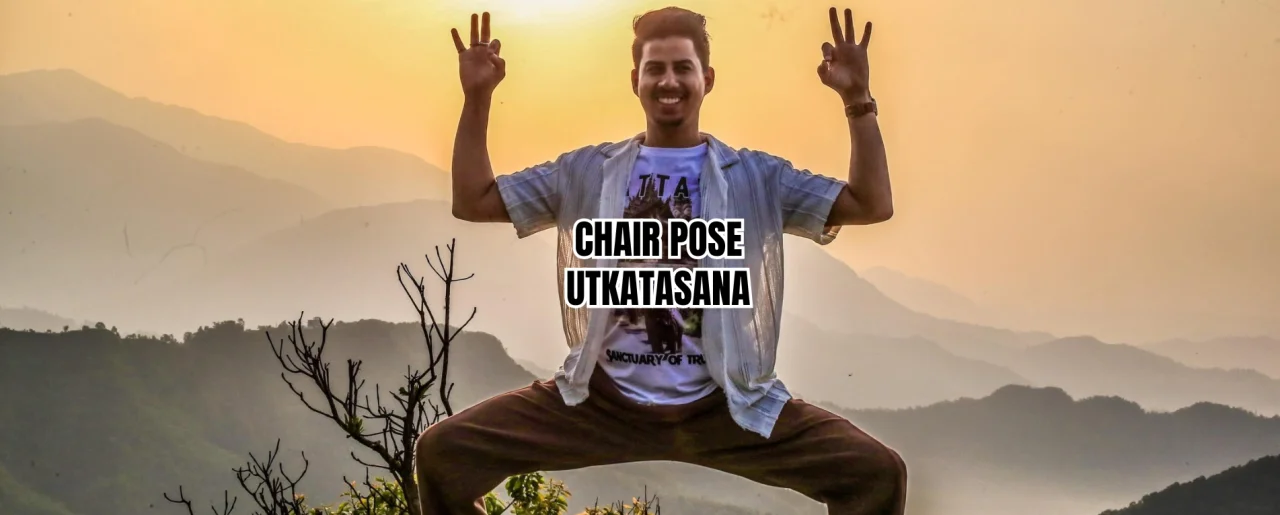
Chair Pose, also known as Utkatasana, is a powerful standing yoga posture that strengthens the legs, engages the core, and develops stability and balance. Although the pose looks simple, holding the body in a chair-like position requires strength, concentration, and proper alignment.
Utkatasana is commonly included in yoga sequences because it activates several major muscle groups at the same time. It can be practiced by beginners with suitable modifications and can also be developed into a challenging posture for experienced practitioners.
What Is Chair Pose (Utkatasana)?
The Sanskrit name Utkatasana comes from the words “utkata,” meaning powerful, fierce, or intense, and “asana,” meaning posture. In Chair Pose, the knees bend while the hips move backward, creating the appearance of sitting on an imaginary chair.
The posture requires strong engagement of the thighs, glutes, abdomen, and back while maintaining a stable and upright upper body.
How to Do Chair Pose Step by Step
- Stand upright with your feet together or approximately hip-width apart.
- Keep your spine long and relax your shoulders.
- Inhale and raise both arms overhead.
- Exhale and bend your knees while moving your hips backward, as if sitting on an imaginary chair.
- Keep your chest lifted and your spine extended.
- Shift your weight toward your heels while keeping the knees aligned with the feet.
- Keep your arms active and reach through the fingertips.
- Engage your abdominal muscles and maintain steady breathing.
- Hold the position for several breaths according to your ability.
- To release, straighten your legs and return to a comfortable standing position.
Chair Pose Alignment Tips
Correct alignment is important when practicing Utkatasana. Keep your knees tracking in the same direction as your toes rather than allowing them to collapse inward.
- Keep your weight balanced through the feet.
- Move the hips backward rather than pushing the knees excessively forward.
- Keep the chest open and avoid rounding the upper back.
- Relax the shoulders away from the ears.
- Keep the abdominal muscles gently engaged.
- Maintain a comfortable depth rather than forcing the knees or hips.
- Keep breathing smoothly throughout the posture.
Benefits of Chair Pose
Regular and appropriate practice of Chair Pose can provide several physical and mental benefits.
1. Strengthens the Legs
Utkatasana strongly engages the quadriceps, hamstrings, glutes, and calf muscles. This makes it a useful posture for developing lower-body strength.
2. Engages the Core
Maintaining an upright torso requires the abdominal and core muscles to remain active. This can help develop greater core stability during yoga practice.
3. Improves Balance and Stability
Chair Pose challenges the practitioner to maintain a stable position while the knees and hips are bent. With consistent practice, this can improve body awareness and postural control.
4. Builds Physical Endurance
Holding Utkatasana for several breaths can create muscular endurance in the legs and core. Gradually increasing the holding time can make the posture more challenging.
5. Develops Concentration
The intensity of Chair Pose encourages practitioners to coordinate breathing, alignment, and mental focus. This makes it useful for developing concentration during yoga practice.
Common Mistakes in Chair Pose
Some common alignment mistakes can reduce the effectiveness of Utkatasana or create unnecessary strain.
- Allowing the knees to move inward.
- Putting excessive weight toward the toes.
- Rounding the lower or upper back.
- Lifting the shoulders toward the ears.
- Holding the breath while maintaining the posture.
- Going deeper than your current mobility allows.
Chair Pose for Beginners
Beginners do not need to lower the hips deeply to practice Utkatasana. Start with a shallow bend in the knees and focus on maintaining good alignment and steady breathing.
You can also practice the posture with the back lightly supported against a wall. As your leg and core strength improves, gradually increase the duration and depth of the pose.
Chair Pose Variations
Supported Chair Pose
Practice Utkatasana with your back lightly supported by a wall. This can help beginners understand the sensation of moving the hips backward while keeping the torso upright.
Chair Pose with Prayer Hands
Bring the palms together in front of the chest instead of extending the arms overhead. This variation can make shoulder positioning easier while allowing you to focus on the lower body.
Revolved Chair Pose
Revolved Chair Pose adds a gentle spinal rotation to the basic posture. It requires additional balance, mobility, and concentration and is generally more suitable for practitioners who are comfortable with the basic pose.
Precautions and Contraindications
Practice Chair Pose within a comfortable range and avoid forcing the knees, hips, or lower back. People with existing joint or musculoskeletal concerns should consider guidance from a qualified yoga teacher or appropriate healthcare professional before practicing challenging variations.
If you experience sharp pain, dizziness, or unusual discomfort, come out of the posture and rest.
Chair Pose in Yoga Teacher Training
Utkatasana is a useful posture to study during yoga teacher training because it teaches important principles of standing-posture alignment, muscular engagement, breathing, and sequencing.
If you are interested in developing your yoga knowledge and teaching skills, explore Nepal Yoga Teacher Training to learn more about yoga education and training opportunities in Nepal.
For practitioners looking for an advanced and immersive learning experience, a 500 Hour Yoga Teacher Training in Nepal can provide an opportunity to study yoga asana, alignment, pranayama, meditation, anatomy, teaching methodology, and related yogic practices in greater depth.
Conclusion
Chair Pose or Utkatasana is a dynamic standing posture that combines strength, stability, balance, and concentration. Practicing it with correct alignment and controlled breathing can make it an effective addition to a yoga sequence.
Rather than focusing only on how deeply you can bend your knees, prioritize stable feet, an engaged core, a long spine, and comfortable breathing. With consistent practice, Utkatasana can become a strong foundation for exploring more challenging standing and balancing postures.