Sound healing is an ancient wellness practice that uses therapeutic sounds, vibrations, and musical instruments to encourage relaxation, mindfulness, and emotional balance. From Tibetan singing bowls and crystal bowls to gongs, tuning forks, and chimes, sound healing has become an increasingly popular part of holistic wellness, yoga, meditation, and spiritual practices.
If you are passionate about helping people relax, exploring holistic therapies, or building a career in the wellness industry, becoming a sound healer can be an interesting and rewarding path. However, learning this practice requires more than simply playing singing bowls. You need to understand sound frequencies, vibration techniques, meditation, energy awareness, and how to conduct safe and meaningful sound healing sessions.
In this guide, we will explain how to become a sound healer, what training you need, which instruments to learn, how certification works, and how you can start your own sound healing practice.
What Is Sound Healing?
Sound healing is a complementary wellness practice that uses sound vibrations and frequencies to create a relaxing environment for the mind and body. Practitioners use different instruments to produce rhythmic tones and soothing sounds that may support relaxation, meditation, and stress management.
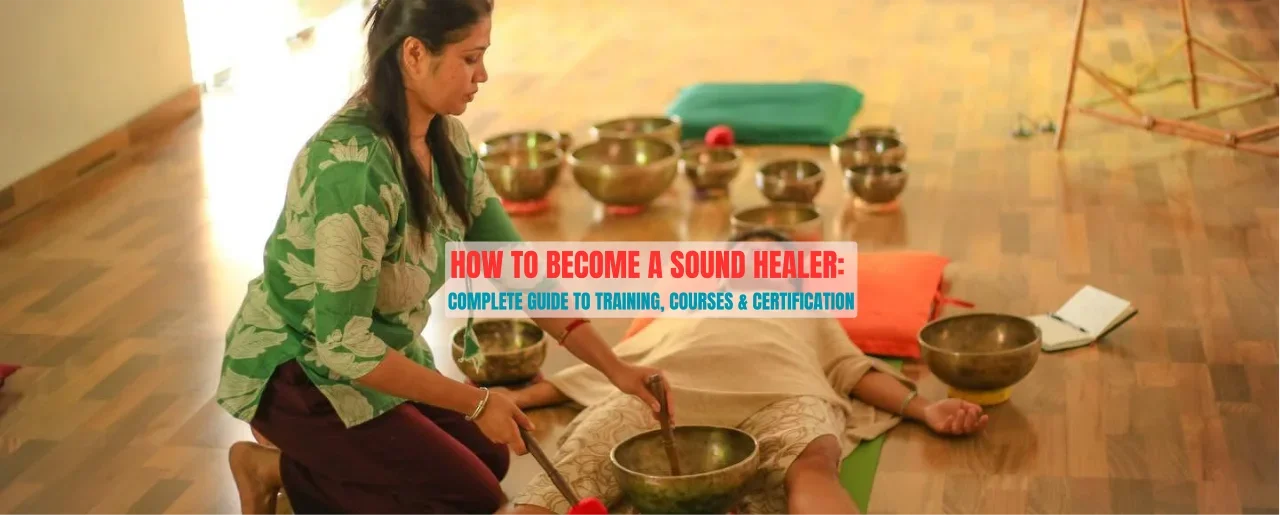
During a typical sound healing session, participants may sit comfortably or lie down while the practitioner plays instruments such as Tibetan singing bowls, crystal singing bowls, gongs, and other sound-producing tools.
The experience is often combined with breathing exercises, mindfulness, meditation, and guided relaxation.
Common Instruments Used in Sound Healing
- Tibetan Singing Bowls: Traditional metal bowls that produce resonant sounds when struck or played with a wooden mallet.
- Crystal Singing Bowls: Instruments made from quartz crystal that create clear, sustained tones.
- Gongs: Large percussion instruments used to produce rich, layered vibrations during sound baths.
- Tuning Forks: Metal instruments that generate specific tones and are sometimes used in sound-based relaxation practices.
- Koshi Chimes: Wind chimes that create gentle melodic sounds during meditation and relaxation sessions.
- Ocean Drums: Instruments that produce wave-like sounds and can enhance relaxation experiences.
Why Become a Sound Healer?
Interest in holistic wellness, mindfulness, meditation, and alternative relaxation practices has created opportunities for people who want to explore sound healing professionally or personally.
Becoming a sound healer can allow you to combine creativity, mindfulness, music, and traditional wellness practices in a meaningful way.
Benefits of Learning Sound Healing
- Personal Growth: Develop a deeper understanding of mindfulness, meditation, and relaxation techniques.
- Professional Development: Add sound healing techniques to your existing yoga, meditation, or wellness practice.
- Stress Management Skills: Learn how to facilitate relaxing sound experiences for individuals and groups.
- Creative Expression: Explore different instruments, rhythms, tones, and sound combinations.
- Wellness Career Opportunities: Work with yoga studios, meditation centres, wellness retreats, and holistic wellness communities.
- Personal Wellness: Incorporate sound meditation into your own daily mindfulness routine.
How to Become a Sound Healer: Step-by-Step Guide
If you are wondering how to become a professional sound healer, the best approach is to develop a strong foundation in sound healing techniques, gain practical experience, and learn how to conduct sessions responsibly.
Step 1: Understand the Basics of Sound Healing
Start by learning what sound healing involves and how different instruments create vibrations and tones. Understand the relationship between sound, listening, breathing, mindfulness, and relaxation.
Some important topics to explore include:
- Introduction to sound healing and its traditional roots.
- Basic sound and vibration concepts.
- Introduction to frequencies, tones, and resonance.
- The role of sound in meditation and mindfulness.
- Basic understanding of the seven chakra system as used in certain traditional wellness practices.
- Ethical responsibilities and limitations of sound healing.
Step 2: Learn to Play Sound Healing Instruments
Practical instrument training is an essential part of becoming a sound healer. You should learn how to select, handle, and play different instruments correctly.
Start with Tibetan singing bowls because they are widely used in individual sound sessions, group sound baths, and meditation practices.
During training, you should learn:
- How to hold and position singing bowls.
- Different techniques for striking and rubbing the bowls.
- How to create continuous and balanced sounds.
- How to work with multiple singing bowls.
- How to use gongs and crystal bowls.
- How to combine different instruments during a sound bath.
Step 3: Enrol in a Professional Sound Healing Course
Although you can explore sound healing independently, enrolling in a structured training programme can help you develop practical skills under experienced guidance.
A good sound healing course should combine theoretical knowledge, instrument practice, guided meditation, session planning, and practical experience.
Before choosing a course, check whether it covers:
- Fundamentals of sound healing.
- Tibetan and crystal singing bowl techniques.
- Sound bath facilitation.
- Chakra-based sound practices.
- Breathing and relaxation techniques.
- Individual and group session planning.
- Client safety and professional ethics.
- Supervised practical sessions.
Step 4: Practise Conducting Sound Healing Sessions
Practical experience is essential for developing confidence. Start by practising with friends, family members, or fellow students in a comfortable environment.
Learn how to create a peaceful atmosphere, introduce the session, explain the instruments, guide participants through relaxation, and gradually bring the experience to a close.
With regular practice, you can improve your instrument techniques, sound combinations, timing, and ability to facilitate group sessions.
Step 5: Obtain a Sound Healing Certification
After completing a structured training programme, you may receive a certificate from the training provider. Certification requirements differ between schools and training organisations, so it is important to understand what a particular certificate represents.
When selecting a certification programme, consider:
- The school's experience and reputation.
- Qualifications and practical experience of instructors.
- Course curriculum and training hours.
- Practical assessments and supervised experience.
- Certification requirements and recognition.
- Opportunities for further learning and professional development.
Remember that sound healing certification is not a universal medical or healthcare licence. A certificate demonstrates completion of a particular training programme and should not be presented as a qualification to diagnose or treat medical conditions.
What Do You Learn in a Sound Healing Training Course?
A comprehensive sound healing training programme should provide a balance of theoretical knowledge and practical experience. The exact syllabus varies depending on the school and course level.
1. Introduction to Sound and Vibration
Understand the basic principles of sound, vibration, resonance, and frequencies. Explore how different instruments produce unique sounds and how they are used in meditation and relaxation practices.
2. Tibetan Singing Bowl Training
Learn traditional singing bowl techniques, including striking, circular rubbing, tone production, and creating harmonious sound sequences.
3. Crystal Singing Bowl Techniques
Explore the use of crystal singing bowls, their tonal qualities, playing techniques, and their role in guided sound meditation.
4. Chakra Sound Meditation
Explore the traditional seven-chakra framework and how sound, meditation, and focused attention are incorporated into chakra-based wellness practices.
5. Sound Bath Facilitation
Learn how to organise and conduct group sound bath sessions. This includes preparing the space, choosing instruments, creating sound sequences, and guiding participants through a relaxing experience.
6. Professional Ethics and Safety
Understand participant consent, sound sensitivity, appropriate sound levels, personal boundaries, and the importance of adapting sessions to individual comfort. Learn when to recommend that participants consult qualified healthcare professionals.
How Long Does It Take to Become a Sound Healer?
The time required to become a sound healer depends on the training programme, the number of instruments you want to learn, and your practical experience.
Some introductory workshops can be completed in a few days, while comprehensive professional training programmes may require several weeks or longer.
There is no single internationally recognised duration or universal certification standard for becoming a sound healer.
Where Can You Learn Sound Healing?
Choosing the right learning environment can make a significant difference to your experience. Look for a school that provides practical instrument training, experienced instructors, a peaceful learning environment, and opportunities to practise conducting sessions.
Popular learning destinations include India, Nepal, Bali, Thailand, and other wellness-focused locations.
Why Choose Nepal for Sound Healing Training?
Nepal has a long-standing connection with meditation, yoga, Buddhist traditions, singing bowls, and Himalayan wellness practices. Its peaceful mountain surroundings and spiritual atmosphere make it an appealing destination for people interested in holistic learning.
Pokhara, in particular, offers a relaxing environment surrounded by the Annapurna mountain range, beautiful lakes, and a vibrant yoga and wellness community.
For international students, learning in Nepal can also provide an opportunity to explore traditional Himalayan culture while developing a personal mindfulness and meditation practice.
Career Opportunities After Sound Healing Certification
After completing suitable training and gaining practical experience, you can explore several opportunities in the wellness industry.
- Independent Sound Healing Practitioner: Offer individual sound relaxation and meditation sessions.
- Sound Bath Facilitator: Organise group sound meditation experiences.
- Yoga Studio Instructor: Incorporate sound meditation into yoga and mindfulness classes.
- Wellness Retreat Facilitator: Conduct sound-based relaxation activities at wellness retreats.
- Meditation Centre Instructor: Introduce singing bowl practices into meditation programmes.
- Online Wellness Educator: Share introductory sound meditation techniques through online workshops and educational content.
- Private Wellness Sessions: Offer personalised relaxation experiences within your professional scope.
What Instruments Do You Need to Start a Sound Healing Practice?
You do not need to purchase every sound healing instrument immediately. Beginners can start with a small collection and gradually expand as their skills and experience develop.
- One or two Tibetan singing bowls.
- Suitable wooden mallets and bowl cushions.
- One crystal singing bowl.
- A small gong or meditation chime.
- A comfortable yoga mat or meditation space.
- Optional tuning forks and other sound instruments.
Focus on learning how to use each instrument effectively rather than buying a large collection without sufficient practice.
Sound Healing vs. Music Therapy: What Is the Difference?
Sound healing and music therapy both involve sound, but they are not the same professional discipline.
Sound healing generally refers to complementary wellness practices involving singing bowls, gongs, chimes, and other instruments to encourage relaxation and meditation.
Music therapy is a recognised healthcare-related profession in many countries, involving structured therapeutic interventions delivered by appropriately trained and qualified music therapists.
If your goal is to work in a clinical healthcare setting, you should investigate the relevant professional qualifications and regulations in your country.
Tips for Choosing the Best Sound Healing Training Course
With different workshops and certification programmes available, selecting the right course requires careful research.
- Choose a training provider with relevant teaching experience.
- Review the complete course syllabus before enrolling.
- Check how much practical instrument training is included.
- Ask whether students receive supervised practice.
- Understand the certification process and its limitations.
- Look for small class sizes and individual instructor guidance.
- Read genuine student reviews and testimonials.
- Confirm the total course fee, accommodation, and other expenses.
Final Thoughts: Start Your Journey as a Sound Healer
Becoming a sound healer is a journey of learning, listening, practising, and developing an understanding of sound-based relaxation techniques. Whether you want to explore singing bowls for personal growth or add sound healing to your existing yoga and wellness profession, proper training can help you build a strong foundation.
Start with the basics, learn to play traditional instruments, enrol in a structured course, and gain practical experience before conducting independent sessions. Most importantly, approach sound healing with curiosity, responsibility, and respect for individual needs.
With consistent practice and the right guidance, you can explore the world of sound meditation and become part of the growing holistic wellness community.