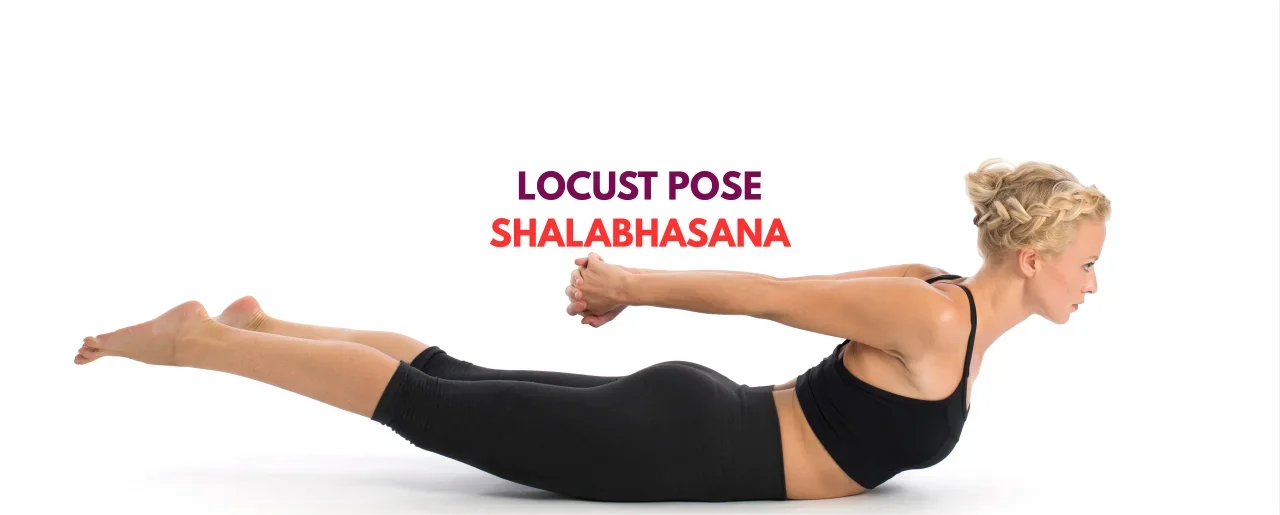
Locust Pose, also known as Shalabhasana, is a traditional yoga backbend that strengthens the back body while encouraging spinal extension. In this posture, the practitioner lies on the abdomen and lifts the legs, chest, and arms away from the floor, creating a strong and active full-body shape.
The Sanskrit name Shalabhasana comes from the word Shalabha, meaning "locust" or "grasshopper." The posture resembles the extended body of a locust and is commonly included in Hatha Yoga and other traditional yoga practices.
What Is Locust Pose?
Locust Pose is a prone yoga posture that focuses on strengthening the muscles of the back, hips, legs, and shoulders. Unlike supported backbends, Shalabhasana requires the practitioner to actively lift parts of the body away from the floor.
The pose can be practiced in several variations. Beginners may start by lifting only the legs or upper body before progressing to a fuller expression of the posture.
How to Do Locust Pose Step by Step
-
Lie on your stomach:
Begin by lying face down on your yoga mat. Extend both legs behind you and keep the tops of your feet resting on the floor.
-
Position your arms:
Extend your arms behind you with the palms facing inward or downward, depending on your variation. You can also keep the arms alongside the body.
-
Prepare your body:
Keep your legs active and gently engage your abdominal muscles. Lengthen through the crown of your head and through your legs.
-
Lift the chest:
Inhale and gently lift your head, chest, and upper torso away from the floor. Avoid compressing the lower back.
-
Lift the legs:
Engage your glutes and the muscles of your legs and gradually lift your legs from the floor. Keep the legs long rather than simply bending the knees.
-
Lift the arms:
If practicing the full variation, lift your arms away from the floor and extend them backward. Keep your shoulders relaxed and avoid straining the neck.
-
Maintain steady breathing:
Stay in the posture for a few comfortable breaths. Keep the breath smooth and controlled.
-
Release slowly:
Exhale and gently lower your chest, arms, and legs back to the mat. Rest for a few breaths before repeating.
Benefits of Locust Pose
When practiced with appropriate alignment and without forcing the body, Shalabhasana can become a valuable part of a balanced yoga practice.
1. Strengthens the Back
Locust Pose actively engages the muscles surrounding the spine. Regular, appropriate practice can help develop awareness and strength in the back body.
2. Strengthens the Legs and Glutes
Lifting the legs requires active engagement of the gluteal and leg muscles. This makes Shalabhasana a useful strengthening posture for the posterior chain.
3. Encourages Spinal Extension
The lifting action creates an active backbend and helps practitioners become familiar with controlled spinal extension.
4. Opens the Chest and Shoulders
Depending on the variation, extending the arms backward can encourage opening through the chest and shoulders.
5. Develops Core Awareness
Engaging the abdomen while maintaining a stable pelvis can help practitioners develop better awareness of core support during backbending movements.
6. Improves Body Awareness
Because multiple areas of the body work together in Shalabhasana, the posture encourages concentration, coordination, and mindful movement.
Locust Pose Alignment Tips
Good alignment is more important than lifting the body as high as possible. Keep these points in mind while practicing:
- Keep the legs active and extended.
- Avoid squeezing the buttocks excessively.
- Lengthen the spine before lifting higher.
- Keep the neck long and avoid looking too far upward.
- Keep the shoulders away from the ears.
- Engage the abdominal muscles gently for support.
- Avoid forcing the lower back into excessive extension.
- Continue breathing naturally throughout the posture.
Common Mistakes in Shalabhasana
Locust Pose can become challenging when practitioners focus only on lifting higher. Some common mistakes include:
- Overarching the lower back: Focus on lengthening the spine instead of forcing the chest or legs upward.
- Holding the breath: Maintain smooth and steady breathing.
- Straining the neck: Keep the head in a comfortable position and avoid looking excessively upward.
- Using momentum: Lift and lower the body slowly and with control.
- Lifting too high: A smaller, controlled movement is often more beneficial than forcing the full pose.
- Relaxing the legs: Keep the legs active and lengthened.
Beginner Variation of Locust Pose
Beginners do not need to immediately attempt the full expression of Shalabhasana. Start with a simpler variation to develop strength and body awareness.
Half Locust Pose
Lie on your stomach and keep your upper body relaxed on the mat. Lift one leg at a time while keeping the pelvis grounded as much as possible. Lower the leg slowly and repeat on the opposite side.
This variation allows beginners to understand the movement before progressing to lifting both legs together.
Upper-Body Locust Variation
Another option is to keep the legs grounded while lifting the chest and arms. This variation emphasizes the upper back and shoulder region without requiring a full-body lift.
Locust Pose vs. Sphinx Pose
Locust Pose and Sphinx Pose are both prone yoga postures, but they have different levels of muscular engagement and movement.
| Feature | Locust Pose | Sphinx Pose |
|---|---|---|
| Sanskrit Name | Shalabhasana | Salamba Bhujangasana |
| Position | Prone | Prone |
| Arm Support | Arms may lift away from the floor | Forearms remain grounded |
| Legs | Actively lifted in many variations | Generally remain grounded |
| Intensity | Moderate to challenging | Generally gentler |
| Main Focus | Back-body strength and spinal extension | Supported spinal extension |
How Long Should You Hold Locust Pose?
Beginners can start with a short hold of approximately 3 to 5 comfortable breaths. The duration can gradually increase as strength and control develop.
Instead of focusing on holding the pose for a long time, prioritize controlled movement, proper alignment, and steady breathing.
Breathing in Locust Pose
Breathing plays an important role in maintaining awareness during Shalabhasana. Generally, practitioners can inhale while preparing and lifting into the posture and continue with slow, controlled breaths while holding it.
Avoid holding your breath or forcing the breathing pattern. If breathing becomes difficult, reduce the intensity of the posture or release it.
When Should You Avoid Locust Pose?
Locust Pose is a physically demanding backbend and may not be appropriate for everyone. Avoid or modify the posture if it causes pain or discomfort.
Extra caution may be required for people with:
- Acute or significant back pain
- Recent spinal or abdominal surgery
- Shoulder or neck injuries
- Serious hip or leg injuries
- Conditions that worsen with spinal extension
- Pregnancy, particularly during later stages
If you have a medical condition or injury, consult an appropriate healthcare professional before beginning or modifying your yoga practice.
Locust Pose in a Yoga Sequence
Shalabhasana can be included in a back-strengthening yoga sequence. A gentle sequence may include:
- Cat-Cow Pose
- Makarasana (Crocodile Pose)
- Sphinx Pose
- Locust Pose
- Bhujangasana (Cobra Pose)
- Balasana (Child's Pose)
- Gentle breathing or meditation
Always allow your practice to match your current strength and mobility rather than attempting advanced variations before your body is prepared.
How to Progress in Locust Pose
A gradual approach can make Shalabhasana more accessible. Start with individual movements before combining them into the complete posture.
- Practice lifting one leg at a time.
- Practice lifting the chest while keeping the legs grounded.
- Practice lifting both legs with the upper body grounded.
- Combine the upper and lower body movements.
- Gradually increase the duration while maintaining controlled breathing.
Progress should be based on strength, stability, comfort, and control rather than simply achieving a higher lift.
Learn Yoga Beyond Individual Asanas
Yoga is more than learning individual postures. A comprehensive yoga practice can include asana, pranayama, meditation, anatomy, yoga philosophy, alignment, and teaching methodology.
If you want to develop your understanding of traditional yoga in a structured environment, explore nepal yoga teacher training and deepen your knowledge of yoga practice and teaching.
Conclusion
Locust Pose (Shalabhasana) is a powerful yet adaptable yoga posture that develops strength in the back body while encouraging controlled spinal extension. With proper alignment, steady breathing, and gradual progression, it can become a valuable part of a well-rounded yoga practice.
Rather than trying to lift as high as possible, focus on creating length through the spine, keeping the movement controlled, and maintaining awareness of your breath. Consistent and mindful practice is more important than achieving the most advanced version of the pose.