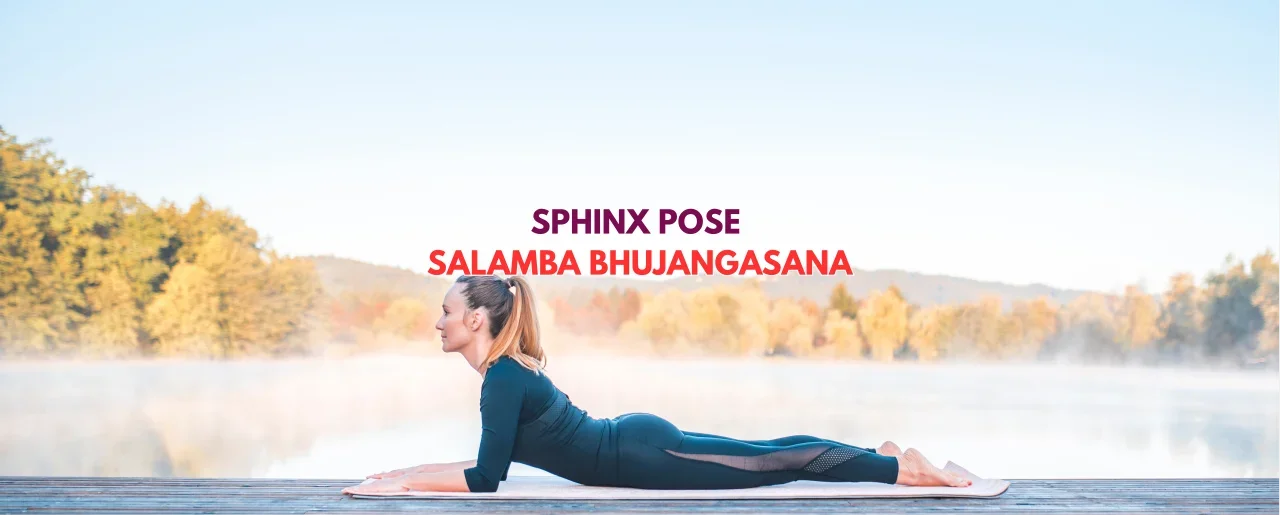
Sphinx Pose, traditionally known as Salamba Bhujangasana, is a gentle supported backbend that helps practitioners explore spinal extension while keeping the forearms grounded for stability. It is often considered a beginner-friendly yoga posture and can be included in Hatha, restorative, and gentle yoga practices.
The posture gets its English name from the way the upper body resembles a sphinx. Unlike deeper backbends, Sphinx Pose does not require the arms to straighten completely, making it a useful posture for developing awareness of the spine, shoulders, chest, and breath.
What Is Sphinx Pose?
Sphinx Pose is a prone yoga posture performed while lying on the abdomen. The practitioner places the forearms on the floor and gently lifts the chest while keeping the lower body grounded.
The Sanskrit name Salamba Bhujangasana combines the ideas of being supported and the cobra-like shape of the posture. The forearms provide support while the spine moves gently into extension.
For beginners, Sphinx Pose can be a comfortable introduction to backbending before progressing to postures such as Cobra Pose or other more demanding spinal extension practices.
How to Do Sphinx Pose Step by Step
-
Lie on your stomach:
Begin by lying face down on your yoga mat. Extend your legs comfortably behind you and allow the tops of your feet to rest on the mat.
-
Place your forearms on the mat:
Bring your forearms forward and place your elbows underneath or slightly ahead of your shoulders. Keep your forearms comfortably parallel.
-
Lift the chest:
Take a slow breath in and gently press your forearms into the floor. Allow your chest to rise naturally without forcing your lower back.
-
Relax your shoulders:
Move your shoulders away from your ears and keep the neck long. Maintain a comfortable gaze rather than dropping the head backward.
-
Lengthen the spine:
Imagine extending the crown of your head forward while gently moving the chest upward. Focus on creating length rather than trying to achieve maximum height.
-
Breathe slowly:
Stay in the posture for several comfortable breaths. Keep your breathing smooth and avoid holding your breath.
-
Release gently:
When you are ready, slowly lower your chest and head toward the mat and rest for a few moments.
Benefits of Sphinx Pose
When practiced with proper alignment and without forcing the body, Sphinx Pose can provide several physical and mindful benefits.
1. Gently Strengthens the Back
Sphinx Pose engages muscles around the spine while the forearms provide support. It can help beginners develop awareness of spinal extension.
2. Opens the Chest and Shoulders
The gentle lifting action creates space across the chest and front of the shoulders. This can be useful in a yoga practice that balances prolonged sitting and rounded-shoulder positions.
3. Encourages Spinal Mobility
The posture introduces controlled spinal extension and can help practitioners become more familiar with gentle backbending movements.
4. Stretches the Front Body
Sphinx Pose can create a gentle lengthening sensation through the front of the body, including the abdomen and chest.
5. Develops Postural Awareness
The posture encourages practitioners to pay attention to the relationship between the shoulders, upper back, pelvis, and neck.
6. Supports a Calm Yoga Practice
Because the forearms remain connected to the floor, Sphinx Pose can provide a grounded and stable experience. It can be incorporated into slower and mindful yoga sequences.
Sphinx Pose Alignment Tips
Correct alignment is more important than trying to lift the chest as high as possible. Keep these points in mind while practicing:
- Keep your elbows comfortably underneath or slightly ahead of your shoulders.
- Keep your shoulders away from your ears.
- Maintain a long and relaxed neck.
- Avoid throwing your head backward.
- Keep your legs extended comfortably behind you.
- Do not force the lower back into a deep arch.
- Keep your breathing slow and natural.
- Stop if you experience sharp, pinching, or worsening pain.
Common Mistakes in Sphinx Pose
Although Sphinx Pose looks simple, beginners can sometimes create unnecessary tension by trying to achieve a deeper backbend.
- Lifting the chest too high: This can create excessive compression in the lower back.
- Shrugging the shoulders: Keep the shoulders relaxed and away from the ears.
- Moving the elbows too far apart: Maintain a comfortable and stable forearm position.
- Overextending the neck: Keep the head and neck in a comfortable position.
- Holding the breath: Continue breathing naturally throughout the posture.
- Ignoring pain: Yoga should not require you to push through sharp or intense pain.
Sphinx Pose vs. Cobra Pose
Sphinx Pose and Cobra Pose are related backbending postures, but they have important differences.
| Feature | Sphinx Pose | Cobra Pose |
|---|---|---|
| Sanskrit Name | Salamba Bhujangasana | Bhujangasana |
| Arm Position | Forearms remain on the floor | Hands remain on the floor |
| Intensity | Generally gentler | Can be more demanding |
| Wrist Loading | Lower | Greater |
| Primary Focus | Supported spinal extension | Active backbend |
Who Can Practice Sphinx Pose?
Sphinx Pose is commonly included in beginner-level yoga practices because the forearms provide support and the posture does not require the deeper range of motion found in some advanced backbends.
However, every body is different. People with existing back, neck, shoulder, rib, or abdominal problems should modify the posture appropriately and seek professional guidance when necessary.
When Should You Avoid Sphinx Pose?
Do not force Sphinx Pose if it causes pain or discomfort. People with certain injuries or medical conditions may need to avoid or modify this posture.
Extra caution may be required if you have:
- An acute or significant back injury
- A neck injury or condition
- A shoulder or arm injury
- A rib injury
- Recent abdominal surgery
- A condition that becomes worse with spinal extension
- Pregnancy, particularly during later stages
If you are unsure whether Sphinx Pose is appropriate for you, consult a qualified healthcare professional or experienced yoga teacher.
How Long Should You Hold Sphinx Pose?
Beginners can start with approximately 3 to 5 comfortable breaths. As your body becomes familiar with the posture, you may gradually increase the duration if it remains comfortable.
The goal is not to stay in the posture for as long as possible. Focus instead on steady breathing, relaxed shoulders, comfortable spinal extension, and mindful awareness.
Sphinx Pose in a Yoga Sequence
Sphinx Pose can be incorporated into a gentle backbending sequence. A simple sequence may include:
- Makarasana (Crocodile Pose)
- Sphinx Pose
- Bhujangasana (Cobra Pose)
- Balasana (Child's Pose)
- Gentle breathing or meditation
Practicing the posture within a balanced sequence can help you explore spinal extension while giving the body opportunities to relax between movements.
Sphinx Pose for Beginners
If you are new to yoga, do not focus on copying the exact shape shown in a photograph. Your ideal Sphinx Pose will depend on your individual anatomy, mobility, strength, and previous experience.
Start with a comfortable position for your elbows and forearms. Keep the movement gentle, breathe naturally, and gradually develop awareness of how your spine responds to the posture.
Learn More Than Individual Yoga Poses
Yoga is more than learning individual asanas. A well-rounded yoga education can include asana, pranayama, meditation, anatomy, yoga philosophy, alignment, and teaching methodology.
If you want to develop your knowledge of yoga systematically, explore nepal yoga teacher training and learn how traditional yoga practices can be studied in a structured environment.
Conclusion
Sphinx Pose (Salamba Bhujangasana) is a simple yet valuable yoga posture for exploring gentle backbending, chest opening, spinal awareness, and mindful breathing. Its supported position makes it an accessible option for many beginners and a useful component of a balanced yoga sequence.
Practice the pose with patience rather than force. The quality of your breathing, alignment, and body awareness is more important than how high you can lift your chest.