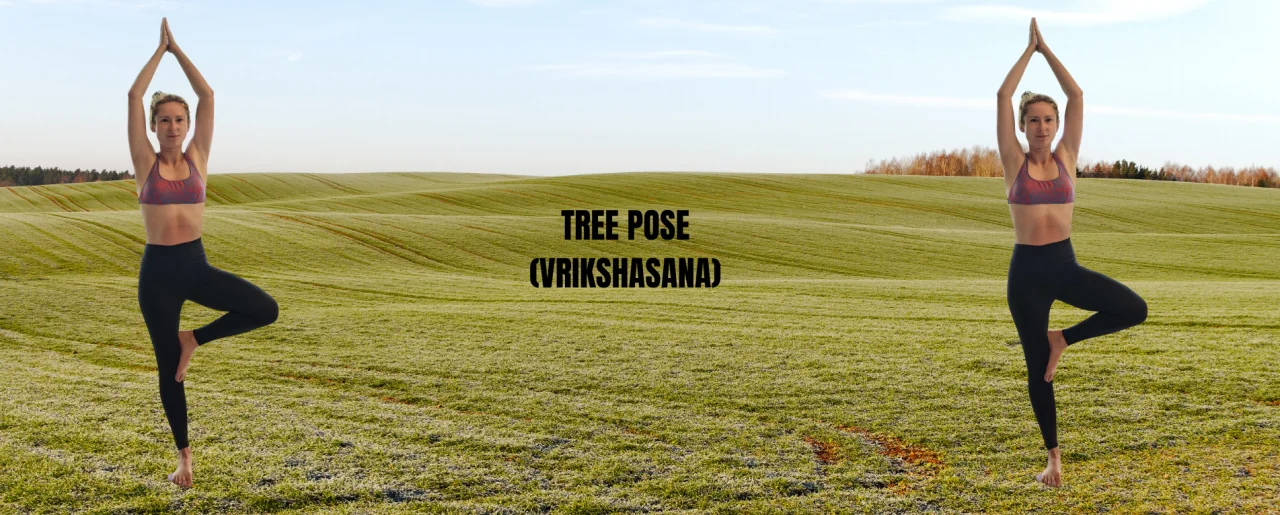
Tree Pose, known in Sanskrit as Vrikshasana, is a foundational standing yoga posture that develops balance, concentration, stability, and body awareness. In this pose, the practitioner stands on one leg while placing the opposite foot against the standing leg and bringing the hands together above the head.
Although Vrikshasana looks simple, it teaches an important principle of yoga: stability comes from creating balance between strength, flexibility, breathing, and mental focus.
For beginners and experienced practitioners alike, Tree Pose can be an effective way to improve balance while developing greater awareness of posture and movement.
What Is Tree Pose (Vrikshasana)?
Vrikshasana is a standing balance posture inspired by the stability of a tree. The Sanskrit word Vriksha means tree, while Asana means pose or posture.
In the traditional form of Tree Pose, one foot remains firmly grounded while the other leg bends and the foot rests against the inner standing leg. The arms can be raised overhead with the palms together.
Tree Pose primarily challenges:
- Balance and coordination
- Leg strength
- Core stability
- Hip mobility
- Ankle stability
- Postural awareness
- Concentration
- Breath control
Because of its combination of physical and mental elements, Vrikshasana is commonly included in beginner and intermediate yoga sequences.
How to Do Tree Pose Step by Step
Follow these steps to practice Vrikshasana with control.
Step 1: Start in Mountain Pose
Stand upright with your feet together or comfortably separated. Keep your spine tall, shoulders relaxed, and arms beside your body.
Take a few slow breaths and establish your balance.
Step 2: Shift Your Weight
Gradually transfer your body weight onto your left foot. Keep the standing leg active without locking the knee.
Step 3: Bend the Opposite Knee
Bend your right knee and bring the right foot toward the inner left leg.
Depending on your flexibility and balance, the foot can be placed against the inner calf or inner thigh.
Avoid placing the foot directly against the side of the knee joint.
Step 4: Find Your Balance
Focus your eyes on one stable point in front of you. This is sometimes called a drishti, or focused gaze.
Keep the standing foot grounded and engage the core.
Step 5: Bring the Hands Together
Once stable, bring your palms together in front of your chest.
If comfortable, gradually raise both arms overhead while keeping the shoulders relaxed.
Step 6: Breathe and Hold
Maintain slow, controlled breathing while holding the posture for a comfortable amount of time.
Then slowly lower the arms, release the raised foot, and repeat on the opposite side.
Benefits of Tree Pose
Regular practice of Vrikshasana can support several aspects of physical yoga practice.
1. Improves Balance
Tree Pose challenges the body to maintain stability while standing on one leg. With consistent practice, it can help develop better balance and coordination.
2. Strengthens the Legs
The standing leg works continuously to stabilize the body. The calves, thighs, ankles, and supporting muscles all contribute to the posture.
3. Develops Core Stability
Maintaining an upright torso while balancing on one foot requires engagement of the body's core muscles.
4. Improves Concentration
Vrikshasana requires the practitioner to maintain a steady gaze and controlled breathing. This makes it useful for developing focus and body awareness.
5. Encourages Better Posture
The pose encourages an elongated spine, open chest, and conscious alignment of the body.
6. Supports Hip Mobility
The bent leg moves outward from the hip, which can help practitioners explore hip mobility within an appropriate range of motion.
7. Builds Mind-Body Awareness
Because small changes in weight distribution can affect balance, Tree Pose encourages practitioners to become more aware of how their body moves and stabilizes.
Tree Pose for Beginners
Vrikshasana is generally accessible to beginners, but balancing on one leg can initially feel challenging.
If you have difficulty maintaining balance, try practicing near a wall or another stable support. You can also keep the raised foot lower on the standing leg rather than immediately placing it against the inner thigh.
The objective is not to create a perfect shape. Instead, focus on steady breathing, stable alignment, and gradual improvement.
Common Mistakes in Vrikshasana
Avoiding common alignment mistakes can make Tree Pose more stable and comfortable.
Placing the Foot on the Knee
Do not press the raised foot directly against the side of the knee. Place it above or below the knee instead.
Locking the Standing Knee
Keep the standing leg active but avoid aggressively locking the knee.
Losing the Grounding Foot
Try to distribute pressure through the standing foot rather than allowing the ankle to collapse inward or outward.
Holding the Breath
Balance becomes more difficult when breathing becomes tense. Maintain slow and natural breathing throughout the posture.
Looking Around
Constantly moving the gaze can make balancing harder. Choose one stable point to focus on.
Forcing the Hips Open
The raised knee can move outward naturally, but do not force the hip into a deeper position.
Tree Pose and Breathing
Breathing plays an important role in maintaining balance.
A slow inhalation can help create a sense of length through the spine, while a controlled exhalation can encourage relaxation and stability.
Instead of holding your breath while trying to balance, maintain a steady breathing rhythm throughout the posture.
How Long Should You Hold Tree Pose?
There is no single ideal duration for every practitioner.
Beginners can start by holding the pose for approximately 15–30 seconds on each side, depending on their ability and comfort. With practice, the duration can gradually increase.
Quality of alignment and controlled breathing are more important than simply holding the posture for a longer time.
Preparatory Poses for Vrikshasana
If you are new to standing balance poses, several simple postures and movements can help prepare the body.
- Tadasana (Mountain Pose)
- Trikonasana (Triangle Pose)
- Virabhadrasana I (Warrior I)
- Virabhadrasana II (Warrior II)
- Standing leg-strengthening exercises
- Ankle mobility movements
- Gentle hip-opening exercises
These preparations can help develop the stability and mobility needed for Tree Pose.
Tree Pose in a Yoga Teacher Training Program
Vrikshasana is more than a balance exercise when studied as part of a structured yoga education program.
During Yoga Teacher Training in Nepal, students can explore standing asanas from multiple perspectives, including alignment, anatomy, breathing, sequencing, modifications, and teaching methodology.
For students looking for a comprehensive foundation in yoga practice and teaching, a 200 Hour Yoga Teacher Training in Nepal can provide structured learning across asana, pranayama, meditation, yoga philosophy, anatomy, and teaching techniques.
Studying postures such as Vrikshasana in this broader context helps students understand not only how to perform an asana, but also how to explain it, modify it, sequence it, and teach it appropriately to different practitioners.
Why Vrikshasana Is Important for Yoga Teachers
A yoga teacher needs to understand the purpose and mechanics of an asana rather than simply demonstrate its appearance.
Tree Pose provides opportunities to study:
Alignment
Teachers can observe the standing foot, knee, hips, spine, shoulders, and head to help students develop a stable posture.
Balance
Students learn how visual focus, breathing, foot placement, and core engagement influence balance.
Modifications
A teacher can provide variations using a wall, lower foot placement, or other supportive options for beginners.
Sequencing
Vrikshasana can be incorporated into standing sequences and balance-focused yoga classes.
Teaching Cues
Clear instructions such as grounding the standing foot, lengthening the spine, maintaining a steady gaze, and breathing naturally can make the posture easier to understand.
Precautions for Tree Pose
Tree Pose is generally a moderate balance posture, but practitioners should avoid forcing the position.
Use additional caution if you have current problems affecting the ankles, knees, hips, or balance. Practicing near a wall can provide additional support.
If balancing becomes uncomfortable or painful, release the posture and choose an appropriate modification.
Frequently Asked Questions About Tree Pose
What is Tree Pose called in Sanskrit?
Tree Pose is called Vrikshasana, derived from the Sanskrit word Vriksha, meaning tree.
What are the main benefits of Vrikshasana?
The main benefits include improved balance, leg strength, core stability, concentration, coordination, and postural awareness.
Is Tree Pose good for beginners?
Yes. Vrikshasana can be adapted for beginners by using a wall for support or placing the raised foot lower on the standing leg.
Where should the foot be placed in Tree Pose?
The raised foot can be placed against the inner calf or inner thigh. Avoid placing it directly against the knee joint.
How long should I hold Vrikshasana?
Beginners can start with around 15–30 seconds per side and gradually increase the duration as balance and comfort improve.
Does Tree Pose improve concentration?
Tree Pose requires a steady gaze, controlled breathing, and continuous balance adjustments, making it a useful posture for developing concentration and body awareness.
Can I learn Vrikshasana during yoga teacher training?
Yes. Vrikshasana can be studied as part of a broader yoga teacher training curriculum, including alignment, anatomy, modifications, sequencing, and teaching methodology.
Final Thoughts
Tree Pose (Vrikshasana) demonstrates that yoga is not only about flexibility. It is also about balance, stability, concentration, breathing, and awareness.
By grounding one foot while creating length through the spine and maintaining a focused gaze, practitioners can develop both physical stability and mental focus.
For anyone interested in going beyond individual yoga poses, structured Yoga Teacher Training in Nepal can provide a deeper understanding of asana practice, anatomy, pranayama, meditation, philosophy, and teaching methodology.
Whether you are beginning your yoga journey or preparing to become a yoga teacher, Vrikshasana is a simple but valuable posture for learning the relationship between strength, balance, breath, and awareness.