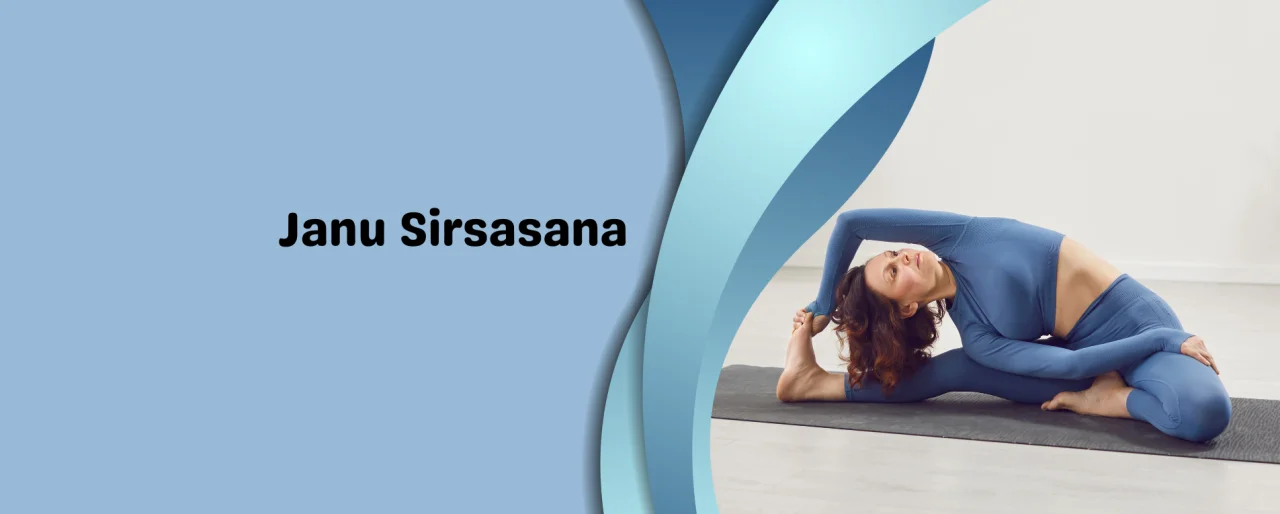
Janu Sirsasana, or Head-to-Knee Forward Bend, is a calming seated posture in yoga that stretches the back, hamstrings, and groin. It's often practiced during cool-down sequences or as part of a restorative yoga flow.
The name comes from Sanskrit:
- "Janu" means knee
- "Sirsa" means head
- "Asana" means pose
The goal is to bring your head toward your knee while maintaining a long spine and open heart.
How to Do Janu Sirsasana (Step-by-Step)
- Start in Dandasana (Seated Staff Pose).
- Bend your right knee, bringing the sole of your right foot to the inner left thigh.
- Inhale and raise your arms, lengthening the spine.
- Exhale and fold forward from the hips, reaching toward the left foot.
- Keep both sitting bones grounded and the spine extended.
- Stay in the pose for 5–10 breaths, then switch sides.
Benefits of Janu Sirsasana
- Stretches the hamstrings, calves, and lower back
- Stimulates the liver and kidneys
- Calms the brain and relieves mild depression
- Aids in digestion and menstrual discomfort
- Encourages introspection and mindful breathing
Common Mistakes to Avoid
- Rounding the spine instead of hinging from the hips
- Lifting the bent knee off the ground
- Forcing the forehead to the knee (instead, aim for a long spine)
- Holding your breath — maintain slow, rhythmic breathing
Who Should Avoid This Pose?
While Janu Sirsasana is generally safe, consult a teacher or physician if you have:
- Lower back injury
- Sciatica
- Recent knee or hamstring issues
- Herniated discs
In our structured yoga instructor certification programs, we emphasize alignment and safe modifications for all body types and levels.
Variations & Modifications
- Use Props: Place a folded blanket under the sitting bones or a bolster under the knee.
- Restorative Version: Lie your chest on a bolster over the extended leg.
- Deepening: Use a strap or clasp your foot with both hands, pulling gently.
Teaching Tips for Instructors
- Guide students to move with breath. Inhale to lengthen, exhale to fold.
- Emphasize spine extension over depth.
- Cue awareness of the internal rotation of the extended leg.
- Offer blocks or straps proactively in mixed-level classes.
This pose is covered in detail during our Yoga Instructor Certification nepal, where we break down traditional asanas into functional, anatomy-based teaching.
Final Thoughts
Janu Sirsasana is more than just a hamstring stretch — it's a meditative, grounding posture that supports both physical and emotional balance. Whether you're deepening your personal practice or preparing to teach, mastering the nuances of this pose will enhance your journey.