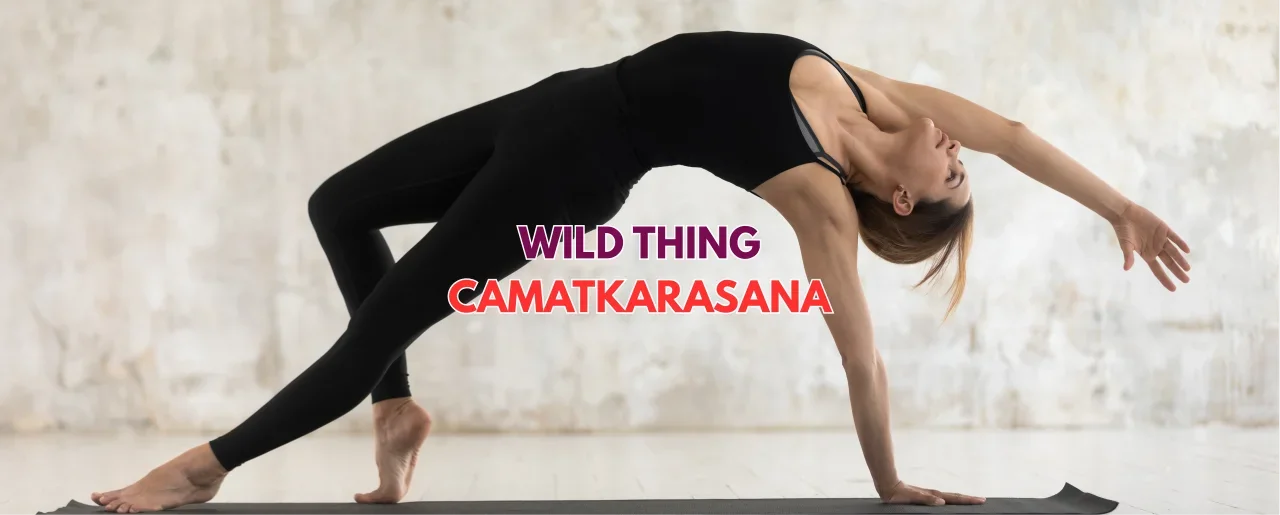
Wild Thing Pose, also known as Camatkarasana, is an expressive yoga backbend that combines strength, flexibility, balance, and heart opening. The posture is commonly practiced as a transition from Side Plank or Downward-Facing Dog and creates a deep stretch across the chest, shoulders, hips, and front body.
For practitioners interested in developing a deeper understanding of yoga asana, alignment, breathing, and teaching methodology, Nepal Yoga Teacher Training can provide a structured environment for exploring traditional yoga practices.
What Is Wild Thing Pose?
Camatkarasana comes from the Sanskrit tradition and is often translated as Wild Thing. It is a dynamic posture that requires a combination of upper-body stability, hip mobility, spinal extension, and body awareness.
In the pose, one hand and one foot support the body while the other leg extends and the chest opens toward the ceiling. The free arm reaches overhead, creating a strong opening through the shoulders and chest.
How to Do Wild Thing Pose
- Begin in Downward-Facing Dog with your hands firmly grounded on the yoga mat.
- Shift your weight into your right hand and the outer edge of your right foot.
- Slowly rotate your body toward the left side.
- Bend your left knee and begin to bring the left foot behind you toward the floor.
- Keep the supporting right shoulder stable and avoid collapsing into the shoulder.
- Press through your supporting hand and feet to lift and open the chest.
- Reach your left arm overhead and gently extend it backward.
- Allow your chest and upper back to open without forcing the spine.
- Take several slow, controlled breaths.
- Return carefully to the starting position and repeat on the opposite side.
Wild Thing Pose Benefits
When practiced with proper alignment and appropriate preparation, Camatkarasana can offer several physical and mindful benefits.
- Opens the chest and shoulders.
- Encourages mobility through the upper back.
- Strengthens the supporting arm and shoulder.
- Engages the core muscles for stability.
- Stretches the front of the hips and thighs.
- Challenges balance and body awareness.
- Can improve coordination between breathing and movement.
- Creates an energizing and expansive yoga experience.
Muscles Used in Camatkarasana
Wild Thing Pose involves multiple muscle groups working together to maintain stability and create the backbend.
- Shoulders and arms: Support and stabilize the upper body.
- Core: Helps maintain balance and control.
- Glutes: Assist with hip extension and stabilization.
- Hip flexors: Receive a stretch as the hips open.
- Chest: Opens as the torso rotates upward.
- Spinal muscles: Support the extension of the spine.
- Leg muscles: Help create stability through the supporting foot and extended leg.
Breathing in Wild Thing Pose
Breathing is an important part of Camatkarasana. Avoid holding your breath while entering or maintaining the posture. Inhale slowly as you expand through the chest and exhale naturally while maintaining stability.
Keep the breath smooth and relaxed. If your breathing becomes strained, reduce the intensity of the pose or return to a more comfortable position.
Beginner-Friendly Preparation
Wild Thing can be challenging for beginners because it requires shoulder stability, hip mobility, and spinal extension. Preparing the body with simpler movements can make the posture more accessible.
- Cat-Cow Pose
- Downward-Facing Dog
- Low Lunge
- Cobra Pose
- Bridge Pose
- Side Plank
- Supported backbend variations
Common Mistakes to Avoid
- Collapsing into the supporting shoulder: Keep the supporting arm active and create space around the shoulder.
- Forcing the backbend: The movement should come from controlled spinal extension rather than excessive pressure on the lower back.
- Losing core engagement: Maintain enough abdominal support to control the movement.
- Placing the foot carelessly: Move slowly when bringing the free foot toward the floor.
- Holding the breath: Maintain slow and steady breathing throughout the posture.
Wild Thing Pose Precautions
Camatkarasana should be practiced gradually and within your current range of motion. Avoid forcing the posture or trying to achieve a deeper backbend than your body can comfortably support.
Practitioners with existing wrist, shoulder, elbow, hip, or spinal injuries should seek appropriate professional guidance before attempting this pose. If you experience sharp pain, dizziness, numbness, or unusual discomfort, come out of the posture safely.
How Long Should You Hold Wild Thing?
Beginners can start with a few comfortable breaths on each side rather than focusing on holding the posture for a long period. As strength, mobility, and balance improve, the duration can gradually increase while maintaining controlled breathing and proper alignment.
Wild Thing Pose and Yoga Practice
Camatkarasana can be incorporated into a well-rounded yoga sequence after suitable warm-up exercises. Because it combines balance, strength, rotation, and backbending, it is generally better approached after preparing the shoulders, hips, spine, and core.
A structured yoga education program can also help practitioners understand how different asanas fit into a safe and progressive sequence. Those interested in developing their practice and learning traditional yoga techniques may explore Nepal Yoga Teacher Training as part of their broader yoga journey.