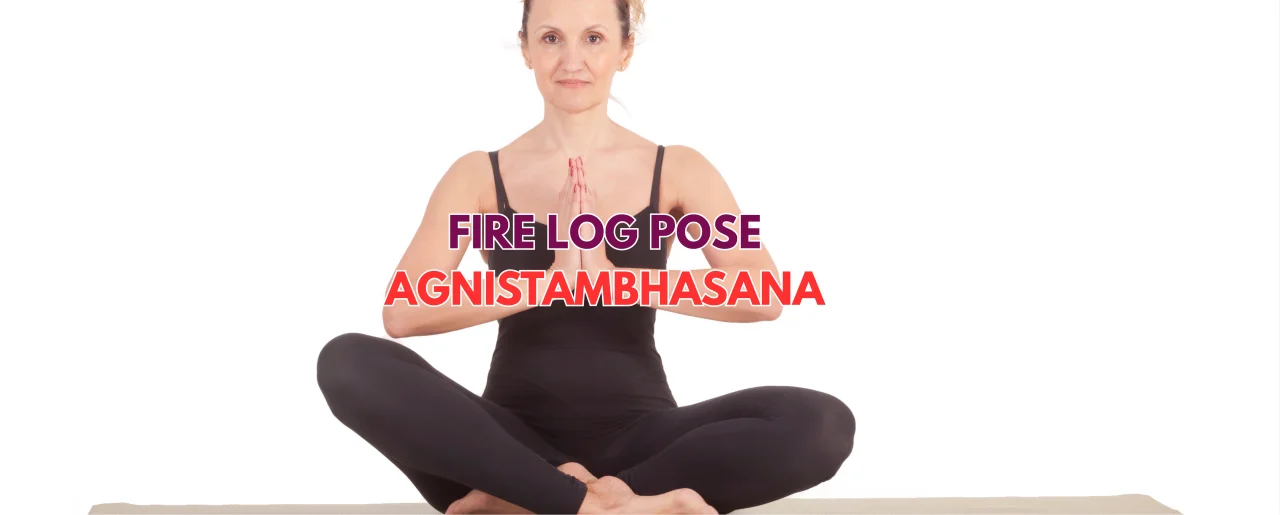
Agnistambhasana, commonly known as Fire Log Pose or Double Pigeon Pose, is a seated yoga posture that focuses on hip mobility and external rotation. In this asana, the shins are stacked one above the other, creating the appearance of logs placed on a fire. The pose is often included in Hatha Yoga and other yoga practices that emphasise flexibility, stability and mindful movement.
Although Fire Log Pose may look simple, it can create a strong stretch around the outer hips and gluteal muscles. Learning the correct technique, using appropriate modifications and avoiding pressure on the knees can help make the posture more comfortable and accessible.
What Is Agnistambhasana?
Agnistambhasana is a Sanskrit yoga pose name commonly translated as Fire Log Pose. It is also known as Double Pigeon Pose because the lower legs are arranged in a stacked position resembling two parallel logs.
The posture involves sitting upright, bending both knees and positioning one shin above the other. The feet generally extend beyond the opposite knees, depending on individual anatomy and flexibility.
Fire Log Pose is often used to explore hip mobility and develop awareness of seated alignment. However, not everyone's hip structure allows the shins to stack comfortably, and forcing the position is unnecessary.
How to Do Fire Log Pose Step by Step
- Begin in a seated position: Sit on a yoga mat with your legs extended comfortably in front of you. Keep your spine upright.
- Bend your first leg: Bend your right knee and bring your right shin in front of your body, keeping the movement comfortable.
- Position the second leg: Bend your left knee and gently bring the left shin above the right shin, if your hips allow this position without pain or excessive strain.
- Align your legs: Aim to place the left ankle above the right knee and the left knee above the right ankle. Do not force your ankle or knee into alignment.
- Adjust your sitting position: Sit evenly on your sitting bones. If your pelvis tilts backward or your back rounds, sit on a folded blanket or yoga block.
- Relax your shoulders: Lengthen your spine, keep your chest relaxed and rest your hands on your knees or thighs.
- Breathe mindfully: Stay for several comfortable breaths without pushing your knees down or forcing your hips open.
- Release slowly: Carefully uncross your legs, extend them forward and allow your body to relax before repeating on the opposite side.
Beginners can start with a shorter hold and gradually increase the duration according to comfort. Never force the knees or ankles to achieve the traditional shape.
Benefits of Agnistambhasana (Fire Log Pose)
When practised with appropriate alignment and modifications, Fire Log Pose may offer several benefits for mobility and body awareness.
1. Supports Hip Mobility
The posture places the hips in external rotation and flexion. Practising within a comfortable range may help maintain or gradually improve hip mobility.
2. Stretches the Outer Hip Muscles
Fire Log Pose can create a stretch around the gluteal muscles and other tissues surrounding the hips. The intensity varies according to individual anatomy and positioning.
3. Encourages Upright Sitting
Maintaining a comfortable seated position encourages awareness of pelvic alignment and spinal posture. A folded blanket can help practitioners sit more comfortably.
4. Develops Body Awareness
Moving slowly into and out of the posture helps practitioners recognise their comfortable range of motion and understand how the hips and legs respond to different positions.
5. Encourages Mindful Breathing
Combining the pose with calm, steady breathing can support concentration and relaxation as part of a balanced yoga routine.
Individual results vary. Fire Log Pose is not a guaranteed treatment for hip pain, sciatica or other medical conditions.
Common Mistakes to Avoid in Fire Log Pose
- Forcing the knees downward: Allow your hips to determine how far your legs can move comfortably.
- Ignoring knee discomfort: The stretch should not create sharp pain or pressure inside the knee joint.
- Rounding the lower back excessively: Sit on a folded blanket if you struggle to maintain an upright position.
- Forcing the ankles to stack: If your shins do not align comfortably, choose an easier variation.
- Holding your breath: Breathe naturally and leave the pose if you cannot remain comfortable.
- Comparing flexibility: Different hip structures and mobility levels affect how the posture looks for each person.
Beginner Modifications for Agnistambhasana
Fire Log Pose can be challenging for people with tight hips or limited mobility. The following variations can make the practice more accessible.
Use a Folded Blanket
Sit on a folded blanket or suitable yoga block to elevate your hips. This may help your pelvis tilt forward and make it easier to maintain an upright spine.
Practise an Easy Seated Position
If stacking the shins feels uncomfortable, sit cross-legged with your feet positioned comfortably beneath your knees. This is a useful alternative for exploring a seated posture without forcing the hips.
Keep the Bottom Foot Closer to Your Body
Adjust the position of your feet and shins until the posture feels manageable. You do not need to create a perfectly stacked position to benefit from mindful movement.
Support Your Knees
If your knees remain elevated, place yoga blocks or folded blankets beneath them when appropriate. Support should reduce strain rather than push the joints into a deeper position.
Who Should Avoid or Modify Fire Log Pose?
Not every yoga posture is suitable for every practitioner. Take particular care with Agnistambhasana if you have:
- A current knee, hip or ankle injury.
- Significant hip stiffness or pain during external rotation.
- A recent lower-body surgery or an existing joint condition.
- Persistent lower-back pain that worsens in a seated position.
Do not force the knees toward the floor or use your hands to press the legs down. Stop immediately if you experience sharp pain, numbness or tingling. If you have an injury or medical condition, consult an appropriate healthcare professional before practising the pose.
How to Include Agnistambhasana in Your Yoga Routine
Consider practising Fire Log Pose after a gentle warm-up that includes comfortable movements for the hips and legs. Begin with a variation that allows you to sit upright and breathe without strain.
Hold the posture for a few comfortable breaths, release slowly and repeat on the other side. Balance the practice with other movements appropriate to your body rather than focusing exclusively on deep hip-opening poses.
Consistency and patience are more important than achieving a particular level of flexibility. A qualified yoga teacher can help you choose suitable modifications and improve your understanding of alignment.
Deepen Your Yoga Practice in Nepal
Developing a well-rounded yoga practice involves more than learning individual asanas. Yoga philosophy, anatomy, alignment, pranayama, meditation and teaching methodology can all contribute to a deeper understanding of traditional yoga.
If you have already completed foundational teacher training and want to expand your knowledge, explore our 300 Hour Yoga Teacher Training in Nepal. This advanced training pathway is intended for practitioners who have completed an appropriate 200-hour yoga teacher training programme. Review the course details for eligibility and curriculum information.
If you are looking for a broader training pathway that combines foundational and advanced studies, learn more about our 500 Hour Yoga Teacher Training in Nepal. Explore the programme structure, course requirements and certification details to determine whether it matches your yoga learning goals.
At Pokhara Yoga School and Retreat Center, you can explore training opportunities designed to develop your knowledge of yoga practice and teaching. Choose a programme based on your existing qualifications, experience and long-term goals.