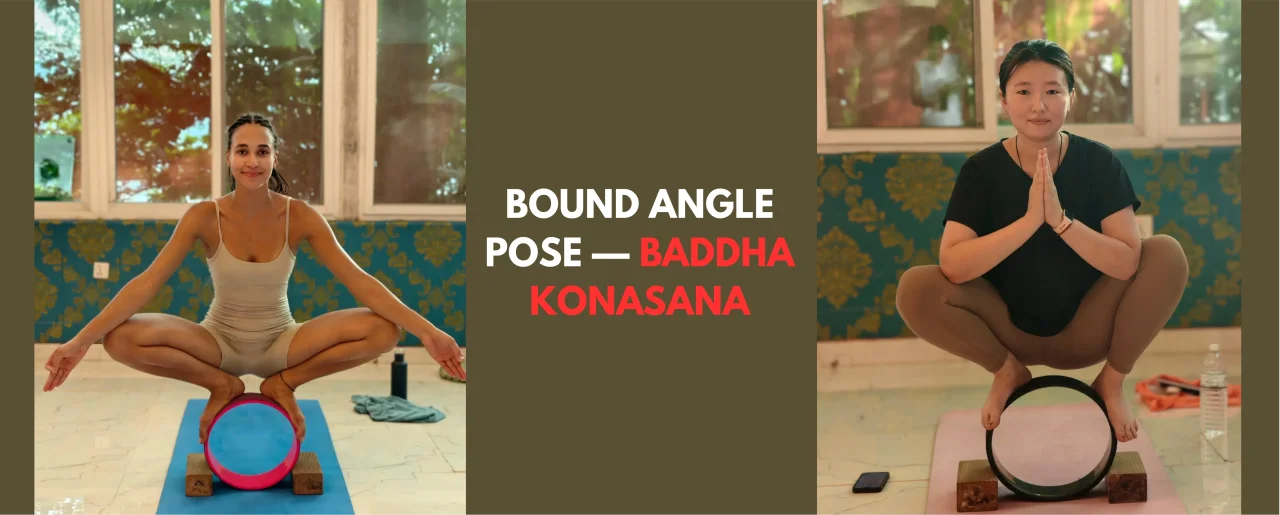
Baddha Konasana, also known as Bound Angle Pose or Butterfly Pose, is a seated yoga posture that brings the soles of the feet together while the knees open out to the sides. It is commonly practised in Hatha Yoga and other yoga traditions to explore hip mobility, upright posture, and mindful breathing.
Whether you are a beginner or an experienced yoga practitioner, learning the correct alignment can help you approach this posture more comfortably. In this guide, discover how to practise Baddha Konasana, its potential benefits, useful modifications, and important safety precautions.
What Is Baddha Konasana?
The Sanskrit name Baddha Konasana combines three words: "Baddha," meaning bound; "Kona," meaning angle; and "Asana," meaning posture. The name refers to the position created when the feet are brought together and the knees bend outward.
The posture is also widely called Butterfly Pose because the movement of the knees can resemble the opening and closing of butterfly wings. Practitioners can perform it as a gentle seated stretch or use a supported version during breathing and relaxation practices.
How to Practise Baddha Konasana Step by Step
- Begin in a seated position: Sit on a yoga mat with your legs extended comfortably in front of you.
- Bring your feet together: Bend your knees and bring the soles of your feet toward each other.
- Allow your knees to open: Let your knees move outward naturally. Do not push them toward the floor.
- Hold your feet: Gently hold your ankles, feet, or toes, choosing the position that feels most comfortable.
- Lengthen your spine: Sit tall, relax your shoulders, and keep your chest comfortably lifted without arching your lower back.
- Adjust your position: Move your feet slightly farther away from your pelvis if the stretch feels too intense.
- Breathe mindfully: Maintain slow, natural breathing while remaining in a comfortable position for around 20–30 seconds initially.
- Release gently: Bring your knees together with your hands supporting them, then extend your legs slowly.
Benefits of Baddha Konasana
When practised within a comfortable range of motion, Baddha Konasana can contribute to a balanced yoga routine in several ways.
- Supports hip mobility: The posture allows practitioners to explore external rotation of the hips and movement in the inner thighs.
- Stretches the inner thighs: The position may provide a gentle stretch to the adductor muscles, depending on individual mobility.
- Encourages postural awareness: Sitting upright helps practitioners pay attention to the alignment of the spine and pelvis.
- Promotes mindful breathing: Holding a comfortable seated posture offers an opportunity to focus on slow, steady breathing.
- Supports relaxation: A gentle, supported version can be incorporated into restorative yoga or meditation sessions.
- Builds body awareness: Practitioners learn to recognise their limits and adjust their position according to comfort.
The effects of the posture vary from person to person. Baddha Konasana should not be considered a guaranteed treatment for medical conditions or a substitute for professional healthcare.
Common Mistakes to Avoid
- Forcing the knees down toward the floor with the hands or elbows.
- Rounding the back excessively while trying to sit upright.
- Pulling the feet too close to the pelvis when hip mobility is limited.
- Bouncing the knees aggressively to increase the stretch.
- Ignoring pain or discomfort in the hips, knees, or groin.
- Holding the posture for too long before becoming familiar with it.
Beginner Tips and Modifications
If sitting upright is difficult, place a folded blanket or firm cushion under your hips. Raising the pelvis slightly may make it easier to maintain a comfortable spinal position.
You can also place yoga blocks or cushions beneath your outer thighs for additional support. Keep your feet farther away from your pelvis if you experience excessive stretching, and hold your ankles instead of pulling on your toes.
Beginners should focus on comfortable alignment rather than trying to bring their knees all the way to the floor. Flexibility develops differently for everyone, so progress gradually without forcing the joints.
Precautions and Contraindications
Although Baddha Konasana is often practised as a gentle posture, it may not be suitable for everyone in its traditional form.
- Knee discomfort: Avoid forcing the knees outward if you have knee pain or a joint injury.
- Hip problems: Use a supported variation or seek qualified guidance if you have limited hip mobility or a hip condition.
- Recent surgery: Consult your healthcare professional before practising after hip, knee, or pelvic surgery.
- Pregnancy: Adapt the posture to your comfort and seek guidance from a qualified prenatal yoga instructor when needed.
- Pain or numbness: Stop if you experience sharp pain, tingling, or numbness.
Always prioritise comfort and controlled movement. If you have a medical condition or an existing injury, consult an appropriate healthcare professional before attempting the posture.
Baddha Konasana in Hatha Yoga Practice
Baddha Konasana can be incorporated into a yoga session that includes gentle warm-ups, standing postures, seated stretches, pranayama, and relaxation. The appropriate placement of the pose depends on the practitioner's experience, the purpose of the session, and individual mobility.
For yoga students, learning how to adapt postures for different bodies is an important part of developing a safe and sustainable practice. Correct instruction includes understanding alignment, suitable modifications, and when a posture should be avoided.
Explore Yoga Teacher Training in Nepal
If you want to deepen your understanding of asana practice, yoga philosophy, breathing techniques, and teaching methodology, explore the training programmes available at Pokhara Yoga School and Retreat Center.
300 Hour Yoga Teacher Training in Nepal
The 300 Hour Yoga Teacher Training in Nepal is an advanced study option for eligible practitioners who have already completed foundational yoga teacher training. Explore the curriculum to understand the programme's approach to advanced practice, yoga philosophy, and teaching skills.
500 Hour Yoga Teacher Training in Nepal
For those seeking a more extensive yoga education pathway, the 500 Hour Yoga Teacher Training in Nepal may be worth exploring. Review the programme structure, prerequisites, curriculum, and certification details before making an enrolment decision.
Conclusion
Baddha Konasana, or Bound Angle Pose, is a versatile seated posture that can support hip mobility, inner-thigh stretching, postural awareness, and mindful breathing. Practising with suitable support and respecting your body's limits can make the posture more comfortable and accessible.
Whether you are beginning your yoga journey or developing an established practice, focus on gradual progress and proper technique. To continue learning about yoga asana, philosophy, and teaching methods, explore the 300 Hour and 500 Hour Yoga Teacher Training programmes in Nepal at Pokhara Yoga School and Retreat Center.