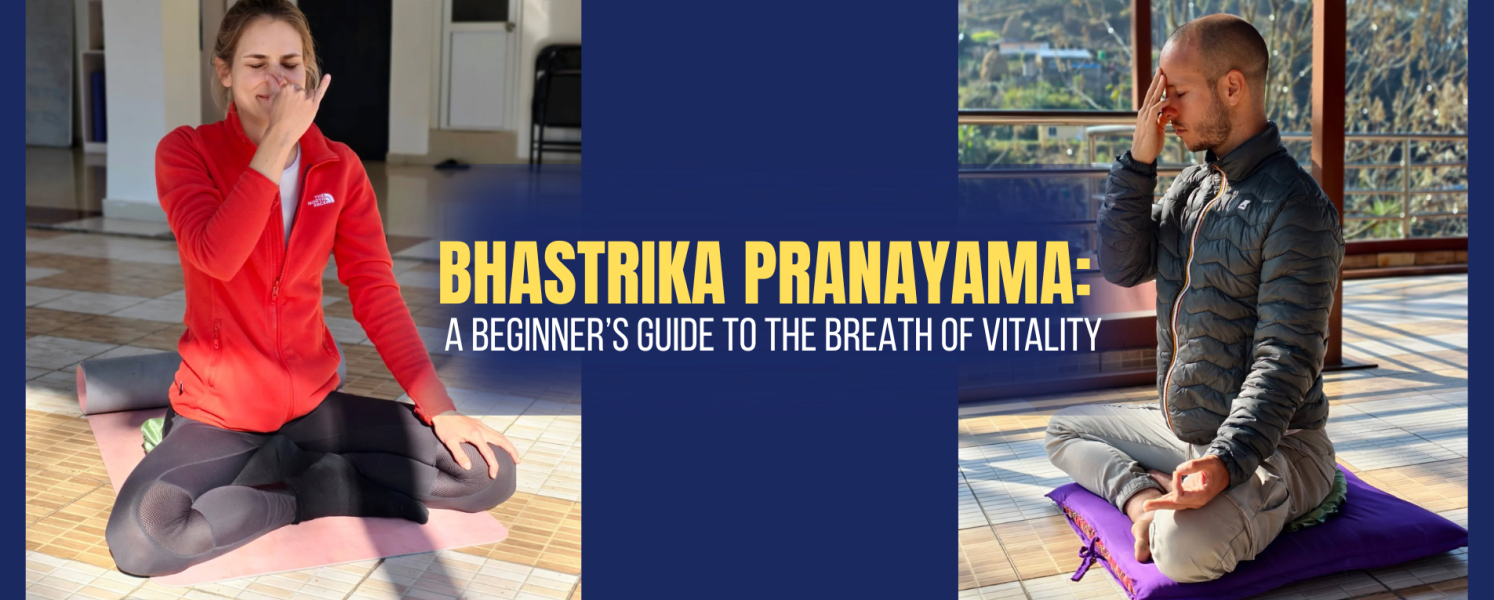
Bhastrika Pranayama, often called the Breath of Vitality, is a powerful yogic breathing technique that can instantly refresh your mind and energize your body.
In this beginner-friendly guide, you'll learn everything you need to know to start practicing Bhastrika safely and effectively.
🌿 What Is Bhastrika Pranayama?
The word "Bhastrika" means "bellows" in Sanskrit — just like a blacksmith’s tool blowing air into fire, Bhastrika fills your body with oxygen, reigniting your inner energy.
This practice involves forceful, rhythmic inhalations and exhalations that stimulate the lungs, energize the nervous system, and boost mental clarity.
🌟 Benefits of Bhastrika Pranayama
- Boosts Energy Levels naturally
- Enhances Oxygen Intake and detoxification
- Strengthens the Lungs and Respiratory System
- Improves Mental Focus and reduces brain fog
- Relieves Stress and uplifts the mood
- Balances the Doshas (Vata, Pitta, Kapha) in Ayurvedic terms
🌿 Tip: To fully embrace the spiritual depth of pranayama, you can deepen your practice by joining a certified Yoga Teacher Training in Nepal — blending traditional techniques with serene Himalayan energy.
🧘♂️ How to Practice Bhastrika Pranayama (Step-by-Step)
1. Find a Comfortable Seat
Sit in Padmasana (Lotus Pose) or simply cross-legged with a straight spine.
2. Warm-Up
Take a few gentle, deep breaths to prepare your body and mind.
3. The Technique
- Inhale deeply and forcefully through your nose, expanding your lungs.
- Immediately exhale forcefully through your nose.
- Continue this pumping action rapidly but with control.
Beginner Tip: Start with 10–15 breaths per round, rest, and complete 2–3 rounds.
⚠️ Safety and Precautions
- Avoid Bhastrika if you have high blood pressure, heart problems, vertigo, or recent surgeries.
- Practice on an empty stomach and preferably in the morning.
- Always sit in a well-ventilated space.
If you feel dizzy or uncomfortable, stop immediately and return to normal breathing.
🕰️ Best Time to Practice
Early morning is ideal when your energy is naturally high and the mind is clear.
Regular practice can transform your mornings into powerful, energized starts.