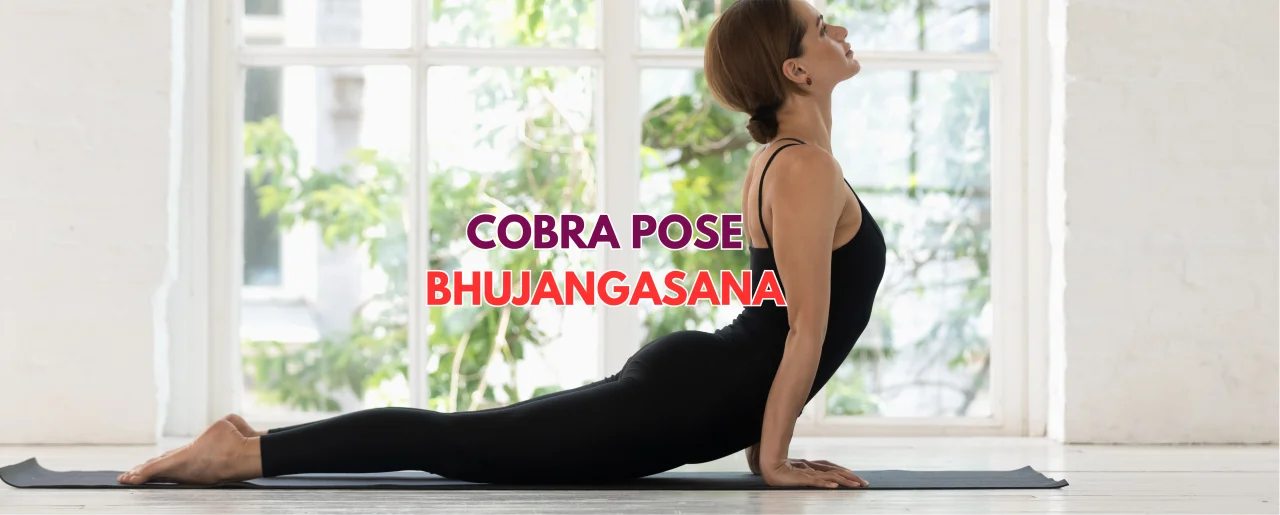
Bhujangasana, commonly known as Cobra Pose, is a traditional yoga posture practised in Hatha Yoga and many modern yoga sequences. In this asana, the practitioner lies on the stomach and gently lifts the chest while keeping the pelvis and legs grounded. The pose encourages spinal extension, body awareness and controlled movement.
Whether you are a beginner or an experienced yoga practitioner, learning the correct technique can help you practise Cobra Pose more comfortably. Rather than lifting as high as possible, focus on controlled movement, relaxed shoulders and a comfortable range of motion.
What Is Bhujangasana?
The Sanskrit word Bhujangasana is commonly translated as Cobra Pose. The name comes from the resemblance of the raised upper body to a cobra lifting its head.
In this prone backbend, the practitioner lies face down, places the hands near the chest and gently lifts the upper body. Depending on the variation, the elbows may remain bent or become more extended. In Cobra Pose, the back muscles contribute to the lift while the hands provide support.
Bhujangasana is often included in yoga routines designed to develop spinal mobility, strengthen awareness of posture and balance movements that involve bending the spine forward.
How to Do Cobra Pose Step by Step
- Lie on your stomach: Begin on a yoga mat with your legs extended behind you and the tops of your feet resting comfortably on the floor.
- Position your hands: Place your palms on the floor beside your lower ribs. Keep your elbows bent and close to your body.
- Relax your shoulders: Draw your shoulders gently away from your ears and keep your neck comfortable.
- Prepare your body: Gently engage your back muscles while keeping your pelvis and legs grounded.
- Lift your chest: Inhale and gradually raise your head and chest. Use your back muscles and light support from your hands instead of pushing forcefully into the floor.
- Maintain alignment: Keep your elbows bent, shoulders relaxed and lower back comfortable. Look forward or slightly upward without compressing your neck.
- Breathe naturally: Hold the position for a few comfortable breaths without forcing a deeper backbend.
- Release slowly: Exhale and lower your chest gently to the mat. Rest briefly before repeating if comfortable.
Beginners can start with a small lift and a short hold. A higher lift is not necessary for an effective practice.
Benefits of Bhujangasana (Cobra Pose)
When practised with appropriate technique and within a comfortable range of motion, Cobra Pose may offer several benefits as part of a balanced yoga routine.
1. Supports Spinal Mobility
Bhujangasana involves spinal extension, helping practitioners explore controlled backward movement of the spine. The range should remain comfortable and appropriate for the individual.
2. Engages the Back Muscles
The posture activates muscles along the back that contribute to lifting and supporting the upper body. The degree of muscular effort depends on the variation and technique.
3. Encourages Postural Awareness
Practising Cobra Pose can help you become more aware of shoulder position, chest movement and the relationship between the pelvis and spine.
4. Stretches the Front of the Body
The gentle backbend may stretch the abdominal region and the front of the torso. Avoid forcing the movement, particularly if you feel pressure in your lower back.
5. Develops Mindful Movement
Coordinating the lift and release with steady breathing encourages concentration and a more controlled approach to yoga practice.
Bhujangasana is not a guaranteed treatment for back pain, digestive problems or other medical conditions. Benefits depend on individual circumstances and the way the posture is practised.
Common Mistakes to Avoid in Cobra Pose
- Lifting too high: Raising the chest excessively can create unnecessary compression in the lower back.
- Straightening the elbows forcefully: Keep your elbows slightly bent in a gentle Cobra variation.
- Pushing heavily through the hands: Use your back muscles to contribute to the lift rather than relying entirely on arm strength.
- Shrugging the shoulders: Keep the shoulders relaxed and away from the ears.
- Tilting the head too far backward: Maintain a comfortable neck position instead of looking excessively upward.
- Holding your breath: Breathe normally throughout the posture.
- Ignoring discomfort: Stop or reduce the lift if you experience pain or pinching in the back.
Beginner Modifications for Bhujangasana
If you are new to yoga, you do not need to perform the deepest version of Cobra Pose. These modifications can help you practise within a comfortable range.
Practise a Low Cobra
Keep your elbows bent and lift your chest only a small distance from the floor. Focus on a controlled movement and comfortable breathing.
Reduce the Height of the Lift
If your lower back feels compressed, lower your chest and reduce the range of motion. The aim is to explore a gentle backbend without forcing the spine.
Keep Your Legs Relaxed
Allow the legs and tops of the feet to rest comfortably on the mat. Avoid unnecessary tension in the legs or squeezing the glutes excessively.
Practise Under Qualified Guidance
A qualified yoga teacher can help you understand alignment, choose an appropriate variation and identify movements that may not suit your body.
Bhujangasana vs. Upward-Facing Dog
Cobra Pose and Upward-Facing Dog may look similar, but they are different yoga postures.
- Cobra Pose: The pelvis and legs remain grounded, the elbows are generally bent and the chest lifts through a controlled backbend.
- Upward-Facing Dog: The arms are typically straight, the chest lifts higher and the thighs and pelvis are lifted off the floor, with support through the hands and tops of the feet.
Both poses involve spinal extension, but they differ in body position, weight distribution and physical demands. Beginners should learn the appropriate technique before attempting more demanding variations.
Who Should Take Precautions?
Bhujangasana may not be appropriate for everyone. Take extra care or seek professional guidance if you have:
- Current lower-back or neck pain.
- A recent spinal, abdominal or shoulder injury or surgery.
- A condition that makes spinal extension uncomfortable or unsuitable.
- Pregnancy, particularly if lying on the stomach is uncomfortable or not recommended for you.
Do not force the backbend or continue through sharp pain, numbness, tingling or dizziness. If you have a medical condition or a history of injury, consult an appropriate healthcare professional about whether the pose is suitable for you.
How to Include Cobra Pose in Your Yoga Routine
Begin with gentle movements to prepare your back and shoulders before practising Bhujangasana. Cat-Cow movements, comfortable shoulder mobility exercises and gentle prone movements may be suitable warm-ups for some practitioners.
Start with one or two gentle repetitions, resting between them. Coordinate the lift with your breath and lower your chest slowly. As your familiarity increases, adjust the duration and number of repetitions according to your comfort and the guidance of your yoga teacher.
Balance backbends with other suitable movements rather than repeating one posture excessively. Consistent practice, good technique and awareness of your individual limitations are more important than lifting the chest to a particular height.
Deepen Your Yoga Knowledge in Nepal
Developing a well-rounded yoga practice involves more than learning individual asanas. Understanding yoga philosophy, anatomy, alignment, pranayama, meditation and teaching methodology can contribute to a deeper understanding of yoga.
If you have completed foundational yoga teacher training and want to expand your knowledge, explore our 300 Hour Yoga Teacher Training in Nepal. This advanced training pathway is intended for practitioners who have completed an appropriate 200-hour yoga teacher training programme. Review the course page for eligibility, curriculum and schedule details.
If you are looking for a broader training pathway that combines foundational and advanced studies, learn more about our 500 Hour Yoga Teacher Training in Nepal. Explore the programme structure, course requirements and certification details to determine whether it matches your yoga learning goals.
Choosing a training programme that matches your experience and goals can help you develop your understanding of yoga practice and teaching in a structured learning environment.