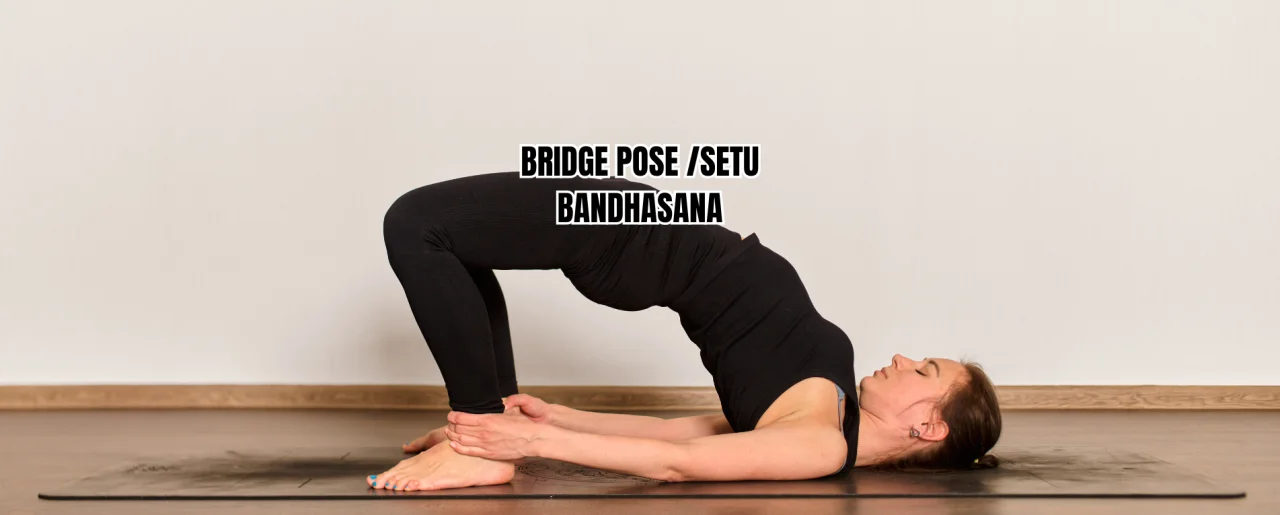
Bridge Pose, commonly known as Setu Bandhasana, is a foundational yoga posture that strengthens the legs, opens the front of the body, and develops awareness of spinal alignment and controlled breathing. It is performed while lying on the back, bending the knees, placing the feet on the floor, and lifting the hips toward the ceiling.
Setu Bandhasana can be practiced as a gentle backbend, a strengthening posture, or as preparation for deeper backbends. It is also useful for yoga students who want to develop a stronger understanding of alignment, breathing, and mindful movement.
What Is Bridge Pose (Setu Bandhasana)?
The Sanskrit name Setu Bandhasana is commonly translated as Bridge Pose. The word Setu means bridge, while Bandha can refer to a lock, support, or binding action.
In Bridge Pose, the body forms an elevated shape resembling a bridge. The feet and shoulders remain grounded while the hips and chest lift upward.
The posture involves several important elements of yoga practice, including:
- Leg strength
- Hip extension
- Spinal mobility
- Core engagement
- Shoulder stability
- Chest opening
- Balance and coordination
- Breath awareness
Because it can be modified for different levels of experience, Bridge Pose is commonly included in beginner, intermediate, restorative, and therapeutic-style yoga sequences.
How to Do Bridge Pose Step by Step
Follow these steps to practice Setu Bandhasana with awareness and control.
Step 1: Lie on Your Back
Begin by lying comfortably on your back on a yoga mat.
Bend your knees and place both feet flat on the floor. Keep the feet approximately hip-width apart.
Allow your arms to rest alongside your body.
Step 2: Position Your Feet
Bring your heels reasonably close to your sitting bones while keeping the feet parallel.
Avoid allowing the knees to fall widely apart during the posture.
Step 3: Prepare the Spine
Take a slow breath and become aware of your back, feet, and shoulders.
Keep the neck relaxed and avoid turning your head once you begin lifting.
Step 4: Lift the Hips
Press your feet firmly into the floor and gradually lift your hips toward the ceiling.
Engage the legs while keeping the movement controlled.
Step 5: Open the Chest
As the hips rise, gently lift through the chest without forcing the neck.
Depending on your variation, you can keep the arms alongside the body or bring the shoulders slightly underneath the torso.
Step 6: Maintain the Pose
Keep your breathing steady while maintaining the posture.
The knees should remain reasonably aligned with the feet, and the weight should be distributed through the feet and upper back rather than being placed on the neck.
Step 7: Release Slowly
When you are ready to come out of the pose, gradually lower your spine and hips back toward the floor.
Take a few relaxed breaths before repeating the posture or moving into your next asana.
Benefits of Bridge Pose
When practiced with appropriate alignment and within a comfortable range, Setu Bandhasana can provide several benefits for yoga practitioners.
1. Strengthens the Legs
Bridge Pose requires active engagement of the thighs, glutes, and supporting muscles of the legs.
2. Strengthens the Back and Core
The posture requires coordinated engagement of the back and core muscles to help stabilize the lifted body.
3. Opens the Chest
Lifting the chest and maintaining an appropriate shoulder position can create a gentle opening across the front of the body.
4. Improves Hip Extension
The hips move into extension as they lift away from the floor. Practicing this movement can help students develop awareness of hip mobility.
5. Develops Spinal Awareness
Bridge Pose introduces practitioners to spinal extension while encouraging controlled and mindful movement.
6. Supports Better Body Awareness
The posture requires coordination between the feet, legs, hips, spine, shoulders, and breath. This makes it useful for developing overall body awareness.
7. Can Prepare the Body for Deeper Backbends
Bridge Pose can be incorporated into sequences that gradually prepare practitioners for more demanding backbends, depending on their experience and mobility.
Bridge Pose for Beginners
Setu Bandhasana can be accessible to beginners when practiced progressively.
If you are new to the posture, focus on creating a stable foundation rather than trying to lift the hips as high as possible.
A beginner should pay particular attention to:
- Keeping both feet firmly grounded
- Maintaining parallel feet
- Keeping the knees reasonably aligned
- Avoiding excessive pressure on the neck
- Moving slowly into and out of the posture
- Maintaining comfortable breathing
A qualified yoga teacher can help beginners understand individual alignment and suitable modifications.
Common Mistakes in Setu Bandhasana
Allowing the Knees to Fall Outward
When the knees move too far apart, stability can decrease. Try to keep the knees tracking generally in line with the feet.
Turning the Feet Outward
Keep the feet parallel rather than allowing the toes to turn excessively outward.
Lifting the Hips Too High
Higher is not always better. Focus on maintaining a comfortable and controlled spinal position.
Putting Pressure on the Neck
Bridge Pose should not feel like a neck-strengthening exercise. Keep the neck relaxed and avoid turning the head while the hips are lifted.
Holding the Breath
Breathing should remain steady and comfortable. Avoid holding your breath while trying to maintain the posture.
Moving Too Quickly
Slow transitions help improve control and reduce unnecessary strain.
Breathing During Bridge Pose
Breath awareness is an important part of practicing Setu Bandhasana.
Take slow, controlled breaths while maintaining the posture. An inhalation can accompany the lifting phase, while comfortable breathing can continue while holding the pose.
Rather than forcing a particular breathing pattern, focus on maintaining a smooth and relaxed rhythm.
How Long Should You Hold Bridge Pose?
The appropriate duration depends on your experience, physical condition, and the purpose of the practice.
Beginners may start with 15–30 seconds and gradually develop their ability to remain comfortable and stable in the posture.
The goal should not be to hold Bridge Pose for the longest possible time. Good alignment, steady breathing, and controlled movement are more important.
Preparatory Poses for Bridge Pose
Several yoga poses and movements can help prepare the body for Setu Bandhasana.
- Tadasana (Mountain Pose)
- Cat-Cow movements
- Pelvic tilts
- Gentle hip-opening movements
- Bhujangasana (Cobra Pose)
- Supta Padangusthasana
- Gentle spinal mobility exercises
A yoga teacher can create a preparation sequence based on the student's experience and the objective of the class.
Bridge Pose Variations
Supported Bridge Pose
A yoga block or appropriate support can be used under the pelvis in a supported variation. This changes the purpose of the posture and can make it more restorative.
Dynamic Bridge Pose
Practitioners can slowly lift and lower the hips in coordination with the breath to develop movement awareness and control.
Traditional Active Bridge
In the active version, the practitioner lifts the hips using the strength of the legs and posterior chain while maintaining an appropriate chest and shoulder position.
The correct variation depends on the practitioner's goals and experience.
Bridge Pose in Yoga Teacher Training
Bridge Pose is valuable to study not only as a physical posture but also as an example of how yoga asanas are taught and modified.
During Yoga in Nepal, students can explore traditional yoga practices while developing a deeper understanding of asana, pranayama, meditation, yoga philosophy, and mindful movement.
Yoga in Nepal can provide students with an opportunity to experience yoga practice in an environment connected with Nepal's Himalayan landscape and yogic traditions.
For students interested in becoming yoga teachers, a structured 200 Hour Yoga Teacher Training in Nepal can provide foundational education in asana practice, anatomy, pranayama, meditation, philosophy, sequencing, and teaching methodology.
Studying Setu Bandhasana within a teacher-training environment allows students to understand not only how to perform Bridge Pose, but also how to:
- Demonstrate the posture
- Explain alignment
- Identify common mistakes
- Offer modifications
- Teach appropriate breathing
- Sequence the posture within a class
- Understand relevant anatomy
Why Bridge Pose Is Important for Yoga Teachers
A yoga teacher needs to understand the mechanics and purpose of an asana rather than simply demonstrate its final shape.
Setu Bandhasana provides useful teaching opportunities related to:
Alignment
Teachers can observe the position of the feet, knees, hips, shoulders, and spine.
Strength
Students can learn how the legs and supporting muscles contribute to a stable Bridge Pose.
Mobility
The posture provides an opportunity to explore hip extension and spinal movement progressively.
Modifications
Different students may need different variations depending on their mobility, experience, and practice goals.
Sequencing
Bridge Pose can be used within warm-up sequences, backbend preparations, strengthening practices, or appropriate cool-down sequences.
Precautions for Bridge Pose
Although Bridge Pose is commonly practiced, it should not be forced.
Practitioners should be particularly mindful if they have existing problems involving the neck, spine, shoulders, hips, knees, or wrists. If the posture causes pain, stop the movement rather than attempting to push through it.
Never turn the head from side to side while actively holding the pose.
If you are unsure whether Setu Bandhasana is appropriate for you, seek guidance from a qualified yoga teacher or appropriate healthcare professional.
Final Thoughts
Bridge Pose (Setu Bandhasana) is a versatile yoga posture that combines strength, mobility, balance, breath awareness, and mindful movement.
Rather than focusing only on lifting the hips higher, practitioners should focus on building a stable foundation, maintaining comfortable breathing, and moving with control.
For students who want to develop a deeper understanding of yoga, studying asanas such as Setu Bandhasana through structured Yoga in Nepal and teacher-training programs can provide valuable knowledge that extends beyond physical practice.
Whether you are a beginner exploring yoga or an aspiring yoga teacher, Bridge Pose offers an excellent opportunity to understand the connection between strength, mobility, alignment, breath, and awareness.