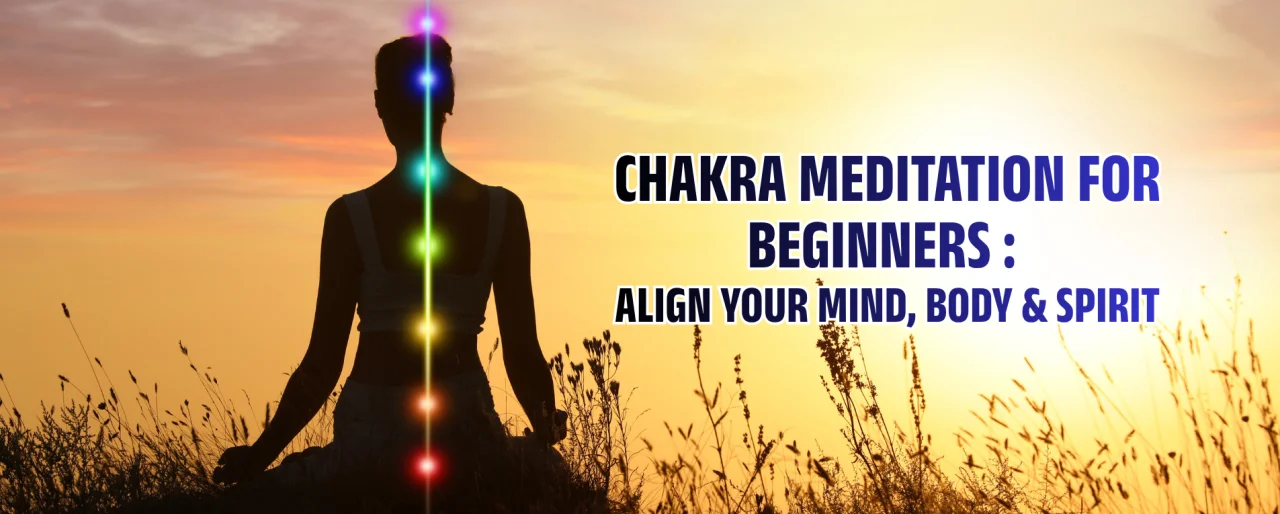
Chakra meditation is a contemplative practice based on the traditional yogic concept of chakras, often described as subtle energy centers associated with different areas of the body and aspects of human experience.
For beginners, chakra meditation can provide a structured way to develop concentration, body awareness, mindful breathing, and reflective attention. The practice commonly focuses on the seven major chakras, using visualization, breath awareness, meditation, and sometimes traditional sounds or mantras.
In this guide, you will learn what chakra meditation is, the traditional seven chakras, how to practice chakra meditation step by step, potential benefits, beginner tips, and how chakra meditation relates to broader yoga and meditation practices.
What Is Chakra Meditation?
Chakra meditation is a meditation practice that uses the traditional chakra system as a framework for concentration and contemplation.
The Sanskrit word chakra is commonly translated as wheel or disc. In traditional yoga and related Indian philosophical systems, chakras are described as subtle centers associated with different qualities and locations within the body.
Modern chakra meditation practices may combine several techniques, including:
- Breath awareness
- Visualization
- Focused attention
- Mantra repetition
- Body awareness
- Mindfulness
- Silent meditation
It is important to understand that the chakra system belongs to a traditional spiritual and yogic framework. Different yoga and meditation traditions may describe chakras differently.
What Are the 7 Chakras?
Many contemporary yoga and meditation practices work with a system of seven major chakras. Each chakra is traditionally associated with a particular location, symbolic qualities, and color.
1. Root Chakra – Muladhara
Location: Base of the spine
Traditional color: Red
Muladhara is traditionally associated with grounding, stability, security, and connection with the physical world.
In meditation, practitioners may focus their attention on the base of the spine while visualizing the color red and maintaining awareness of the breath.
2. Sacral Chakra – Svadhisthana
Location: Lower abdomen or pelvic region
Traditional color: Orange
Svadhisthana is traditionally associated with creativity, emotions, movement, and relationships.
A meditation practice may involve focusing gently on the lower abdomen while visualizing an orange light.
3. Solar Plexus Chakra – Manipura
Location: Upper abdomen
Traditional color: Yellow
Manipura is traditionally associated with personal power, confidence, determination, and transformation.
During meditation, practitioners may bring their attention to the area around the navel or upper abdomen and visualize a warm yellow light.
4. Heart Chakra – Anahata
Location: Center of the chest
Traditional color: Green
Anahata is traditionally associated with compassion, love, openness, and emotional balance.
Practitioners may focus on the center of the chest while observing the breath and visualizing a green light.
5. Throat Chakra – Vishuddha
Location: Throat region
Traditional color: Blue
Vishuddha is traditionally associated with communication, expression, listening, and clarity.
During meditation, attention can be gently brought toward the throat area while maintaining slow and natural breathing.
6. Third Eye Chakra – Ajna
Location: Between the eyebrows
Traditional color: Indigo
Ajna is traditionally associated with awareness, intuition, concentration, and inner reflection.
Beginners can gently focus their attention on the area between the eyebrows without creating tension around the eyes or forehead.
7. Crown Chakra – Sahasrara
Location: Crown of the head
Traditional color: Violet or white
Sahasrara is traditionally associated with consciousness, spiritual awareness, and contemplation.
Meditation on the crown chakra can involve quiet awareness rather than intense visualization.
How to Practice Chakra Meditation for Beginners
You do not need to begin with a long or complicated meditation. A simple practice can help you become familiar with breath awareness, visualization, and focused attention.
Step 1: Choose a Quiet Place
Find a quiet and comfortable place where you can sit without unnecessary interruptions.
You can sit on a meditation cushion, yoga mat, chair, or another comfortable surface.
Step 2: Sit Comfortably
Sit with the spine naturally upright. Relax your shoulders, jaw, and facial muscles.
You can sit cross-legged or use a chair if that is more comfortable.
Step 3: Close Your Eyes
Close your eyes gently if comfortable. If you prefer, keep them slightly open with a soft gaze.
Step 4: Focus on Your Breathing
Begin by observing your natural breathing.
Notice the movement of the abdomen and chest without trying to force the breath.
Step 5: Bring Attention to the Chakras
Beginning with the root chakra, gradually bring your attention upward through the traditional seven chakra locations.
You may spend several breaths with each chakra before moving to the next.
Step 6: Use Visualization
If comfortable, visualize the traditional color associated with each chakra.
For example, you can visualize red at the root chakra, orange at the sacral chakra, yellow at the solar plexus, green at the heart, blue at the throat, indigo at the third eye, and violet or white at the crown.
Step 7: Return to the Breath
If your attention wanders, gently return your awareness to the breath and the area of focus.
There is no need to force concentration. Simply notice when the mind wanders and calmly return to the practice.
Step 8: Finish Slowly
After completing your meditation, take a few natural breaths before opening your eyes.
Notice how your body and mind feel before returning to your normal activities.
Benefits of Chakra Meditation
Chakra meditation is traditionally used as a contemplative and spiritual practice. From a modern wellness perspective, meditation practices that involve focused attention and mindful breathing may support relaxation, concentration, and self-awareness.
1. Encourages Mindfulness
Chakra meditation gives practitioners a structured object of attention, which can help develop mindfulness and present-moment awareness.
2. Supports Relaxation
Slow breathing, stillness, and focused attention can make meditation a useful part of a relaxation routine.
3. Develops Concentration
Returning attention to a particular chakra, visualization, mantra, or breath can help practitioners develop focused attention.
4. Increases Body Awareness
Moving attention through different areas of the body can encourage greater awareness of physical sensations and posture.
5. Encourages Self-Reflection
The symbolic qualities traditionally associated with the chakras can provide a framework for personal reflection and contemplation.
6. Supports a Consistent Meditation Practice
A structured seven-chakra sequence can give beginners a clear framework for developing a regular meditation habit.
Chakra Meditation and the Mind-Body Connection
One of the central ideas behind many yoga and meditation practices is the relationship between physical awareness, breathing, attention, and mental experience.
Chakra meditation provides a symbolic framework through which practitioners can explore this relationship.
Rather than thinking of meditation as an attempt to force a particular experience, beginners can approach the practice with curiosity and awareness.
Simple 10-Minute Chakra Meditation for Beginners
If you are completely new to chakra meditation, try the following simple routine.
- Minute 1: Sit comfortably and observe your natural breathing.
- Minute 2: Bring awareness to the root chakra and visualize red.
- Minute 3: Focus on the sacral chakra and visualize orange.
- Minute 4: Focus on the solar plexus chakra and visualize yellow.
- Minute 5: Focus on the heart chakra and visualize green.
- Minute 6: Focus on the throat chakra and visualize blue.
- Minute 7: Focus on the third eye chakra and visualize indigo.
- Minute 8: Focus on the crown chakra and visualize violet or white.
- Minute 9: Allow your attention to rest on the whole body.
- Minute 10: Return to natural breathing and slowly finish the practice.
This is a simple introductory framework. Different yoga traditions may use different chakra meditation techniques, mantras, visualizations, and sequences.
Chakra Meditation with Mantra
Some traditional and contemporary practices combine chakra meditation with mantra, a repeated sound, word, or phrase used as an object of concentration.
Practitioners may use traditional seed sounds, often called bija mantras, in chakra-focused practices.
Because mantra practices can vary considerably between traditions, beginners may benefit from learning them from a knowledgeable teacher rather than assuming that every chakra system uses the same method.
Chakra Meditation for Beginners: Common Mistakes
Trying to Force an Experience
Meditation is not a test. You do not need to experience lights, sensations, or unusual states of consciousness for your practice to be meaningful.
Holding the Breath
Beginners should allow breathing to remain natural and comfortable unless practicing a specific breathing technique under appropriate guidance.
Expecting Immediate Results
Meditation is a skill that develops through regular practice. Give yourself time to become familiar with sitting still and maintaining attention.
Using Excessive Visualization
If visualization feels difficult, simply focus on the breath and the traditional location associated with each chakra.
Comparing Your Experience with Others
Every person's meditation experience is different. Focus on developing your own consistent practice rather than comparing experiences.
How Long Should You Practice Chakra Meditation?
Beginners can start with approximately 5–10 minutes per day.
As your practice develops, you may gradually increase the duration to 15, 20, or 30 minutes if comfortable.
Consistency is generally more useful than forcing yourself to meditate for long periods.
Chakra Meditation and Yoga Practice
Chakra meditation can be explored alongside other traditional yoga practices such as asana, pranayama, meditation, mantra, and yoga philosophy.
Practicing yoga before meditation may help some students prepare the body for comfortable seated practice. Breath awareness and pranayama can also be used as complementary practices depending on the student's experience and the tradition being followed.
Learn Meditation and Yoga in Nepal
For students who want to explore yoga and meditation in a traditional cultural environment, Yoga in Nepal offers an opportunity to study practices such as asana, meditation, pranayama, and yoga philosophy while experiencing Nepal's distinctive Himalayan environment.
Studying yoga in Nepal can help practitioners explore yoga as a broader discipline rather than focusing exclusively on physical postures.
Chakra Meditation in a 200 Hour Yoga Teacher Training Program
Students who want to develop a deeper understanding of yoga may also consider a structured 200 Hour Yoga Teacher Training in Nepal.
A comprehensive yoga teacher training program can introduce students to foundational areas such as:
- Yoga asana
- Pranayama
- Meditation
- Yoga philosophy
- Anatomy and physiology
- Teaching methodology
- Class sequencing
- Traditional yoga practices
Studying meditation within this broader framework can help students understand how different contemplative practices relate to the wider traditions of yoga.
Precautions for Chakra Meditation
Chakra meditation is generally practiced as a quiet contemplative activity, but beginners should approach any meditation technique gradually.
If a meditation practice causes significant distress, discomfort, dizziness, or other concerning symptoms, stop the practice and seek appropriate professional guidance.
People experiencing significant mental or emotional difficulties should not use meditation as a substitute for professional healthcare or mental health support.
Final Thoughts
Chakra meditation for beginners provides a structured way to explore meditation through the traditional seven-chakra framework. By combining comfortable breathing, focused attention, visualization, and self-awareness, beginners can gradually develop a consistent meditation practice.
Remember that chakra systems and meditation techniques can differ between yoga traditions. Approach the practice with curiosity rather than expecting a specific physical or spiritual experience.
For those interested in exploring yoga beyond individual techniques, studying Yoga in Nepal can provide an opportunity to learn about asana, pranayama, meditation, philosophy, and traditional approaches to yoga.
Those looking for more structured education can also explore a 200 Hour Yoga Teacher Training in Nepal to develop a broader foundation in yoga practice and teaching.
Whether you are beginning meditation for the first time or deepening an existing yoga practice, the most important elements are consistency, patience, comfortable breathing, and mindful awareness.