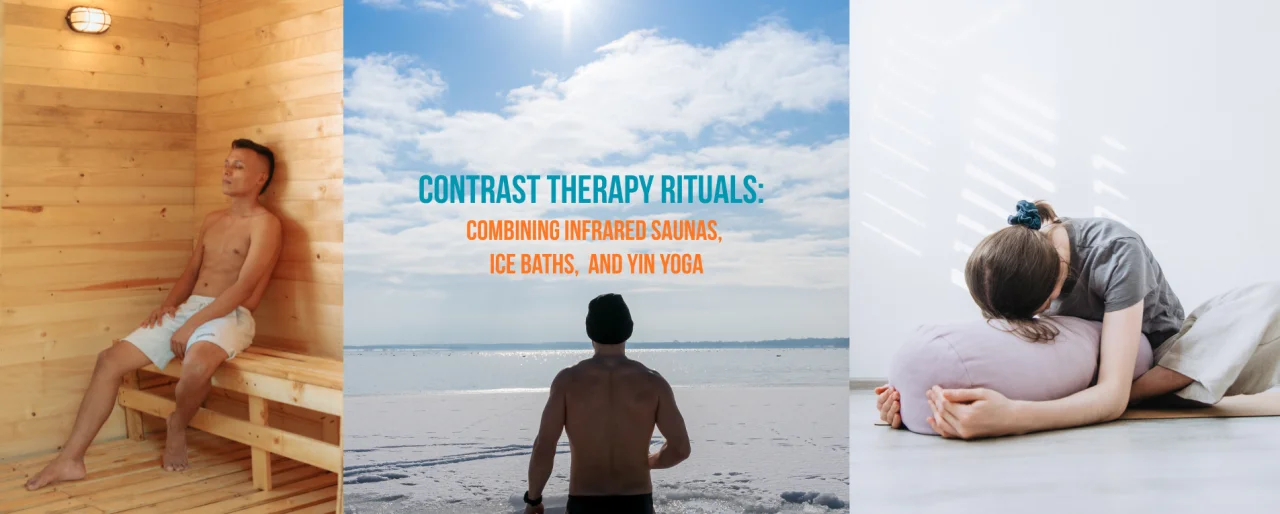
Rather than treating heat, cold, and yoga as separate wellness activities, a contrast therapy ritual brings them together in a purposeful sequence. The heat provides a warming environment, cold exposure creates a very different physical sensation, and Yin Yoga offers slow, supported postures that encourage stillness and mindful breathing.
What Is Contrast Therapy?
Contrast therapy generally refers to alternating between hot and cold environments or applications. Traditional approaches may include hot and cold water, while modern wellness routines can incorporate infrared saunas and ice baths.
Adding Yin Yoga creates a slower, more mindful component to the experience. The combination can be particularly appealing to people who want to create a dedicated recovery and relaxation ritual rather than simply completing a workout.
Why Combine Infrared Sauna, Ice Bath, and Yin Yoga?
Each part of the ritual provides a different experience. Infrared sauna introduces heat, an ice bath introduces cold exposure, and Yin Yoga emphasizes slow movement, longer-held postures, and mindful awareness.
Combining these practices can create a structured transition between stimulation and relaxation. The goal should not be to tolerate extreme temperatures for as long as possible. Instead, the focus should be on listening to your body and practicing each component safely.
Infrared Sauna: The Heat Component
An infrared sauna uses infrared energy to warm the body and create a heated environment. Unlike a traditional sauna, infrared sauna systems are designed to use infrared wavelengths as part of the heating process.
Many people use sauna sessions as part of their relaxation and wellness routines. Sitting quietly in a warm environment can also provide an opportunity to disconnect from screens and everyday distractions.
How to Approach an Infrared Sauna Session
- Drink adequate fluids before and after the session.
- Start with a shorter session if you are new to sauna use.
- Stay aware of how your body feels throughout the session.
- Leave the sauna if you feel dizzy, faint, unusually weak, or unwell.
- Avoid treating longer or hotter sessions as automatically better.
Ice Bath: The Cold Component
An ice bath involves immersing the body in cold water for a controlled period. Cold exposure can feel intense, particularly for beginners, so it is important to approach it gradually rather than trying to tolerate extreme temperatures immediately.
The experience can also encourage strong awareness of breathing. Remaining calm and breathing steadily can be challenging when the body encounters cold water, making the practice an opportunity to develop mindfulness and self-awareness.
Tips for Beginners Using an Ice Bath
- Begin with less intense cold exposure rather than immediately using extremely cold water.
- Keep initial exposure brief and gradually learn how your body responds.
- Enter and exit the water calmly.
- Never practice cold immersion alone.
- Stop immediately if you feel confused, excessively numb, faint, or otherwise unwell.
Cold-water immersion is not appropriate for everyone. People with certain cardiovascular, circulatory, or other medical conditions should consult a qualified healthcare professional before attempting cold exposure.
Yin Yoga: The Mindful Recovery Component
Yin Yoga is a slower style of yoga that typically uses relaxed, supported postures held for longer periods. Rather than emphasizing continuous movement, Yin Yoga encourages stillness, awareness, and comfortable breathing.
After heat or cold exposure, gentle yoga can provide a transition into a quieter part of the ritual. Props such as bolsters, blankets, and blocks can be used to make postures more comfortable and supported.
Suitable Yin Yoga Poses
- Child's Pose (Balasana): A gentle resting posture that can be adapted with props.
- Butterfly Pose: A seated posture that can be practiced with relaxed breathing.
- Supported Forward Fold: A restorative variation using a bolster or cushions.
- Dragon Pose: A hip-focused Yin posture that should be practiced within a comfortable range.
- Supported Savasana: A relaxed finishing posture for quiet reflection.
How to Create a Contrast Therapy Ritual
A contrast therapy ritual does not need to be complicated. A simple sequence can help you move gradually from heat to cold and then into a quieter yoga practice.
Step 1: Prepare Your Space
Before beginning, prepare everything you need. Have drinking water, towels, comfortable clothing, your yoga mat, and any yoga props ready. If you are using an ice bath, make sure you have a safe way to enter and exit it.
Step 2: Begin With Gentle Movement
Start with a few minutes of gentle movement or simple yoga postures. This can help you become aware of your breathing and physical state before beginning the heat or cold portion of the ritual.
Step 3: Enter the Infrared Sauna
Spend a comfortable amount of time in the infrared sauna based on your experience and the sauna manufacturer's guidance. Relax, breathe naturally, and avoid pushing yourself simply to stay longer.
Step 4: Transition to Cold Exposure
After leaving the sauna, allow yourself to transition safely before entering the cold water. Keep the initial ice-bath exposure brief, particularly if you are new to cold immersion.
Focus on steady breathing and remain attentive to how you feel. You do not need to prove how long you can stay in the water.
Step 5: Return to a Comfortable Temperature
After cold exposure, dry yourself and allow your body to return to a comfortable temperature. Avoid immediately repeating intense heat and cold cycles if your body is not responding well.
Step 6: Finish With Yin Yoga
Move to your yoga mat and practice a short Yin Yoga sequence. Use supportive props and choose postures that allow you to remain comfortable and breathe naturally.
Finish with several minutes of Savasana or quiet meditation. This gives you an opportunity to observe how your body and mind feel after the complete ritual.
Example Contrast Therapy Routine
A simple routine for an experienced and healthy adult might look like this:
- 5–10 minutes of gentle movement and breathing.
- A comfortable infrared sauna session according to the equipment's instructions.
- A brief and controlled cold-water exposure.
- Time to dry off and return to a comfortable temperature.
- 15–30 minutes of gentle Yin Yoga.
- 5–10 minutes of Savasana or quiet breathing.
The exact duration and intensity should be adjusted to your experience, environment, and individual tolerance. More intense exposure is not necessarily more beneficial.
Benefits of Combining Contrast Therapy and Yin Yoga
Encourages Relaxation
The ritual creates dedicated time away from everyday activities. The quiet environment of a sauna and the slow pace of Yin Yoga can encourage a more relaxed experience.
Builds Body Awareness
Moving between different physical sensations can encourage you to pay closer attention to your breathing, temperature, muscle tension, and overall comfort.
Creates a Mindful Wellness Routine
Repeating a carefully structured ritual can provide a consistent opportunity to pause and focus on the present moment.
Combines Different Yoga and Wellness Practices
The combination brings together heat exposure, cold exposure, yoga, breathing, and relaxation. Each component can be practiced independently, while the complete ritual provides a more structured wellness experience.
Safety Considerations
Contrast therapy can place significant demands on the body because it involves exposure to substantial temperature changes. It is important to approach both sauna use and cold-water immersion conservatively.
- Do not use extreme heat or cold simply to make the experience more intense.
- Stay hydrated and pay attention to signs of overheating or dehydration.
- Never use an ice bath alone.
- Stop if you experience dizziness, fainting, chest discomfort, confusion, or unusual symptoms.
- People with underlying medical conditions should seek professional medical advice before attempting contrast therapy.
- Pregnant individuals and people taking medications that affect blood pressure, circulation, or temperature regulation should seek appropriate professional guidance before using extreme heat or cold.
Contrast Therapy and Yoga Retreats
Wellness practices such as sauna, cold exposure, meditation, and yoga can also be incorporated into a broader retreat experience. A retreat environment can provide dedicated time to step away from everyday routines and focus on mindful movement, breathing, and relaxation.
For practitioners interested in developing a deeper understanding of traditional yoga practices, a structured YTT Course in Nepal can provide education in asana, pranayama, meditation, yoga philosophy, anatomy, and teaching methodology.
If you are looking for a foundational yoga teacher training program, explore our 200 Hour Yoga Teacher Training in Nepal. A comprehensive training can help practitioners develop a stronger understanding of yoga both for personal practice and future teaching.
Final Thoughts
Contrast therapy rituals can bring together infrared sauna, ice baths, and Yin Yoga into a structured wellness experience. Heat and cold provide contrasting physical sensations, while Yin Yoga adds slow movement, mindful breathing, and stillness.
The most important principle is to practice mindfully rather than chase extreme temperatures or longer exposure times. Start gradually, listen to your body, and seek professional guidance when necessary.
For those who want to explore yoga at a deeper level, combining personal wellness practices with formal yoga education can provide a stronger understanding of asana, pranayama, meditation, and yoga philosophy.