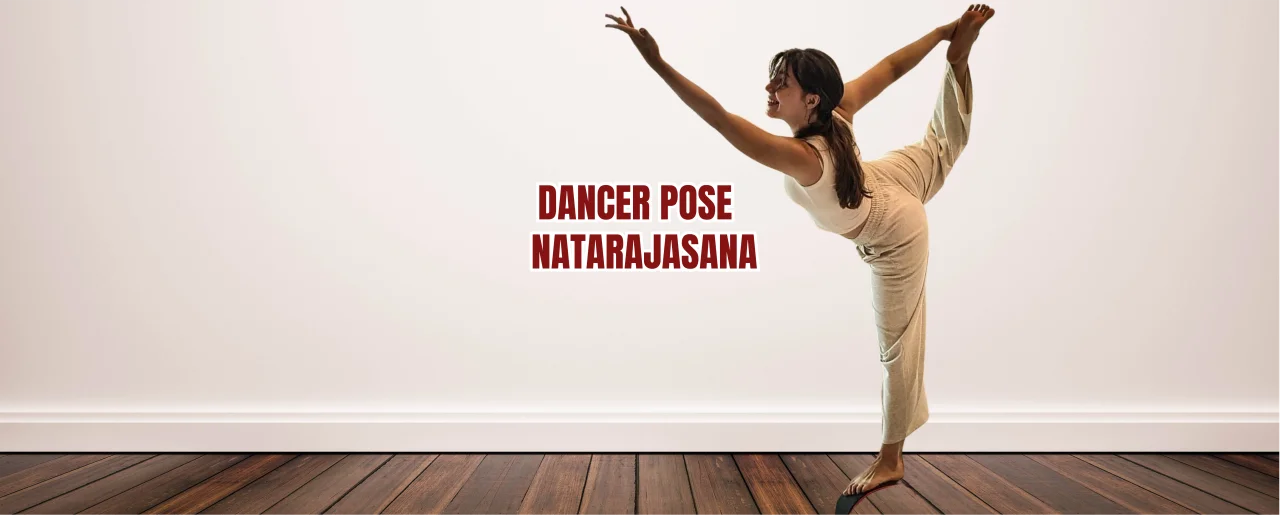
Dancer Pose (Natarajasana) is a balancing yoga posture that combines stability, flexibility, concentration, and controlled movement. Also known as Lord of the Dance Pose, it requires practitioners to balance on one leg while extending the opposite leg backward and reaching for the foot with the hand.
How to Practice Dancer Pose
Begin by standing upright with your feet together and your arms relaxed by your sides. Shift your weight onto one leg and slowly bend the opposite knee, bringing the heel toward your hip.
Reach back with the corresponding hand and hold the inside or outside of the lifted foot, depending on your comfort and flexibility. Keep the standing leg stable and gradually extend the lifted leg backward while reaching the opposite arm forward.
Maintain a steady gaze on a fixed point to support balance. Keep your chest open and your spine lengthened while breathing steadily. Hold the posture for a comfortable duration, then slowly release and repeat on the opposite side.
Benefits of Dancer Pose
When practiced with proper alignment and within a comfortable range of motion, Natarajasana can be a valuable addition to a balanced yoga practice. Some commonly associated benefits include:
- Develops balance and body coordination.
- Engages the muscles of the standing leg and core.
- Encourages flexibility in the hips, shoulders, and legs.
- Supports better body awareness and concentration.
- Encourages an open chest and upright posture.
- Combines strength, balance, and flexibility in one posture.
Dancer Pose in Yoga Teacher Training
Dancer Pose is useful in yoga teacher training because it allows students to explore the relationship between balance, strength, flexibility, breathing, and concentration. Practitioners can learn how to establish a stable foundation before gradually working toward a deeper expression of the posture.
If you want to develop your understanding of yoga asanas, alignment, pranayama, meditation, and traditional yoga practices, you can explore 300 Hour Teacher Training Nepal for a structured and progressive yoga learning experience.
Precautions While Practicing Dancer Pose
Dancer Pose requires balance and flexibility, so beginners should approach it gradually. Avoid forcing the lifted leg or creating excessive pressure in the standing knee, hip, or lower back. Use a wall or other suitable support when necessary to improve stability. If you experience pain or discomfort, release the pose and practice under the guidance of a qualified yoga teacher.
Conclusion
Natarajasana, or Dancer Pose, is a challenging balancing posture that brings together strength, flexibility, concentration, and body awareness. With consistent practice and proper alignment, it can be incorporated into a well-rounded yoga sequence and help practitioners develop greater control and stability.