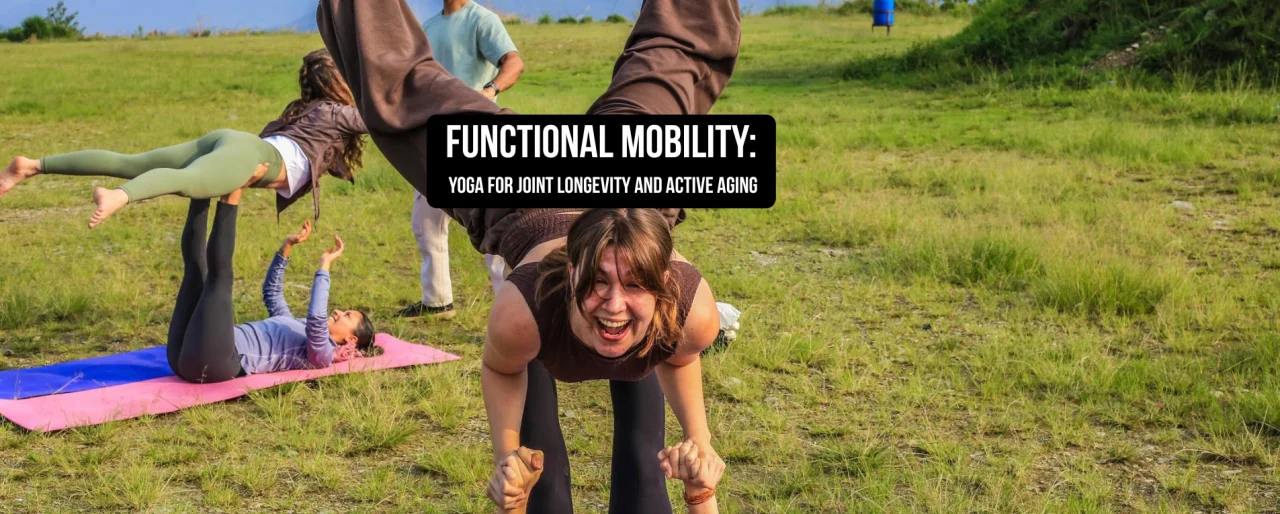
As we age, maintaining healthy movement becomes more important than achieving advanced flexibility. Functional mobility is the ability to move efficiently, safely, and comfortably through everyday activities. Yoga is one of the most effective lifelong practices for improving mobility, preserving joint health, and supporting active aging.
Unlike conventional workouts that often isolate muscles, yoga integrates strength, flexibility, balance, breath awareness, and coordination. These qualities help improve posture, reduce stiffness, minimize injury risk, and enhance overall quality of life.
What Is Functional Mobility?
Functional mobility refers to the body's ability to move through its natural range of motion with control, stability, and strength. It enables you to perform daily activities such as walking, climbing stairs, bending, lifting, and reaching without discomfort.
- Healthy joint mobility
- Muscle flexibility
- Core stability
- Functional strength
- Balance and coordination
- Breath awareness
Why Joint Longevity Matters
Healthy joints allow you to remain active throughout life. Lack of movement, prolonged sitting, poor posture, and muscle weakness often contribute more to stiffness than aging itself. Regular yoga practice nourishes the joints by encouraging circulation, improving muscle support, and maintaining natural movement patterns.
How Yoga Improves Functional Mobility
1. Improves Joint Range of Motion
Gentle yoga sequences encourage healthy movement in the ankles, knees, hips, spine, shoulders, and wrists while reducing stiffness.
2. Builds Functional Strength
Standing poses such as Warrior, Chair Pose, and Plank strengthen muscles throughout their full range of motion, helping stabilize the joints.
3. Enhances Balance
Tree Pose, Eagle Pose, and balancing postures improve body awareness, coordination, and stability, reducing fall risk as we age.
4. Supports Spinal Health
Yoga maintains spinal flexibility through bending, twisting, and extension, helping improve posture and reduce back discomfort.
5. Increases Hip and Shoulder Mobility
Poses such as Low Lunge, Butterfly Pose, Downward Dog, and Puppy Pose restore healthy movement in major joints used every day.
Functional Mobility vs Flexibility
| Flexibility | Functional Mobility |
|---|---|
| Passive stretching | Active movement control |
| Focus on muscle length | Focus on usable movement |
| May lack strength | Requires strength and stability |
| Static | Dynamic |
Best Yoga Poses for Joint Longevity
- Mountain Pose (Tadasana)
- Cat-Cow Stretch
- Downward Facing Dog
- Warrior II
- Tree Pose
- Chair Pose
- Low Lunge
- Bridge Pose
- Supine Twist
- Child's Pose
The Importance of Breath
Breath connects movement with awareness. Controlled breathing helps release muscular tension, improve stability, increase oxygen delivery, and support smoother movement patterns.
Yoga for Active Aging
Consistent yoga practice helps maintain independence by improving posture, mobility, balance, coordination, and mental well-being. Combined with healthy nutrition, quality sleep, hydration, and regular walking, yoga supports graceful aging and lifelong vitality.
Learn Functional Mobility Through Yoga Teacher Training
If you wish to deepen your understanding of movement, anatomy, and safe alignment, consider joining our Nepal Yoga Teacher Training. Our internationally recognized 200 Hour Yoga Teacher Training Nepal covers functional anatomy, biomechanics, alignment, pranayama, meditation, yoga philosophy, teaching methodology, and injury prevention.
Final Thoughts
Functional mobility is essential for maintaining healthy joints and an active lifestyle. Yoga offers a balanced approach by combining flexibility, strength, coordination, and mindful breathing into one sustainable practice. Whether your goal is pain-free movement, athletic performance, or healthy aging, a consistent yoga practice can help you move better and live longer.