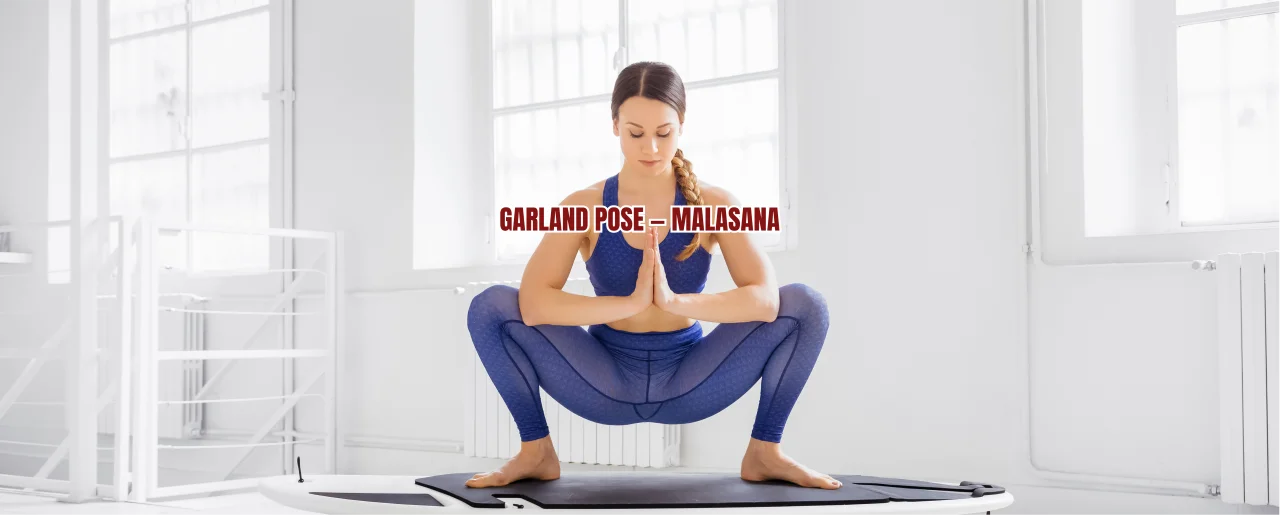
Garland Pose (Malasana) is a deep squat yoga posture that is commonly practiced to develop flexibility, stability, and body awareness. Also known as Yogi Squat, Malasana is often included in yoga sequences to create a strong and grounded foundation while encouraging mobility in the hips, ankles, and lower body.
How to Practice Garland Pose
Begin by standing with your feet slightly wider than hip-width apart. Slowly bend your knees and lower your hips toward the floor into a deep squat. Keep your feet grounded and allow your knees to move in line with your toes.
Bring your palms together in front of your chest in a prayer position. Gently press your elbows against the inner thighs while keeping your spine as upright as comfortably possible. Keep your chest open and breathe steadily while holding the posture.
If maintaining the full squat is difficult, you can use a yoga block, folded blanket, or other suitable support. Focus on maintaining comfort and proper alignment rather than forcing yourself deeper into the pose.
Benefits of Garland Pose
When practiced regularly with proper alignment, Malasana can support flexibility, strength, stability, and body awareness. Some commonly associated benefits include:
- Encourages flexibility in the hips, groins, and ankles.
- Engages and strengthens the lower body.
- Supports better posture and spinal awareness.
- Provides a gentle stretch for the inner thighs and lower body.
- Encourages stability and grounding during yoga practice.
- Helps develop greater awareness of hip and ankle mobility.
Garland Pose in Yoga Teacher Training
Garland Pose is an important posture for yoga students because it introduces key concepts such as lower-body alignment, hip mobility, ankle flexibility, breathing, and body awareness. It can also help students understand how modifications and props can be used to make a posture more accessible.
If you want to deepen your knowledge of yoga asanas, alignment, pranayama, meditation, and traditional yoga practices, you can explore 500 hour yoga teacher training nepal for a comprehensive and advanced yoga learning experience.
Precautions While Practicing Malasana
Practice Garland Pose gradually and avoid forcing your knees, hips, or ankles into an uncomfortable position. If your heels do not comfortably reach the floor, you can place a folded blanket or yoga block underneath them for support.
Maintain steady breathing and avoid rounding or straining your back unnecessarily. Beginners should practice under the guidance of a qualified yoga teacher, particularly when working with limited flexibility or existing discomfort.
Conclusion
Garland Pose (Malasana) is a grounded squat posture that combines flexibility, stability, and body awareness. With regular practice and appropriate modifications, it can become a useful addition to a balanced yoga routine and help practitioners develop greater awareness of the hips, ankles, legs, and overall posture.