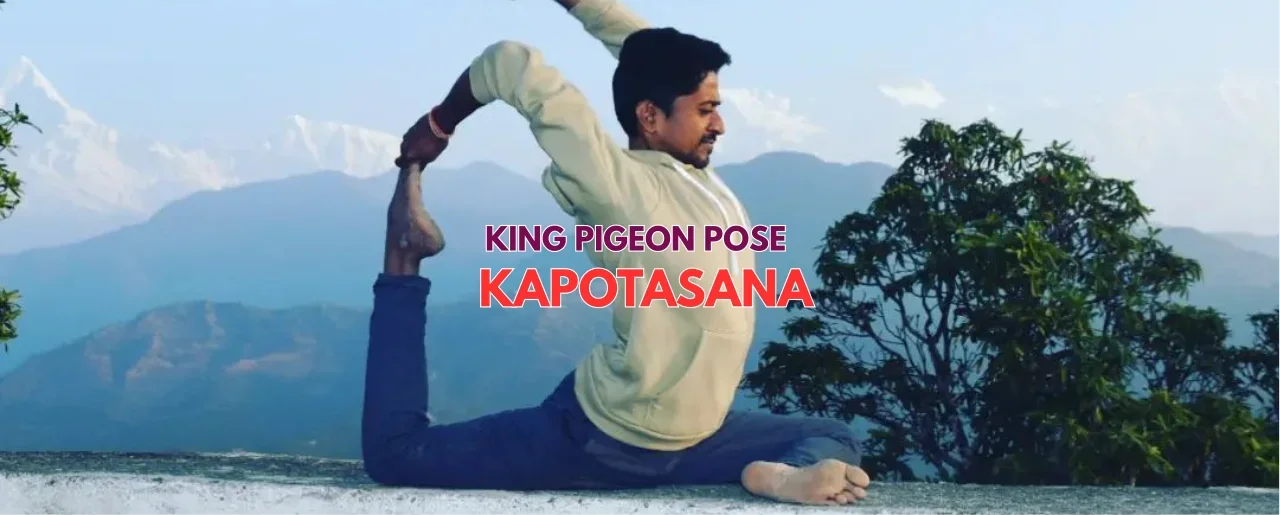
King Pigeon Pose, traditionally known as Kapotasana, is an advanced yoga backbend that combines flexibility, balance, strength, and focused breathing. It is a challenging posture that requires mobility in the shoulders, chest, hips, and spine.
Although the pose looks impressive, it is not about forcing your body into a dramatic shape. With consistent preparation, appropriate modifications, and patient practice, you can gradually develop the mobility and control needed for deeper backbends.
What Is King Pigeon Pose (Kapotasana)?
Kapotasana is a traditional yoga posture involving a deep backbend and a strong opening through the front of the body. In the full expression of the pose, the practitioner bends backward and reaches toward the feet, bringing the hands and feet closer together.
The posture is often associated with advanced Hatha Yoga practice. It requires more than spinal flexibility alone: the shoulders, hip flexors, quadriceps, and upper back also need suitable mobility. Strong legs, a stable foundation, and controlled breathing help support the movement.
Benefits of King Pigeon Pose
When practised appropriately, Kapotasana may support flexibility, body awareness, and strength. The benefits depend on your technique, preparation, and individual physical condition.
1. Encourages Spinal Mobility
This backbend challenges the mobility of the spine, particularly when the movement is distributed across the upper and middle back rather than compressed into the lower back. Begin with gentler backbends before attempting the full pose.
2. Opens the Chest and Shoulders
Kapotasana involves lifting the chest and moving the arms overhead and backward. Preparatory shoulder stretches and chest-opening exercises can help you work toward this position gradually.
3. Stretches the Front of the Hips and Thighs
The posture places the hip flexors and quadriceps in a lengthened position. Gentle lunges and supported quadriceps stretches are useful ways to prepare these areas before practising deeper backbends.
4. Develops Strength and Body Awareness
Maintaining a stable base requires active engagement of the legs, glutes, and back muscles. Regular, well-controlled practice can help you understand how to distribute effort throughout a posture instead of relying on flexibility alone.
5. Encourages Focused Breathing
Challenging yoga postures invite you to pay attention to your breathing and recognise your physical limits. Smooth, comfortable breathing can help you avoid rushing or forcing the movement.
How to Practice King Pigeon Pose Step by Step
Kapotasana is an advanced posture, so warm up first and work within your current range of motion. If you are new to backbends, learn suitable preparatory poses with a qualified yoga teacher before attempting the full version.
Step 1: Warm Up Your Body
Start with gentle movements such as Cat-Cow Pose, low lunges, shoulder mobility exercises, and supported bridge variations. Warm up gradually instead of moving directly into a deep backbend.
Step 2: Establish a Stable Kneeling Position
Kneel on a yoga mat with your knees comfortably positioned. Keep your pelvis controlled and your breathing steady. Use additional padding under your knees if needed.
Step 3: Lift Your Chest
Lengthen through your spine and lift your sternum gently. Keep your neck comfortable and distribute the backbend through the upper body as much as your mobility allows.
Step 4: Begin a Controlled Backbend
Slowly move your chest upward and backward while keeping your legs active. Avoid pushing your hips forward aggressively or collapsing into your lower back.
Step 5: Reach Only Within Your Comfortable Range
If your shoulders, spine, and thighs have sufficient mobility, you may gradually work toward reaching the feet. Never pull yourself deeper using your hands. A supported or modified variation is a better choice if you cannot reach comfortably.
Step 6: Exit the Pose Slowly
Return to an upright position with control and rest in a comfortable neutral posture. Avoid sudden movements, and allow your breathing to return to normal before continuing.
Preparatory Yoga Poses for Kapotasana
Building a foundation is more useful than rushing into the full pose. The following postures can help prepare the body when practised with correct alignment.
- Cat-Cow Pose: Encourages gentle spinal movement.
- Low Lunge: Helps stretch the front of the hips.
- Bridge Pose: Introduces controlled backbending.
- Camel Pose: Develops backbend awareness and chest mobility.
- Supported Fish Pose: Offers a gentler chest-opening variation.
- Shoulder Mobility Exercises: Prepare the arms for overhead movement.
Common Mistakes to Avoid
- Forcing the spine into a deeper backbend than it can comfortably manage.
- Putting excessive pressure on the lower back.
- Holding the breath while reaching for the feet.
- Skipping warm-up exercises for the shoulders, hips, and thighs.
- Comparing your flexibility with another practitioner's flexibility.
- Attempting the full pose without adequate preparation or guidance.
Safety Precautions and Modifications
King Pigeon Pose is not suitable for everyone, especially without appropriate preparation. Avoid the posture if it causes pain, numbness, tingling, or dizziness. People with back, neck, shoulder, hip, or knee injuries, or other relevant medical concerns, should seek advice from an appropriately qualified healthcare professional before attempting this deep backbend.
Beginners should work on preparatory poses rather than forcing the complete posture. A qualified yoga instructor can help assess alignment, suggest modifications, and determine whether you are ready to progress.
King Pigeon Pose and Yoga Teacher Training
Learning advanced yoga postures is not simply about achieving a particular shape. It also involves understanding anatomy, alignment, breathing, gradual progression, and when a posture should be modified or avoided.
If you want to deepen your understanding of traditional yoga, asana practice, pranayama, and meditation, explore Nepal Yoga Teacher Training Nepal . Training in Nepal can offer an opportunity to study yoga in a dedicated learning environment while experiencing the region's natural beauty and cultural traditions.
Choose a course that matches your experience and goals. If you are interested in advanced backbends, ask the school about its approach to anatomy, safe alignment, practical teaching, and modifications for students with different levels of flexibility.
Final Thoughts
King Pigeon Pose (Kapotasana) is a demanding posture that rewards patience, preparation, and awareness. Rather than chasing the deepest possible backbend, focus on building strength, improving mobility gradually, and practising with steady breathing.
Yoga is a personal journey. Whether you are exploring advanced asanas or considering structured yoga education in Nepal, let consistency, safe technique, and respect for your body's limits guide your practice.