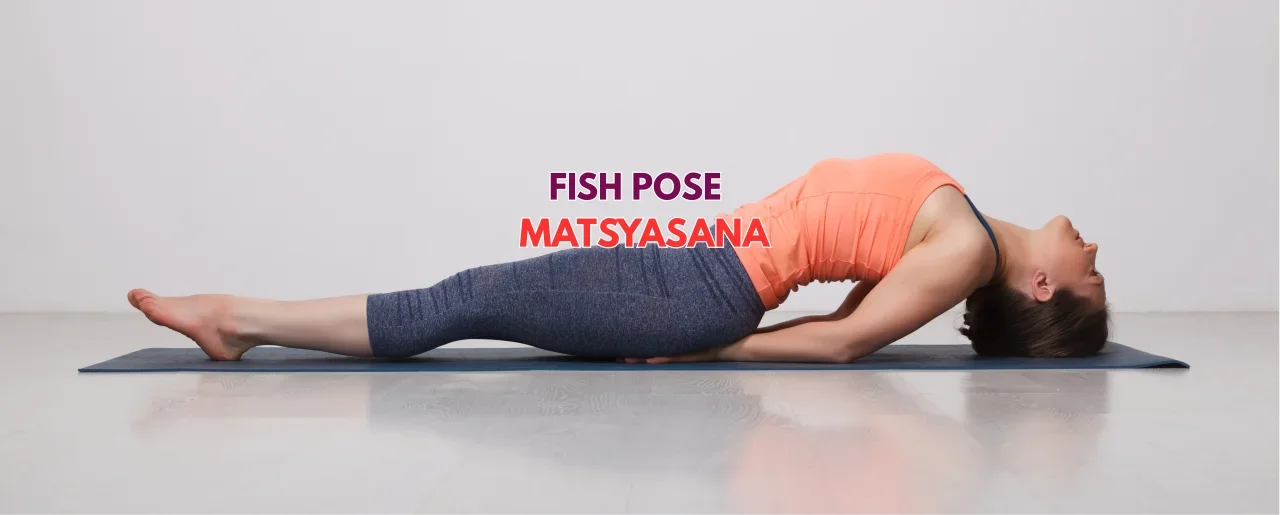
Matsyasana, commonly known as Fish Pose, is a traditional yoga posture that gently opens the chest and encourages extension through the upper back. In the traditional version, the practitioner lies on the back, lifts the chest, and gently arches the upper body while keeping the head and neck carefully positioned.
Fish Pose can look effortless when performed by an experienced practitioner, but comfort and alignment matter more than the depth of the backbend. Whether you are new to yoga or have been practising for years, a gradual approach can help you explore this posture with greater body awareness.
Matsyasana, or Fish Pose, is a backbend that focuses on opening the chest and extending the upper back.What Is Matsyasana (Fish Pose)?
The Sanskrit name Matsyasana is translated as Fish Pose. It is practised in different yoga traditions, with variations ranging from a supported, gentle chest opener to a deeper backbend.
In the traditional posture, the chest lifts while the upper back arches. Depending on the variation, the forearms and elbows may support the body, and the crown of the head may lightly approach or touch the floor. The neck should never be forced to carry excessive weight.
Benefits of Matsyasana
When practised comfortably and with appropriate technique, Fish Pose may contribute to flexibility, postural awareness, and a balanced yoga routine. Benefits vary from person to person.
1. Encourages Chest and Shoulder Mobility
The lifted-chest position gently challenges movement through the chest and shoulders. A supported variation can be a useful starting point for people who find deeper backbends difficult.
2. Develops Upper-Back Extension
Matsyasana involves extending the upper back rather than simply dropping the head backward. Practising slowly helps you explore this movement while maintaining awareness of your spine.
3. Supports Postural Awareness
The pose encourages you to notice how your chest, shoulders, and upper back move together. This awareness can complement other mobility and strengthening exercises in a regular routine.
4. Encourages Mindful Breathing
Lifting the chest changes the position of the rib cage. Breathing naturally in a comfortable variation can help you focus on the movement of the breath without straining.
5. Adds Variety to a Yoga Sequence
Fish Pose can complement other postures that develop spinal mobility. A yoga teacher may include it in a balanced sequence, depending on the student's experience, comfort, and physical needs.
How to Do Matsyasana Step by Step
Beginners can start with a supported version using a folded blanket or an appropriate yoga bolster. The traditional version requires more control and should be learned gradually.
Step 1: Lie on Your Back
Lie on your yoga mat with your legs extended comfortably. Relax your shoulders and allow your breathing to settle. Keep your head and neck in a neutral position.
Step 2: Position Your Arms
Bring your arms alongside your body. In the traditional variation, you may slide your hands beneath your hips with your palms facing down, provided this is comfortable for your shoulders.
Step 3: Press Through Your Forearms
Bend your elbows and gently press your forearms into the floor. Use this support to lift your chest upward. Avoid pushing forcefully through your head or neck.
Step 4: Lift Your Chest
Allow your upper back to extend gradually as your chest rises. Keep your shoulders comfortable and distribute the movement through the upper body instead of forcing the lower back into an exaggerated arch.
Step 5: Position Your Head Carefully
In the traditional variation, the crown of the head may lightly touch the floor. Only attempt this if your neck remains comfortable and your forearms support most of your weight. If there is any pressure or discomfort in the neck, keep your head supported or choose a gentler variation.
Step 6: Breathe and Release Slowly
Maintain comfortable breathing for a few breaths, then lower your upper back and head slowly. Remove any support from beneath your body only after you have returned to a relaxed position.
Beginner-Friendly Variations of Fish Pose
Supported Fish Pose
Place a suitable yoga bolster or folded blanket beneath the upper back so that the chest opens gently. Support your head separately if needed. The support should feel stable and comfortable, without compressing the neck.
Gentle Reclined Chest Opener
Lie on your back with your shoulders relaxed and your head supported. Allow the chest to open naturally without creating a deep arch in the spine. This is a useful alternative if the traditional posture is too challenging.
Common Mistakes to Avoid
- Putting excessive weight or pressure on the crown of the head.
- Forcing the neck backward to make the pose look deeper.
- Lifting the chest by compressing the lower back excessively.
- Holding the breath or tightening the shoulders.
- Attempting the full posture without preparing the upper back.
- Ignoring pain or discomfort while holding the pose.
Precautions and Safety Tips
Matsyasana may not be suitable for everyone, especially in its traditional form. People with neck or spinal conditions, recent injuries or surgery, or other relevant medical concerns should consult an appropriately qualified healthcare professional before attempting the posture.
Never force your head toward the floor or use your neck to support your body weight. Beginners should consider a supported variation under the guidance of a qualified yoga instructor. Stop immediately if you experience pain, numbness, tingling, dizziness, or unusual discomfort.
When Should You Practise Fish Pose?
Matsyasana can be included in a yoga session after appropriate warm-up movements. Gentle shoulder mobility exercises and comfortable upper-back movements may help prepare your body.
Choose a variation that suits your current ability. Start with a short, comfortable hold and breathe naturally rather than trying to maintain the pose for a long time.
Learn Traditional Yoga in Nepal
Developing a yoga practice involves more than memorising postures. Understanding alignment, anatomy, breathing, and modifications helps you make informed choices about your practice.
If you want to explore yoga more deeply, discover Nepal Yoga Teacher Training Nepal . A yoga training programme in Nepal may provide opportunities to study asana, pranayama, meditation, and yogic philosophy in a dedicated learning environment.
Before enrolling, review the course syllabus, teaching methods, instructor qualifications, and practical training opportunities. Choose a programme that matches your experience and learning goals.
Frequently Asked Questions
1. Is Matsyasana suitable for beginners?
Beginners may be able to practise a supported version of Fish Pose if it is comfortable and appropriate for their physical condition. The traditional version should be learned gradually with qualified guidance.
2. Which muscles are involved in Fish Pose?
Matsyasana involves the muscles that support the upper back, shoulders, and trunk. Depending on the variation, it also challenges the muscles that help stabilise the body.
3. How long should I hold Matsyasana?
Begin with a few comfortable breaths and adjust according to your experience and the variation you are practising. There is no need to hold the pose if your neck or back feels strained.
4. Can I practise Fish Pose with a stiff neck?
Avoid the traditional version if you have neck pain or a condition that could be aggravated by extending the neck. Seek appropriate professional advice and consider gentler alternatives only when suitable.
5. Is it necessary for the head to touch the floor?
No. Beginners can use a supported variation with the head resting comfortably on a blanket or bolster. Forcing the head toward the floor is unnecessary and may place excessive strain on the neck.
6. Where can I learn yoga in Nepal?
Visit Nepal Yoga Teacher Training Nepal to explore yoga education opportunities and learn more about studying traditional yoga in Nepal.
Final Thoughts
Matsyasana, or Fish Pose, is a chest-opening backbend that can add variety to a mindful yoga practice. Its value comes from practising with awareness, using suitable support, and respecting your body's natural limits.
Whether you are just beginning yoga or deepening your existing practice, focus on comfortable breathing and controlled movement. A gentle variation performed well is more valuable than a deep posture achieved through force.