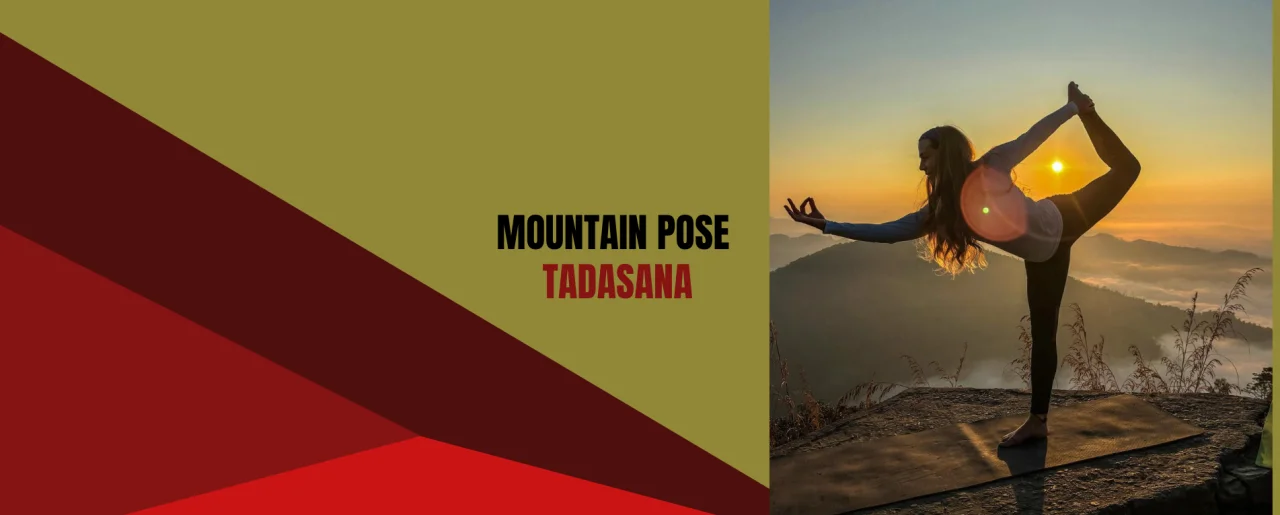
Mountain Pose (Tadasana) is one of the foundational standing yoga poses. Although it looks simple, Tadasana teaches important principles of posture, balance, alignment, breathing, and body awareness. It is often used as a starting or resting position between standing yoga poses.
The Sanskrit name Tadasana comes from the word Tada, meaning mountain, and Asana, meaning posture or seat. The pose represents the stable and grounded qualities of a mountain while encouraging the practitioner to stand with awareness and steady breathing.
What Is Mountain Pose (Tadasana)?
Mountain Pose is a standing posture in which the body is positioned upright with the feet grounded, legs active, spine naturally elongated, shoulders relaxed, and head aligned over the body.
Tadasana is commonly practiced at the beginning of a yoga session and between standing postures. It can also be used as a foundation for learning proper alignment in other yoga asanas.
How to Do Mountain Pose Step by Step
- Stand upright on your yoga mat with your feet together or comfortably hip-width apart.
- Distribute your body weight evenly across both feet.
- Keep your toes relaxed and allow your feet to connect firmly with the ground.
- Engage your legs gently without locking your knees.
- Lengthen your spine and allow the crown of your head to move upward.
- Relax your shoulders and allow your arms to rest naturally beside your body.
- Keep your chin parallel to the floor and your gaze forward.
- Take slow, comfortable breaths through the nose.
- Remain in the posture for several breaths while observing your alignment and body sensations.
Benefits of Mountain Pose
Although Tadasana is a basic yoga posture, practicing it with awareness can help develop important physical and mental skills.
1. Improves Postural Awareness
Mountain Pose encourages you to notice the position of your feet, legs, pelvis, spine, shoulders, and head. This awareness can help you understand healthy alignment during other yoga postures.
2. Develops Balance and Stability
Standing evenly on both feet encourages stability and body awareness. Practicing Tadasana can provide a foundation for more challenging standing and balancing postures.
3. Strengthens the Legs
The legs remain active in Mountain Pose. Gentle engagement of the feet, calves, thighs, and surrounding muscles helps create a stable foundation for the posture.
4. Encourages a Long, Natural Spine
Tadasana teaches practitioners to lengthen the spine without unnecessarily tightening the body. This can be useful when learning alignment principles for other seated and standing yoga poses.
5. Supports Mindful Breathing
Because the body remains relatively still, Mountain Pose provides an opportunity to observe the breath. Slow and comfortable breathing can help develop concentration and mindfulness during yoga practice.
6. Creates a Foundation for Other Yoga Poses
Many standing yoga postures begin from or return to Tadasana. Learning the basic alignment of Mountain Pose can therefore make it easier to understand other asanas.
Mountain Pose Alignment Tips
Proper alignment is more important than simply standing still. Use the following points as a guide:
- Keep your feet grounded and distribute weight evenly.
- Avoid locking the knees.
- Keep the pelvis in a comfortable neutral position.
- Lengthen the spine without forcing the chest forward.
- Relax the shoulders away from the ears.
- Keep the head comfortably aligned over the spine.
- Allow the arms to remain relaxed.
- Breathe naturally throughout the posture.
Common Mistakes in Tadasana
Locking the Knees
Some practitioners push their knees backward when standing. Instead, keep the legs active while maintaining a soft and comfortable knee position.
Raising the Shoulders
Try not to create unnecessary tension in the shoulders. Allow them to relax naturally while maintaining an upright posture.
Tilting the Pelvis Excessively
Avoid exaggerating the curve of the lower back or tucking the pelvis excessively. Aim for a comfortable, natural alignment.
Forcing the Chest Forward
Mountain Pose does not require you to push your chest forward. Instead, focus on lengthening through the spine while keeping the ribs and shoulders relaxed.
Holding the Breath
Breathing should remain smooth and natural. If you notice that you are holding your breath, soften the posture and return your attention to your breathing.
Mountain Pose for Beginners
Tadasana is generally accessible to beginners because it does not require complicated movements or advanced flexibility. Start by standing comfortably and focus on how your feet connect with the ground.
Beginners can practice the pose for 30 seconds to 1 minute and gradually increase the duration as they become more comfortable with mindful standing and breathing.
How to Practice Mountain Pose Mindfully
Mountain Pose can become a simple mindfulness exercise when practiced with attention.
- Feel the contact between your feet and the ground.
- Notice the position of your legs and pelvis.
- Observe the length of your spine.
- Relax your shoulders, jaw, and facial muscles.