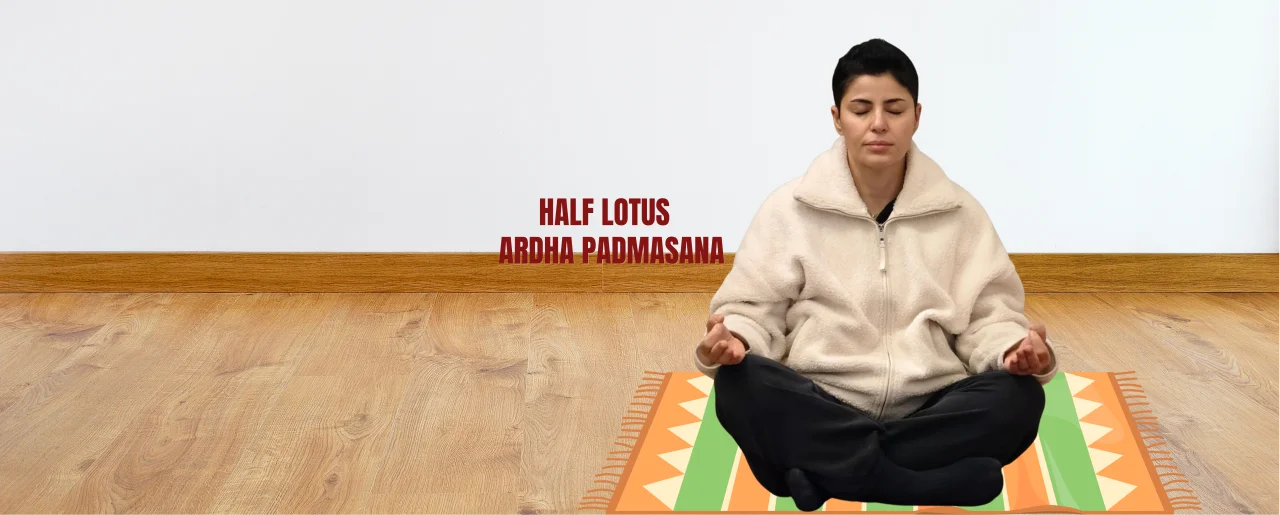
Padmasana (Lotus Pose) is one of the most well-known seated yoga poses, traditionally practiced for meditation, pranayama, and developing physical and mental stability. In this posture, both legs are folded and placed over the opposite thighs while keeping the spine upright and the body relaxed.
How to Practice Padmasana
Begin by sitting comfortably with your legs extended in front of you and keep your spine straight. Slowly bend one knee and place the foot on the opposite thigh. Then bend the other knee and place the second foot on the opposite thigh. Keep your hands comfortably on your knees and maintain an upright posture.
Do not force your legs into the final position. If your hips or knees are not flexible enough, begin with a simpler cross-legged sitting position and gradually develop flexibility through regular yoga practice.
Benefits of Padmasana
When practiced correctly and comfortably, Padmasana can support a stable and focused yoga practice. Some commonly associated benefits include:
- Supports a stable seated position for meditation and pranayama.
- Encourages awareness of an upright and balanced posture.
- May help improve flexibility in the hips and legs.
- Supports concentration during meditation practices.
- Provides a traditional seated posture for various yogic practices.
Importance of Padmasana in Yoga Training
Padmasana is more than a traditional sitting posture. It is commonly associated with meditation, pranayama, and other traditional yoga practices. For students learning yoga, understanding proper alignment, breathing, comfort, and body awareness is more important than forcing the body into the final form of the pose.
If you are interested in learning yoga in a structured environment and want to explore asanas, pranayama, meditation, and traditional yoga practices, you can learn more about Nepal Yoga Teacher Training.
Precautions While Practicing Padmasana
Padmasana may not be comfortable for everyone, especially beginners. Avoid placing unnecessary pressure on the knees, hips, or ankles. Never force the feet into position. If you experience pain or discomfort, release the pose and practice a more comfortable seated posture. Beginners should ideally learn the pose under the guidance of a qualified yoga teacher.
Conclusion
Padmasana is a traditional yoga posture widely used for meditation and pranayama. With gradual practice, proper alignment, and respect for your body's natural flexibility, it can become a comfortable and stable seated posture for deeper yoga practices.