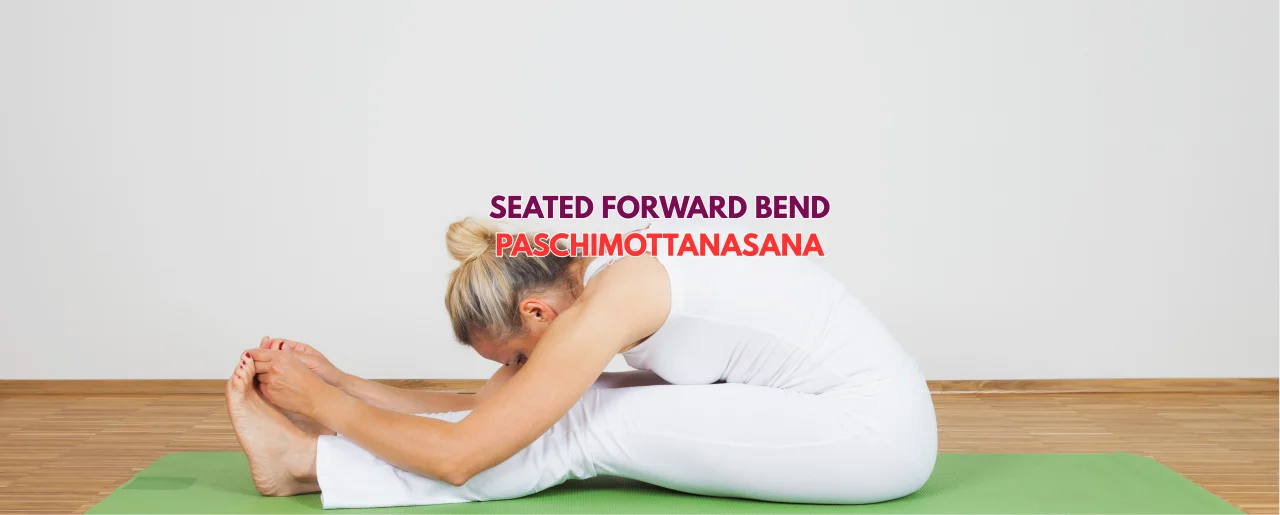
Paschimottanasana, also known as the Seated Forward Bend, is a traditional yoga posture that involves folding the upper body forward over the legs while sitting on the floor. This pose is commonly included in Hatha Yoga practice and encourages mindful breathing, body awareness and gentle stretching.
Whether you are new to yoga or have an established practice, learning the correct technique can help you approach this asana with greater comfort and control. Flexibility is not the goal of every practice; maintaining a steady, comfortable position and respecting your body's limits are equally important.
What Is Paschimottanasana?
The Sanskrit name Paschimottanasana is commonly translated as Seated Forward Bend or Intense Stretch of the West. In this posture, the practitioner sits with the legs extended forward and gradually hinges the torso from the hips toward the thighs.
The pose can provide a gentle stretch to the hamstrings, calves and back of the body when practised with suitable modifications. It also offers an opportunity to slow down, focus on breathing and develop patience during yoga practice.
How to Practise Paschimottanasana Step by Step
- Begin in a seated position: Sit on a yoga mat with both legs extended in front of you. Keep your spine comfortably upright.
- Adjust your posture: Flex your feet gently and sit evenly on both sitting bones. If your lower back rounds significantly, sit on a folded blanket.
- Inhale and lengthen: Raise your arms if comfortable and lengthen through the spine without lifting the shoulders toward the ears.
- Fold from the hips: As you exhale, lean forward from the hip joints while keeping the spine as long as possible. Avoid forcing your chest toward your knees.
- Rest your hands: Place your hands on your shins, ankles or feet, wherever they reach without strain. Bending your knees is completely acceptable.
- Breathe steadily: Relax your neck and shoulders and take several slow, comfortable breaths. Do not pull yourself deeper into the stretch.
- Return slowly: Inhale and lift your torso gradually to an upright seated position.
Beginners can start with three to five comfortable breaths and gradually adjust the duration according to their experience and comfort.
Benefits of Paschimottanasana
When performed with appropriate alignment and without forcing the body, the Seated Forward Bend may offer several physical and mental benefits.
- Stretches the back of the legs: The posture gently targets the hamstrings and calves, depending on your flexibility and technique.
- Encourages spinal awareness: Practising a controlled hip hinge can help you become more aware of your sitting posture and spinal movement.
- Promotes mindful breathing: Slow breathing during the posture can help cultivate attention and relaxation.
- Supports flexibility practice: Regular, comfortable stretching may gradually improve your range of motion.
- Encourages a calmer practice: Holding the pose without strain can provide time for quiet concentration and body awareness.
Individual experiences vary. Paschimottanasana should not be considered a treatment for a medical condition or a guaranteed way to improve digestion, reduce weight or cure back pain.
Common Mistakes to Avoid
- Rounding the lower back excessively to reach the feet.
- Pulling forcefully on the toes or ankles to deepen the stretch.
- Locking the knees when this causes discomfort or excessive tension.
- Holding your breath or pushing beyond your comfortable range of motion.
- Comparing your flexibility with another practitioner's posture.
A useful guideline is to prioritise a comfortable hip hinge over how far forward you can reach. Yoga props and slightly bent knees can make the posture more accessible.
Beginner Modifications for Seated Forward Bend
You do not need to touch your toes to practise Paschimottanasana effectively. Try these modifications to make the posture more comfortable:
- Use a folded blanket: Sit on a blanket to help tilt the pelvis forward more comfortably.
- Bend your knees: Keep your knees slightly bent if your hamstrings feel tight or your back rounds excessively.
- Use a yoga strap: Loop a strap around your feet and hold it gently without pulling yourself forward.
- Reduce the forward fold: Stay upright or move forward only a small amount while maintaining steady breathing.
Who Should Take Precautions?
Move carefully or seek guidance from a qualified yoga teacher if you have a history of lower-back pain, a spinal condition, a recent injury, significant hamstring strain or osteoporosis. Avoid forcing the posture, especially when rounding the spine could aggravate your condition.
If you are pregnant, ask a qualified healthcare professional about suitable modifications and avoid compressing the abdomen. Stop if you experience sharp pain, numbness, tingling or dizziness. Seek individual medical advice when you are unsure whether this posture is suitable for you.
How to Include Paschimottanasana in Your Yoga Routine
Practise a few gentle warm-up movements before attempting the Seated Forward Bend. You might begin with comfortable seated movements, gentle hamstring preparation and a few rounds of mindful breathing.
After the pose, return to an upright seated position and allow your breathing to settle. Choose a range of motion that feels manageable rather than trying to achieve the deepest possible stretch.
Consistency, patience and proper guidance are more valuable than forcing flexibility during a single session.
Deepen Your Yoga Knowledge in Nepal
Learning yoga involves more than performing asanas. Understanding alignment, anatomy, breathing techniques, yoga philosophy and safe teaching methods can help practitioners build a more informed and balanced practice.
If you have already completed foundational yoga teacher training and want to develop your practice further, explore our 300 Hour Yoga Teacher Training in Nepal. This advanced course is intended for practitioners who have completed a 200-hour yoga teacher training programme.
For students seeking a combined foundational and advanced training pathway, our 500 Hour Yoga Teacher Training in Nepal offers a broader programme covering multiple aspects of yoga practice, philosophy and teaching.
Explore the course details to understand the eligibility requirements, curriculum, schedule and training options before choosing the programme that best fits your goals.
Final Thoughts
Paschimottanasana is a valuable posture for exploring flexibility, alignment and mindful breathing. Practise patiently, use modifications when needed and avoid forcing your body into a deeper stretch.
With a consistent and mindful approach, the Seated Forward Bend can become a useful part of a balanced yoga routine.