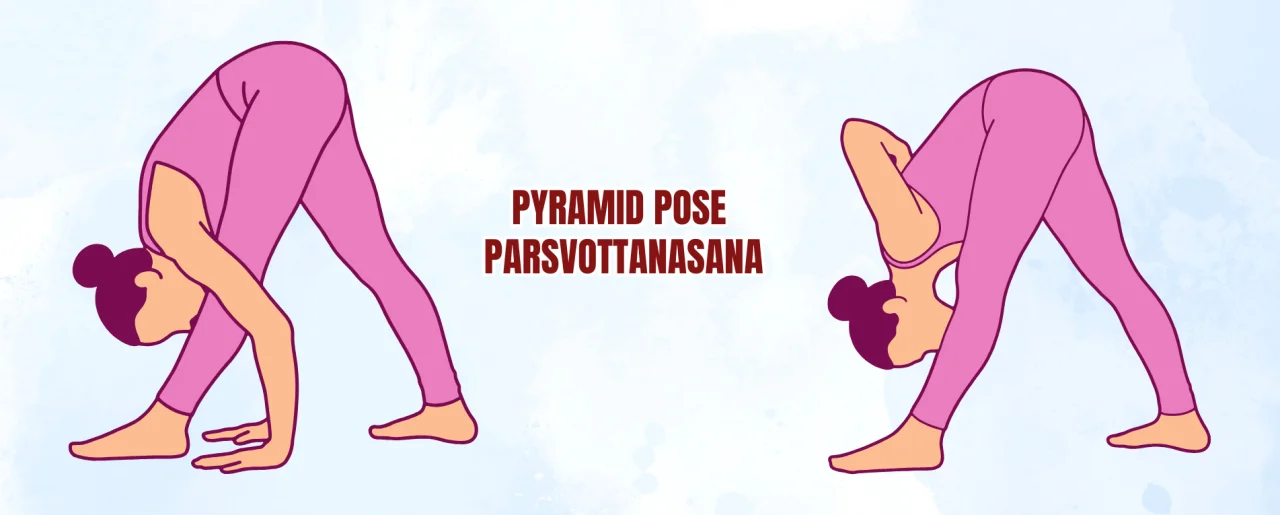
Pyramid Pose, also known as Parsvottanasana or Intense Side Stretch Pose, is a standing yoga posture that combines balance, strength, forward folding, and hamstring flexibility. It requires a stable foundation through the feet and legs while keeping the spine long as the torso moves forward.
Although Pyramid Pose may look simple, proper alignment is important. The pose asks you to coordinate your feet, legs, hips, pelvis, spine, and shoulders while maintaining steady breathing. With regular practice, it can become a useful posture for developing body awareness, balance, and flexibility.
What Is Pyramid Pose (Parsvottanasana)?
Pyramid Pose is a standing forward-bending yoga posture performed with the feet positioned apart and the hips oriented toward the front of the mat. The torso gradually folds over the front leg while the legs remain active and grounded.
The Sanskrit name is Parsvottanasana. The posture is also commonly called Pyramid Pose because the body forms a strong, stable shape resembling a pyramid when viewed from the side.
The pose emphasizes the relationship between stability and mobility. Instead of simply trying to move the head toward the front leg, the practitioner should focus on creating length through the spine and maintaining a stable lower body.
Pyramid Pose Benefits
When practiced with appropriate alignment and within your comfortable range of motion, Pyramid Pose can support several aspects of a yoga practice.
- Stretches the hamstrings and the back of the legs.
- Encourages mobility through the hips and pelvis.
- Helps develop strength and stability in the legs.
- Challenges standing balance and body awareness.
- Encourages length through the spine during a forward fold.
- Can improve awareness of lower-body alignment.
- Provides an opportunity to practice controlled, mindful breathing.
- Can complement a wider yoga sequence focused on flexibility and balance.
Yoga Journal describes Parsvottanasana as a pose that combines hamstring stretching with shoulder opening and emphasizes the importance of balancing stability in the base with freedom in the upper body.
How to Do Pyramid Pose Step by Step
- Begin in Mountain Pose. Stand upright at the top of your yoga mat with your feet grounded and your spine comfortably tall.
- Step one foot backward. Move your right foot back approximately 2 to 4 feet, depending on your height, flexibility, and balance.
- Position the back foot. Turn the back foot slightly outward while keeping the legs active and stable. A moderate angle can make it easier to maintain balance.
- Square the hips. Gently orient your pelvis toward the front leg. Avoid forcing the hips into a position that creates discomfort.
- Lengthen your spine. Place your hands on your hips and inhale. Lift through the crown of your head and create space along the front and sides of your torso.
- Fold forward from the hips. Exhale and slowly hinge your torso forward. Keep the spine long rather than collapsing through the chest and shoulders.
- Place your hands. Bring your hands toward the floor on either side of the front foot. If the floor feels too far away, place your hands on yoga blocks.
- Keep both legs active. Ground through the feet and maintain control in both legs. Avoid locking or aggressively hyperextending the knees.
- Maintain a comfortable forward fold. Allow the torso to move deeper only as long as you can maintain steady breathing and good alignment.
- Hold and breathe. Stay for several slow breaths, then press through your feet and gradually return to standing.
- Repeat on the opposite side. Switch the position of your legs and practice the same sequence on the other side.
Pyramid Pose Alignment Tips
Alignment is particularly important in Parsvottanasana because the posture combines a narrow standing base with a forward fold. The goal is not to reach the floor at any cost. Instead, maintain stability and length while working within your current range of motion.
- Keep the front foot grounded: Press through the foot instead of allowing the weight to move excessively toward the toes.
- Maintain active legs: Engage the legs without gripping or forcing the knees backward.
- Lengthen before folding: Create space through the spine before moving deeper into the forward bend.
- Keep the pelvis controlled: Avoid forcing the hips square if doing so creates strain.
- Relax unnecessary tension: Keep the neck, jaw, and shoulders as relaxed as possible while maintaining appropriate muscular engagement.
- Use props: Yoga blocks can bring the floor closer and make the posture more accessible.
Common Mistakes in Pyramid Pose
1. Rounding the Back to Reach the Floor
One of the most common mistakes is trying to place the hands on the floor even when the hamstrings are not ready. This can cause the spine to collapse forward. Instead, use blocks and prioritize spinal length.
2. Taking the Feet Too Far Apart
A stance that is unnecessarily wide can make it harder to maintain balance and control. Find a distance that allows you to fold from the hips without losing stability.
3. Locking the Knees
Keep the legs strong without aggressively pushing the knees backward. The amount of knee extension should feel controlled and comfortable.
4. Forcing the Hips Square
Pelvic alignment matters, but forcing the hips into position can create unnecessary tension. Work gradually and respect your body's available range of motion.
5. Holding the Breath
Avoid holding your breath while trying to deepen the posture. Slow, comfortable breathing can help you remain focused and aware of your alignment.
Pyramid Pose for Beginners
Beginners do not need to touch their head to the knee or place their hands flat on the floor. The quality of the posture is more important than how deep you can fold.
Start with a slightly wider stance if necessary and use yoga blocks underneath your hands. Keep your spine extended and gradually increase the depth of the fold as your flexibility and control improve.
Practicing with a qualified yoga teacher can also help you understand how your foot, knee, hip, pelvis, and spine alignment work together.
Pyramid Pose Modification Using Yoga Blocks
Yoga blocks are one of the simplest ways to modify Parsvottanasana. Place one block on either side of the front foot and adjust the height according to your flexibility.
This modification allows you to maintain a longer spine without forcing your hands toward the floor. As your mobility develops, you can gradually lower the blocks.
Who Should Be Careful With Pyramid Pose?
Pyramid Pose places a significant stretch on the back of the legs and requires controlled balance. If you have a current hamstring, hip, knee, or lower-back injury, consider consulting a qualified healthcare professional before practicing the pose.
Stop the posture if you experience sharp pain, numbness, dizziness, or other unusual symptoms. Yoga should be practiced within a comfortable and appropriate range rather than forced.
Pyramid Pose and Yoga Teacher Training
Learning individual yoga poses is an important part of developing a deeper understanding of yoga. If you want to study asana alignment, yoga anatomy, pranayama, meditation, philosophy, and teaching methodology in a structured environment, you can explore a yoga teacher training course in Nepal .
A structured teacher-training program can help students move beyond simply performing postures and develop a better understanding of alignment, sequencing, modifications, and safe teaching practices.
For students looking for a foundational residential training program, learn more about the 200 hour yoga teacher training course Nepal and explore how a comprehensive yoga curriculum can support your personal practice and teaching journey.
How Long Should You Hold Pyramid Pose?
There is no single ideal holding time for everyone. Beginners can start with several comfortable breaths and gradually increase the duration as their stability and flexibility improve.
Focus on steady breathing and controlled alignment rather than staying in the pose for a specific amount of time. A shorter, well-aligned practice is generally more useful than forcing yourself to remain in an uncomfortable position.
Pyramid Pose vs. Standing Forward Fold
Although both postures involve forward bending, Pyramid Pose is asymmetrical because one leg is positioned forward and the other is behind. This creates additional demands on balance, hip positioning, and leg alignment.
Standing Forward Fold, or Uttanasana, places both feet in a more symmetrical position. Pyramid Pose therefore provides a different challenge and can be useful for practitioners who want to explore unilateral balance and hamstring mobility.
Final Thoughts
Pyramid Pose (Parsvottanasana) is more than a simple forward bend. It teaches the importance of creating a stable foundation while developing flexibility and awareness. By grounding through the feet, engaging the legs, maintaining pelvic control, and lengthening the spine, you can practice the posture with greater stability and mindfulness.
Remember that yoga is not about forcing the deepest possible shape. Use props when needed, breathe steadily, and gradually develop your range of motion through consistent practice.
If your goal is to understand yoga beyond individual asanas, studying alignment, anatomy, philosophy, meditation, pranayama, and teaching methodology through a structured yoga teacher training program can provide a more complete foundation.