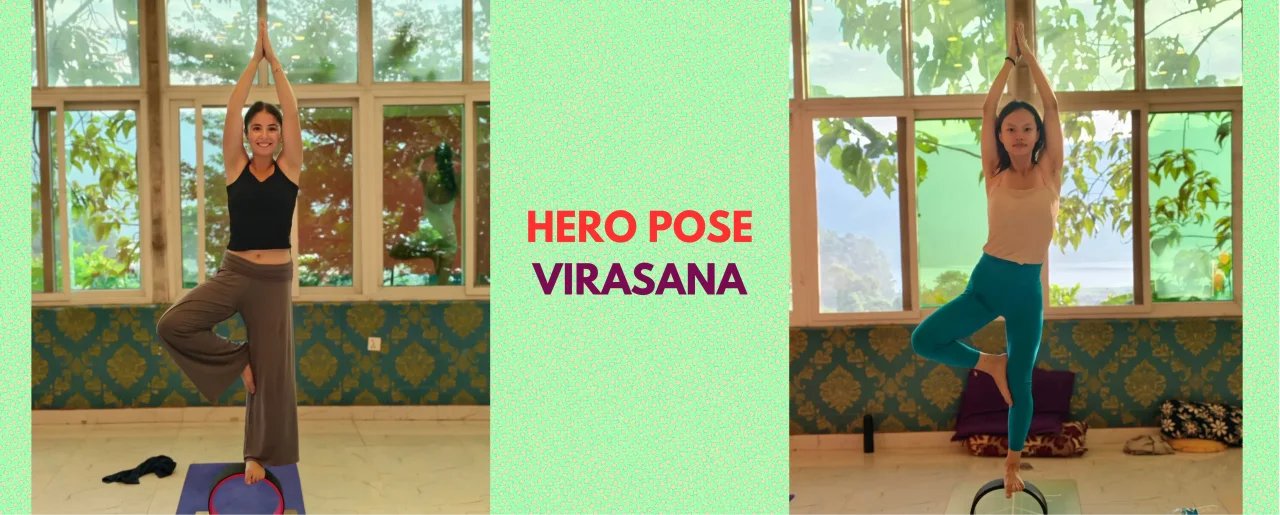
Virasana, commonly known as Hero Pose, is a traditional yoga posture that focuses on lower-body alignment, mindful breathing, and comfortable upright sitting. It is often practised as part of a Hatha Yoga sequence and can help practitioners develop body awareness and a steady posture.
Whether you are new to yoga or have an established practice, learning the correct technique is essential. In this guide, you will discover how to practise Virasana safely, understand its potential benefits, and learn important modifications for a more comfortable experience.
What Is Virasana (Hero Pose)?
Virasana is a seated yoga posture in which the practitioner kneels and sits between the heels, keeping the spine upright. The Sanskrit word "Vira" means hero or warrior, while "Asana" means posture or seat.
This pose is traditionally associated with stillness, stability, and mindful breathing. Depending on individual mobility, Virasana can be practised with support under the hips to reduce discomfort around the knees and ankles.
How to Practise Virasana Step by Step
Follow these steps to explore Hero Pose with attention to comfort and proper alignment.
- Begin in a kneeling position: Kneel on a yoga mat with your knees comfortably positioned and the tops of your feet resting on the floor.
- Position your feet: Gently move your feet apart so there is space between them for your sitting bones. Keep your ankles comfortable and avoid forcing your feet into position.
- Lower your hips carefully: Slowly sit down between your heels. If your hips do not comfortably reach the floor, place a yoga block or firm cushion underneath them.
- Lengthen your spine: Sit upright, relax your shoulders, and keep your head balanced over your torso.
- Bring your hands together: As shown in the accompanying image, you may raise your arms overhead and bring your palms together if your shoulders feel comfortable. You can also rest your hands on your thighs.
- Breathe naturally: Take slow, comfortable breaths without straining or holding your breath.
- Release the pose: Lower your arms, lean forward slightly if needed, and carefully extend your legs before changing position.
Benefits of Virasana (Hero Pose)
When practised appropriately, Virasana can support several aspects of a balanced yoga routine. Individual experiences vary according to mobility, technique, and consistency.
- Encourages upright posture: The pose invites you to lengthen your spine and become more aware of your sitting alignment.
- Promotes mindful breathing: Maintaining a steady seated position can provide an opportunity to focus on the breath.
- Develops body awareness: Virasana encourages attention to the position of the pelvis, spine, shoulders, ankles, and knees.
- Supports meditation practice: With suitable modifications, the pose can provide a stable position for short breathing or meditation sessions.
- Introduces gentle lower-body positioning: It allows practitioners to explore knee and ankle flexion within their comfortable range of motion.
Virasana is not a guaranteed treatment for knee pain, digestive problems, or other medical conditions. Its suitability depends on your individual physical needs.
Common Mistakes to Avoid
- Forcing the hips down when the knees or ankles feel uncomfortable.
- Allowing the lower back to collapse instead of maintaining a comfortable upright spine.
- Raising the arms overhead despite shoulder pain or restricted mobility.
- Holding the pose for too long before becoming accustomed to the position.
- Ignoring sharp pain, numbness, tingling, or increasing pressure around the knees and ankles.
Beginner Tips and Modifications
If you find the traditional position difficult, use a yoga block, bolster, or firm cushion under your sitting bones. The extra height can make it easier to maintain a comfortable posture without forcing the knees into deep flexion.
Keep your hands on your thighs if raising your arms feels uncomfortable. Start with a short hold and gradually increase the duration only if the posture remains comfortable. Never use pain as a measure of progress.
Precautions: Who Should Avoid or Modify Virasana?
Virasana involves substantial bending of the knees and ankles. Practise cautiously and consider professional guidance if you have:
- Current knee or ankle pain or an existing joint injury.
- A recent knee, ankle, or hip operation.
- Significant joint stiffness or limited mobility.
- Difficulty getting into or out of the kneeling position safely.
Stop immediately if you experience sharp pain, numbness, or tingling. If you have a relevant medical condition or are recovering from an injury, consult a qualified healthcare professional before attempting the pose.
Virasana in Traditional Yoga Practice
Virasana can be incorporated into a broader yoga routine that includes mindful movement, breathing exercises, meditation, and suitable relaxation practices. Learning how postures are adapted to different bodies is an important part of developing a safe and sustainable yoga practice.
Students who wish to deepen their knowledge of traditional yoga, asana alignment, teaching methodology, and personal practice may also explore structured yoga education programmes in Nepal.
Explore Advanced Yoga Teacher Training in Nepal
If you would like to develop your yoga knowledge beyond individual postures, explore our advanced training programmes at Pokhara Yoga School and Retreat Center.
- 300 Hour Yoga Teacher Training in Nepal: Build on your existing yoga teaching foundation through advanced asana practice, yoga philosophy, and teaching development. Explore yoga training at Pokhara Yoga School and learn more about the 300 Hour Yoga Teacher Training in Nepal.
- 500 Hour Yoga Teacher Training in Nepal: Explore an extended yoga education pathway designed for practitioners seeking more comprehensive study. Review the course structure, eligibility requirements, and curriculum before enrolling. Discover the 500 Hour Yoga Teacher Training in Nepal.
Conclusion
Virasana (Hero Pose) is a traditional yoga posture that encourages mindful breathing, upright sitting, and awareness of body alignment. The key to practising it well is to respect your body's limits, use support when needed, and avoid forcing your knees or ankles into an uncomfortable position.
With consistent, mindful practice and appropriate guidance, Virasana can become a useful part of a balanced yoga routine. If you are interested in expanding your understanding of yoga, explore the 300 Hour and 500 Hour Yoga Teacher Training programmes in Nepal to learn more about structured yoga education.