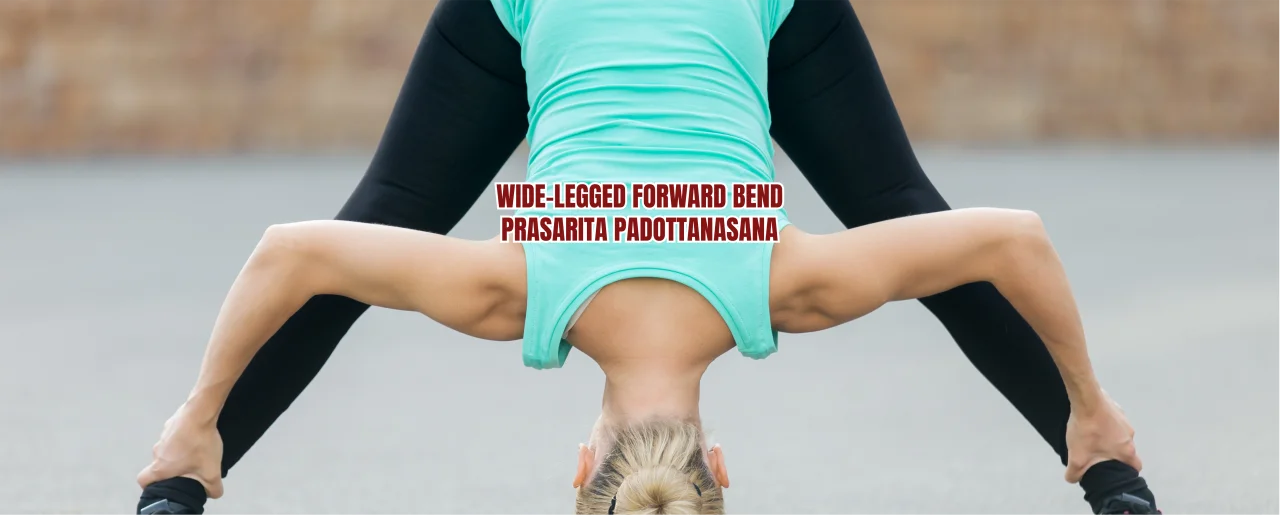
Wide-Legged Forward Bend (Prasarita Padottanasana) is a standing yoga posture that combines a wide-legged stance with a forward bend. It is commonly included in yoga sequences to develop flexibility, stability, body awareness, and balance. The pose can also provide an opportunity to focus on breathing while maintaining a steady posture.
How to Practice Wide-Legged Forward Bend
Begin by standing with your feet comfortably wide apart and keep your legs active. Turn your toes slightly inward or maintain a comfortable foot position according to your practice. Lengthen your spine and engage your legs.
On an exhalation, slowly hinge forward from your hips while keeping your spine as long as possible. Bring your hands toward the floor or place them on suitable support. Allow your head and upper body to move toward the floor without forcing the stretch.
Keep your breathing steady and remain in the posture for a comfortable amount of time. To come out of the pose, engage your legs and slowly lift your torso back to an upright standing position.
Benefits of Prasarita Padottanasana
When practiced comfortably with proper alignment, Wide-Legged Forward Bend can be a useful addition to a balanced yoga practice. Some commonly associated benefits include:
- Encourages flexibility in the hamstrings and inner legs.
- Supports mobility in the hips and lower body.
- Helps develop awareness of proper standing alignment.
- Engages the legs while maintaining a stable foundation.
- Provides an opportunity to practice controlled forward bending.
- Can encourage relaxation and focused breathing during yoga practice.
Prasarita Padottanasana in Yoga Teacher Training
Wide-Legged Forward Bend is useful for yoga students because it teaches important principles of standing posture, hip movement, spinal alignment, and controlled breathing. Learning the pose with proper guidance can help practitioners understand how to work with their individual flexibility instead of forcing the body into a deeper forward bend.
Students who want to develop a deeper understanding of yoga asanas, alignment, pranayama, meditation, and traditional yoga practices can explore 200 Hour Yoga Teacher Training Nepal for a structured yoga learning experience.
Precautions While Practicing Wide-Legged Forward Bend
Practice this posture gradually and avoid forcing your torso toward the floor. Keep the movement controlled and maintain comfortable breathing. Beginners can use yoga blocks or other suitable support if reaching the floor is difficult. Anyone experiencing pain or discomfort should come out of the pose and seek guidance from a qualified yoga teacher.
Conclusion
Prasarita Padottanasana is a traditional standing forward bend that combines a wide stance with controlled hip flexion. With regular practice, proper alignment, and appropriate modifications, it can become a valuable posture for developing lower-body flexibility, stability, and body awareness as part of a well-rounded yoga practice.