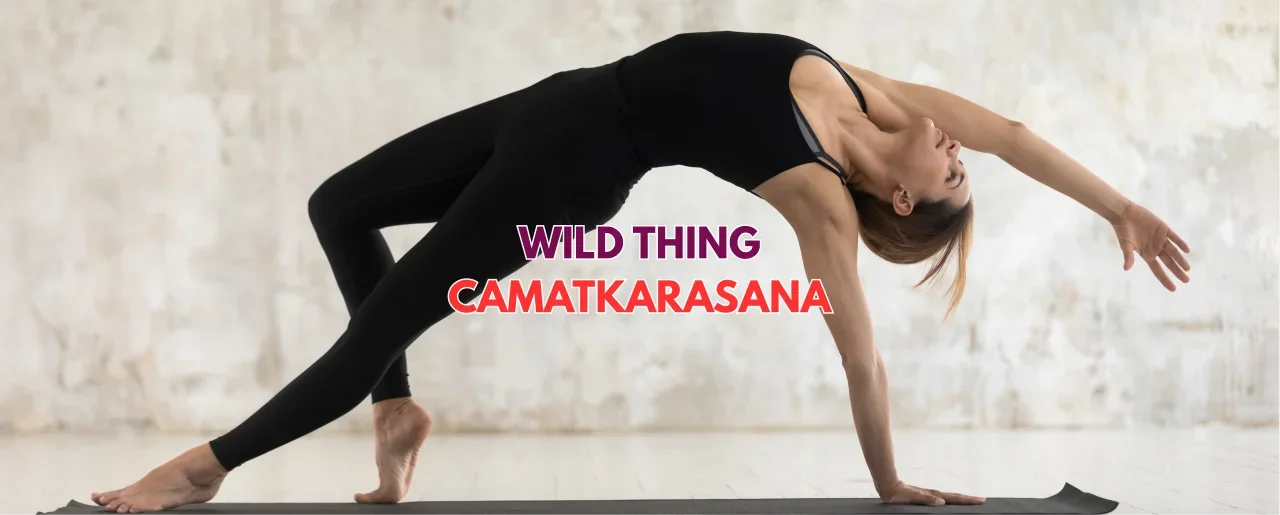
Wild Thing Pose is a backbend performed from a side-plank variation. The practitioner rotates the chest upward, lifts the hips and extends one arm overhead while maintaining support through the grounded hand and feet.
The Sanskrit name Camatkarasana is commonly associated with a sense of wonder or amazement. The pose is often included in flowing yoga sequences to develop body awareness, coordination and controlled movement.
Although the posture may look effortless, it requires shoulder stability, wrist strength, hip mobility and an understanding of safe spinal extension. Beginners should learn the movement gradually with guidance from a qualified yoga instructor.
Benefits of Wild Thing Pose
When practised with appropriate preparation and correct alignment, Wild Thing Pose may offer several physical and mindful benefits.
- Opens the chest: Encourages chest expansion and shoulder mobility.
- Develops balance: Challenges coordination and body awareness.
- Strengthens supporting muscles: Engages the shoulders, arms, hips and core.
- Improves flexibility: Encourages mobility through the shoulders, hips and upper back.
- Connects breath with movement: Encourages mindful breathing during a flowing yoga practice.
- Builds confidence: Helps experienced practitioners explore challenging postures progressively.
These benefits depend on individual mobility, technique and consistency. The pose is not suitable for everyone, and it should never be forced.
How to Practise Wild Thing Pose Step by Step
Step 1: Begin in Downward-Facing Dog
Start on your hands and feet with your hips lifted. Spread your fingers, press evenly through your palms and keep your neck relaxed.
Step 2: Move into Side Plank
Shift your weight onto one hand and rotate your body into Side Plank. Keep the supporting shoulder stable and engage your abdominal muscles.
Step 3: Lift Your Hips
Bend the upper leg and place its foot behind you on the mat as you begin rotating your chest upward. Keep the movement slow and controlled.
Step 4: Open Your Chest
Press gently through the supporting palm and grounded foot. Lift your hips and extend your free arm overhead only as far as your shoulder and back comfortably allow.
Step 5: Breathe and Hold
Continue breathing naturally for a few comfortable breaths. Avoid compressing your lower back or dropping your head backward excessively.
Step 6: Return Slowly
Bring your free arm back, rotate your chest toward the floor and return to a stable position. Rest before repeating on the opposite side.
Beginner Modifications for Camatkarasana
If you are new to backbends, practise the movements that prepare your body before attempting the complete posture.
- Practise Side Plank with the lower knee resting on the mat.
- Work on gentle chest-opening movements and shoulder mobility.
- Build core strength with controlled, beginner-friendly exercises.
- Use a qualified instructor to check your alignment and technique.
- Keep your movement within a comfortable range rather than forcing a deeper backbend.
Stop immediately if you experience sharp pain, dizziness, numbness or unusual discomfort.
Common Mistakes to Avoid
- Placing excessive pressure on the supporting wrist or shoulder.
- Forcing the lower back into an extreme arch.
- Holding the breath while lifting the hips.
- Rushing into the pose without warming up.
- Attempting the full posture without sufficient strength or stability.
People with wrist, shoulder or back injuries, or other relevant medical conditions, should seek advice from an appropriate healthcare professional before practising this challenging posture.
Who Should Avoid Wild Thing Pose?
Wild Thing Pose may not be appropriate for people with current wrist or shoulder injuries, significant back pain, or difficulty maintaining balance. Those recovering from surgery or managing a medical condition should obtain individual guidance before trying it.
Never practise the pose through pain. A simpler chest-opening or supported side-plank variation may be a more suitable alternative.
Learn Yoga Asanas Through Structured Training in Nepal
Developing a safe and effective yoga practice involves more than learning individual poses. Understanding alignment, anatomy, breathing techniques and modifications can help practitioners approach advanced asanas with greater awareness.
If you want to deepen your knowledge of yoga, explore Nepal Yoga Teacher Training in Nepal at Pokhara Yoga School and Retreat Center. The 200-hour programme covers foundational yoga practices, including Hatha Yoga, Ashtanga Yoga, pranayama, meditation and yoga philosophy.
Practitioners who have already completed foundational training can also explore the 300-Hour Yoga Teacher Training in Nepal to deepen their understanding of advanced asanas, alignment and yoga teaching.
Explore the Pokhara Yoga School and Retreat Center website to learn more about yoga training opportunities in Pokhara, Nepal.
Final Thoughts
Wild Thing Pose (Camatkarasana) is a dynamic posture that combines balance, strength and a heart-opening movement. Build a strong foundation, warm up properly and progress gradually to practise more confidently.
For a deeper understanding of yoga philosophy, alignment and asana practice, explore the yoga teacher training programmes offered at Pokhara Yoga School and Retreat Center in Nepal.