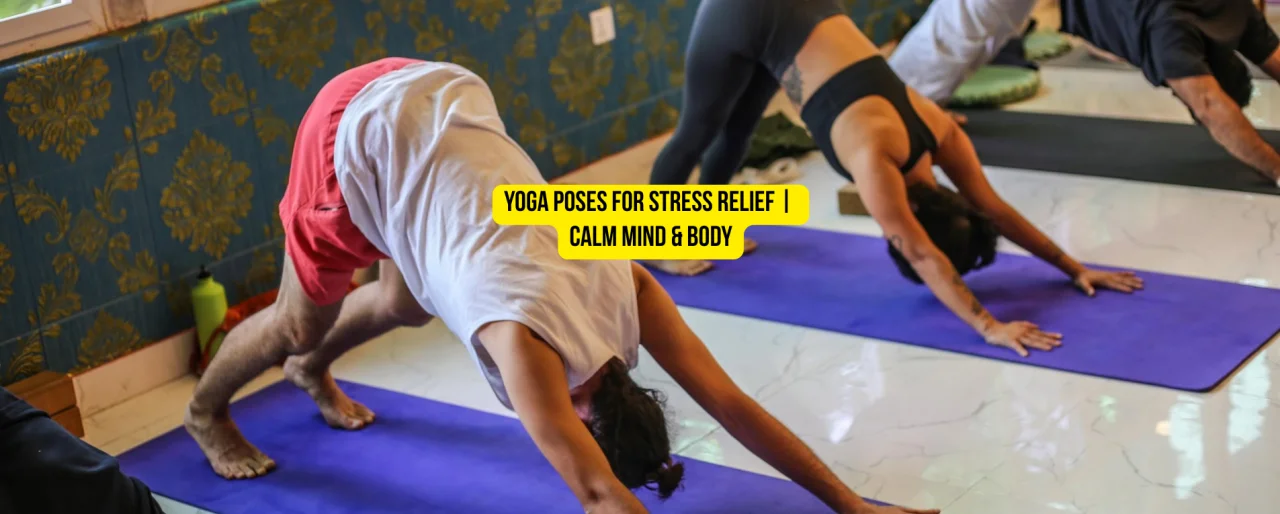
Modern life can bring constant responsibilities, busy schedules, and mental pressure. Yoga for stress relief combines mindful movement, breathing, relaxation, and focused awareness to help create a calmer experience for both the mind and body.
Some yoga poses are particularly useful for relaxation because they encourage slow movement, comfortable breathing, gentle stretching, and greater body awareness. You do not need to perform advanced yoga postures to begin. Simple poses practiced consistently can become part of a relaxing daily routine.
In this guide, we explore some of the best yoga poses for stress relief, how to practice them, their potential benefits, and how yoga teacher training can provide a deeper understanding of these practices.
What Is Yoga for Stress Relief?
Yoga for stress relief refers to yoga practices that combine physical postures, controlled breathing, mindfulness, and relaxation techniques to support a calmer state of mind.
A stress-relieving yoga practice generally emphasizes:
- Slow and mindful movements
- Comfortable breathing
- Gentle stretching
- Body awareness
- Relaxation
- Focused attention
- Restorative postures
The goal is not to perform difficult poses or push the body to its limits. Instead, the practice should encourage awareness, comfort, and relaxation.
10 Best Yoga Poses for Stress Relief
The following yoga poses can be included in a gentle practice designed to promote relaxation and mindfulness.
1. Child's Pose (Balasana)
Child's Pose, or Balasana, is a gentle resting posture that can be included near the beginning, middle, or end of a yoga session.
To practice, kneel on your mat and slowly bring your hips toward your heels. Extend your arms forward or allow them to rest alongside your body. Lower your forehead toward the mat if comfortable and breathe slowly.
Child's Pose can provide a quiet opportunity to slow down, focus on breathing, and bring attention inward.
2. Cat-Cow Pose (Marjaryasana-Bitilasana)
Cat-Cow is a gentle movement between spinal flexion and extension. It is commonly used as a warm-up before more demanding yoga postures.
Start on your hands and knees. As you inhale, gently move toward Cow Pose by lifting the chest and allowing the spine to extend comfortably. As you exhale, move toward Cat Pose by rounding the spine.
Move slowly and coordinate the movement with your breath.
3. Downward-Facing Dog (Adho Mukha Svanasana)
Downward-Facing Dog is a widely practiced yoga posture that combines strengthening, stretching, and mindful breathing.
Begin on your hands and knees. Press through your hands and gradually lift your hips upward and backward. Keep the knees slightly bent if needed and focus on creating a comfortable length through the spine.
Rather than forcing the heels toward the floor, prioritize a stable position and relaxed breathing.
4. Standing Forward Fold (Uttanasana)
Standing Forward Fold is a simple forward-bending posture that can be incorporated into a gentle yoga sequence.
Stand with your feet comfortably positioned. Bend forward from the hips and allow the upper body to relax toward the floor. Keep the knees bent if this makes the pose more comfortable.
Allow the neck and shoulders to relax while maintaining smooth breathing.
5. Legs-Up-the-Wall Pose (Viparita Karani)
Legs-Up-the-Wall Pose is a restorative posture commonly used in relaxation-focused practices.
Sit sideways near a wall and carefully bring your legs upward as you lower your back toward the floor. Allow the legs to rest comfortably against the wall and keep the arms relaxed.
Stay for a comfortable period while breathing slowly and naturally.
6. Easy Pose (Sukhasana)
Sukhasana, or Easy Pose, is a simple seated posture that can be used for meditation, breath awareness, and mindfulness.
Sit comfortably with the legs crossed and the spine naturally upright. Relax the shoulders and place the hands on the thighs or knees.
Close the eyes if comfortable and bring attention to the natural rhythm of your breathing.
7. Corpse Pose (Savasana)
Savasana is one of the most important relaxation postures in yoga.
Lie comfortably on your back with the arms and legs relaxed. Allow the body to become still and observe your breathing without trying to control every breath.
Even though Savasana looks simple, remaining still and mentally present can require practice.
8. Seated Forward Fold (Paschimottanasana)
Seated Forward Fold can be included in a gentle yoga sequence when practiced within a comfortable range.
Sit with the legs extended forward. Inhale to lengthen the spine and gently fold forward from the hips as you exhale.
Do not force the body toward the feet. A comfortable variation is more appropriate than trying to achieve a deep stretch.
9. Legs-on-Chair Variation
A supported legs-on-chair position can be used as a gentle restorative option. Lie on your back and place the lower legs on a stable chair or similar support so the knees remain comfortably bent.
This position can provide an opportunity to rest while focusing on slow, comfortable breathing.
10. Reclining Bound Angle Pose (Supta Baddha Konasana)
Supta Baddha Konasana is a reclining posture that can be practiced in a gentle or supported form.
Lie on your back, bring the soles of the feet together, and allow the knees to move outward only as far as comfortable. Cushions or yoga props can be used for additional support.
Relax the shoulders and maintain a slow breathing rhythm.
How Yoga Can Support Stress Management
Yoga combines movement with breathing and attention, which makes it different from exercise that focuses only on physical performance.
A regular mindful yoga practice may help practitioners develop:
- Greater body awareness
- Improved relaxation habits
- Better breathing awareness
- Mindfulness and concentration
- Greater physical flexibility
- Improved movement control
- A stronger mind-body connection
Yoga should be viewed as one part of a broader approach to wellbeing rather than a replacement for professional care when someone is experiencing significant or persistent stress-related difficulties.
Simple Yoga Routine for Stress Relief
If you are new to yoga, you can create a simple relaxation-focused sequence using several of the poses above.
- Easy Pose: 2–3 minutes of comfortable breathing
- Cat-Cow: 5–10 slow movements
- Child's Pose: 30–60 seconds
- Downward-Facing Dog: 20–30 seconds
- Standing Forward Fold: 20–30 seconds
- Reclining Bound Angle: 1–2 minutes
- Legs-Up-the-Wall: 2–5 minutes
- Savasana: 5–10 minutes
Move at a comfortable pace and avoid forcing any posture. The sequence can be shortened or modified according to your experience.
Breathing and Yoga for Stress Relief
Breathing is an important part of a relaxation-focused yoga practice.
Instead of holding your breath or trying to breathe as deeply as possible, focus on maintaining a smooth and comfortable breathing rhythm.
Mindful breathing can be practiced during yoga poses, meditation, or while sitting quietly. In traditional yoga education, breathing practices known as pranayama are studied as a distinct part of yoga practice.
Yoga Poses for Stress Relief for Beginners
Beginners do not need to start with advanced poses. A gentle sequence involving Child's Pose, Cat-Cow, Easy Pose, Supported Reclining Bound Angle Pose, and Savasana can provide a simple introduction to mindful yoga practice.
When starting yoga, focus on:
- Comfort rather than maximum flexibility
- Slow and controlled movement
- Natural breathing
- Stable alignment
- Gradual progression
- Mindful awareness
Common Mistakes When Practicing Yoga for Stress
Trying to Make Every Pose Perfect
Stress-relieving yoga is not a competition. Focus on awareness and comfort rather than achieving an advanced-looking posture.
Holding the Breath
Holding your breath can create unnecessary tension. Maintain a comfortable breathing rhythm throughout the practice.
Moving Too Quickly
Fast transitions can make a relaxation-focused session feel more like a workout. Slow down and allow enough time to settle into each posture.
Forcing Flexibility
Do not push into pain to achieve a deeper stretch. Use props or modifications when necessary.
Ignoring Rest
Resting postures such as Child's Pose and Savasana are valuable parts of a balanced yoga practice.
Yoga for Stress Relief in a Traditional Yoga Environment
Yoga is more than a collection of physical poses. Traditional yoga education can include asana, pranayama, meditation, yoga philosophy, anatomy, and teaching methodology.
Students interested in experiencing yoga in a traditional setting can explore Yoga in Nepal and learn how physical practice can be combined with meditation, breathing, mindfulness, and other aspects of yoga.
Nepal offers a unique environment for students who want to deepen their yoga practice while experiencing the country's Himalayan landscape and longstanding spiritual traditions.
Yoga Teacher Training and Stress-Relief Practices
For aspiring yoga teachers, understanding stress-relieving practices requires more than memorizing the names of yoga poses.
A structured 200 Hour Yoga Teacher Training in Nepal can introduce students to foundational areas such as asana, anatomy, pranayama, meditation, yoga philosophy, sequencing, and teaching methodology.
During teacher training, students can learn how to create appropriate yoga sequences for different levels and how to provide modifications for practitioners with different needs and abilities.
Understanding the purpose of restorative and gentle postures can also help future teachers create balanced classes that include movement, breath awareness, relaxation, and mindfulness.
Precautions When Practicing Yoga for Stress Relief
Yoga should be practiced within a comfortable range of movement. Do not force a pose or continue through sharp or unusual pain.
If you have an injury, significant physical limitation, or medical concern that could affect your yoga practice, consider getting appropriate professional advice before starting or modifying your practice.
Use yoga props, walls, cushions, or other appropriate support when needed. Beginners may also benefit from learning under the guidance of a qualified yoga teacher.
Final Thoughts
Yoga poses for stress relief do not need to be complicated. Simple postures combined with slow movement, comfortable breathing, mindfulness, and adequate rest can create a balanced yoga practice.
From Child's Pose and Cat-Cow to Legs-Up-the-Wall and Savasana, different postures can be used according to your experience, comfort, and practice goals.
For those who want to go beyond personal practice, studying Yoga in Nepal or completing a 200 Hour Yoga Teacher Training in Nepal can provide a broader understanding of asana, pranayama, meditation, philosophy, anatomy, and teaching methodology.
Most importantly, approach yoga with patience and awareness. The purpose of a stress-relieving practice is not to achieve the most difficult pose, but to develop a healthier relationship between movement, breath, attention, and relaxation.